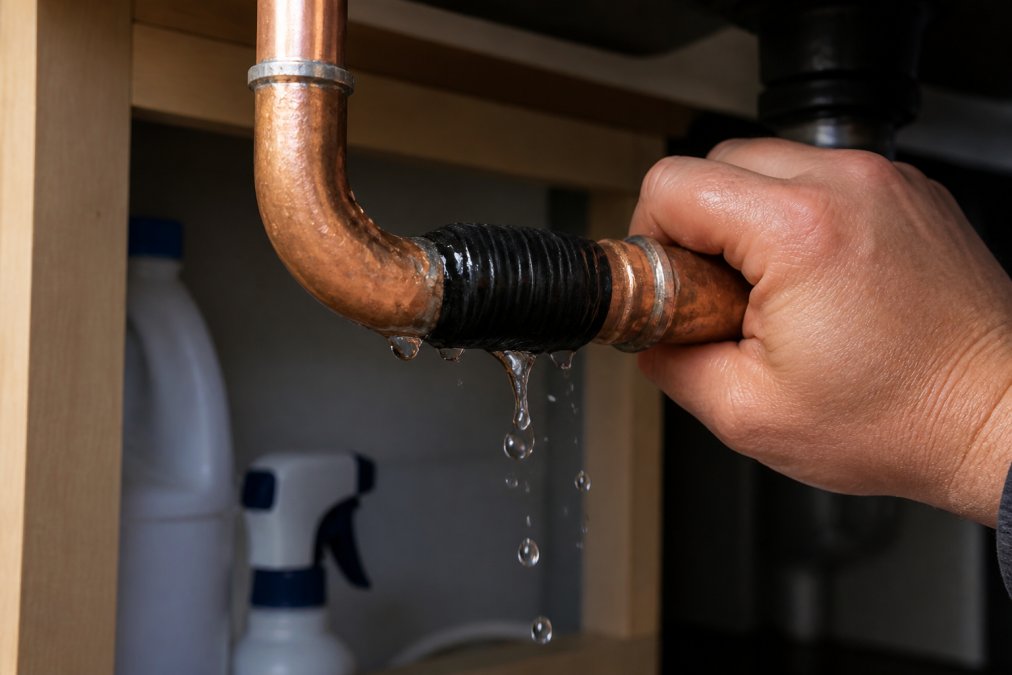
 how-to
How to Fix a Leaking Pipe Temporarily in 2026
Table of Contents
- What You'll Need Before You Start the Repair
- How to Fix a Leaking Pipe Temporarily: Step-by-Step
- Best Waterproof Tape for Plumbing Leaks
- How Long Does Epoxy Putty Last on a Pipe?
- Matching the Fix to Your Pipe Material
- Pressure Rating Limits and Troubleshooting Failed Fixes
- When to Call an Emergency Plumber
- Frequently Asked Questions
Last Updated: September 18, 2026
What You'll Need Before You Start the Repair
A leaking pipe rarely waits for a convenient moment. When water is pooling under a sink or dripping from a joint in the basement, knowing how to fix a leaking pipe temporarily can stop the damage while you arrange a permanent repair. At Colby Plumbing Company LLC, we have handled emergency calls, and the difference between a small mess and a flooded floor usually comes down to how fast someone acts.
- Epoxy repair putty for small holes and pinhole leaks
- A pipe repair clamp with a rubber gasket for larger cracks
- Silicone repair tape for wrapping joints and fittings
- Sandpaper or emery cloth to prep the surface
- A bucket, towels, and a drip tray to catch water
- Work gloves and safety glasses
How to Fix a Leaking Pipe Temporarily: Step-by-Step
The fastest temporary fix follows four steps: shut off the water, dry and prep the pipe, apply putty or a clamp, then wrap with silicone tape. Each step matters. Skip one and the patch may fail within hours.
Step 1: Shutting Off the Main Water Valve
Find your main shut-off valve and turn it clockwise until the water stops. This valve is usually near the water meter, in a basement, or outside near the foundation. Open a nearby faucet to drain the line and confirm the flow has stopped. If the valve is stuck or you cannot find it, call a plumber before you make the leak worse.
Step 2: Clean and Prepare the Pipe Surface
Dry the pipe with a rag, then sand the area around the leak. Surface preparation matters more than most people expect. Epoxy and tape need a clean, rough surface to grip. Remove any corrosion, mineral buildup, or old sealant. Wipe the pipe dry one more time before you apply anything.
Step 3: Apply Epoxy Putty or a Pipe Repair Clamp
For a pinhole leak or small crack, knead the epoxy putty until it is warm and uniform, then press it firmly over the leak. Hold it in place until it starts to set. For a larger crack or a damaged joint, use a pipe repair clamp instead. Wrap the rubber gasket around the pipe, slide the metal clamp over it, and tighten the bolts evenly.
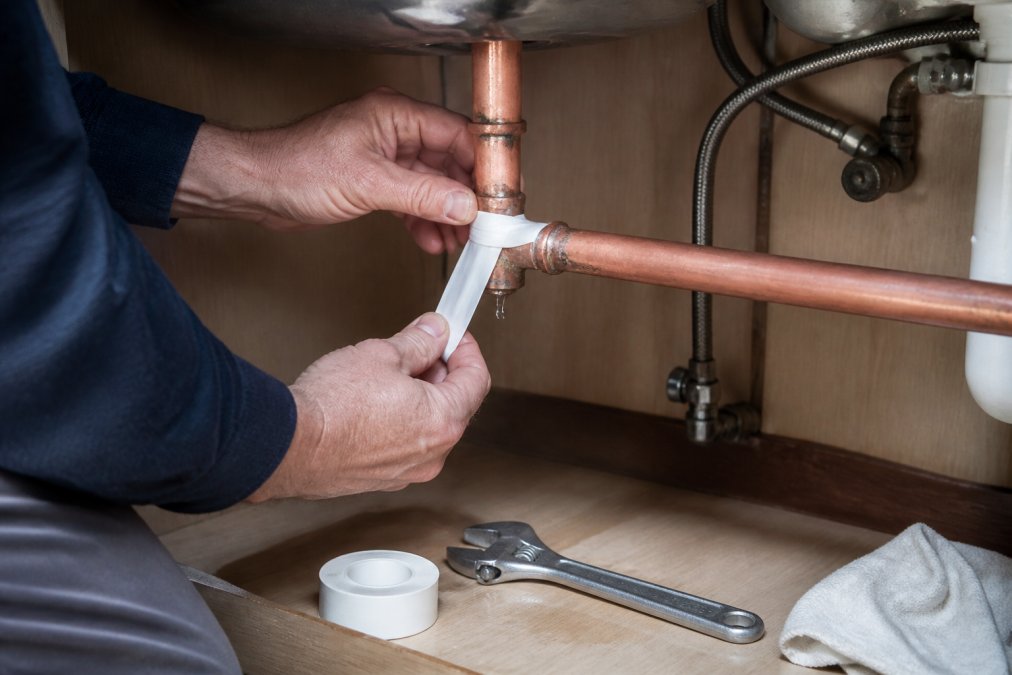
Step 4: Wrap with Silicone Tape for Extra Sealing
Stretch silicone tape tightly around the repair, overlapping each wrap by half. The tape bonds to itself and creates a waterproof mechanical seal. Wrap at least two inches past the leak on both sides. Let the epoxy cure fully before you turn the water back on.
Best Waterproof Tape for Plumbing Leaks
Silicone self-fusing tape is the best waterproof tape for plumbing leaks because it bonds to itself without adhesive and stays flexible under water pressure. It works on copper, PVC, and galvanized pipe. Standard plumber's tape, the thin white thread sealant, is not the same product and will not stop a leak on its own.
How Long Does Epoxy Putty Last on a Pipe?
Epoxy putty typically holds for a few days to several weeks on a low-pressure line, depending on surface prep and curing time. It is a temporary solution, not a permanent repair. Heat, vibration, and high water pressure all shorten its life. If the pipe carries hot water or sits under constant pressure, expect the patch to fail sooner.
Matching the Fix to Your Pipe Material
| Pipe Material | Best Temporary Fix | Why It Works | What to Avoid |
|---|---|---|---|
| Copper | Epoxy putty (pinhole) or rubber-gasket clamp (crack) | Putty grips the roughened oxide layer; clamp spreads load across thin walls | Don't overtighten a clamp, copper walls thin with age and crush easily |
| PVC (schedule 40) | Silicone self-fusing tape or a full-wrap clamp | Tape flexes with the pipe; clamps bridge cracks without solvent | Skip epoxy putty, it doesn't bond reliably to smooth PVC and pops off under pressure |
| CPVC | Silicone tape plus a clamp | CPVC softens with heat; tape tolerates hot-water lines better than putty | Avoid putty on hot-water CPVC, it can soften the pipe surface |
| Galvanized steel | Rubber-gasket repair clamp | Clamp compresses the gasket against an uneven, rust-pitted surface | Putty won't seal pitted rust; it bridges the pits and leaks around them |
| PEX (A, B, or C) | Silicone tape on the run; clamp only on straight sections | PEX flexes, so rigid patches shear off | Never put epoxy putty on a PEX fitting, you'll destroy the fitting when you cut it out |
| Brass | Silicone tape or clamp | Tape conforms to fittings; clamp handles threaded joints | Avoid abrasive sanding, brass scratches and creates new leak paths |
Pressure Rating Limits and Troubleshooting Failed Fixes
A temporary patch is only as strong as the pressure pushing against it. Most epoxy putties and silicone tapes are rated for lines carrying under roughly 30 to 50 psi. A typical residential supply line runs 40 to 80 psi, and pressure spikes from a water heater or a municipal surge can briefly double that. That's why a patch that holds for an hour can blow off at 3 a.m.
Match the fix to the pressure.
| Line Type | Typical Pressure | Safe Temporary Fix |
|---|---|---|
| Drain / waste | Near zero | Silicone tape or putty |
| Cold supply | 40-80 psi | Rubber-gasket clamp |
| Hot supply | 40-80 psi, plus thermal expansion | Clamp with heat-rated gasket |
| Main line before the meter | 60-100+ psi | None, call a plumber |
Troubleshooting by symptom.
- Putty won't set or stays tacky. The surface was wet, oily, or cold. Epoxy needs a dry, roughened surface and temperatures above roughly 60°F to cure. Dry it, sand it, and try again, or switch to a clamp.
- Clamp drips at the edges. The gasket isn't seated or the clamp is off-center. Loosen, recenter the gasket over the leak, and tighten the bolts in a cross pattern, a quarter-turn at a time, not one side all the way down.
- Tape peels back within minutes. You wrapped with the sticky side out or didn't stretch it. Self-fusing tape needs to be stretched to roughly double its length as you wrap so the layers fuse. Overlap each pass by half.
- Patch holds, then fails overnight. Thermal expansion. Hot-water lines grow and shrink with every heating cycle, and a rigid patch can't follow. Switch to a clamp with a flexible gasket.
- Water weeps from a different spot after the fix. The pressure found a new weak point. That's a sign of systemic corrosion, not a bad patch. Stop and call a plumber.
When to Call an Emergency Plumber
Call an emergency plumber when the leak is on a main line, when water will not stop, or when the pipe is badly corroded. You should also call if the leak sits near electrical wiring or if you cannot reach the shut-off valve. A burst pipe or a severe backup needs professional help fast.
Frequently Asked Questions
Can you fix a leaky pipe without replacing the pipe?
Yes, in many cases. Epoxy putty, pipe repair clamps, and silicone tape can seal pinhole leaks and small cracks without cutting out the damaged section. These are temporary solutions though. A clamp with a rubber gasket works well on straight runs, while epoxy putty handles irregular joints and fittings. Plan to have a licensed plumber replace the damaged section within a few weeks before the fix fails.
Will Flex Seal stop a leaking pipe?
Flex Seal and similar rubberized sprays can slow a minor drip on a dry, clean pipe, but they are not designed for pressurized supply lines. Water pressure pushes through the coating, especially at joints and fittings. For a supply line leak, epoxy putty or a mechanical repair clamp holds up far better. Use spray sealants only as a last resort on low-pressure drain pipes, and treat them as a stopgap, not a repair.
What is the best emergency tape for leaking pipes?
Silicone self-fusing tape is the best choice for most emergency pipe repairs. It bonds to itself without adhesive, stretches around fittings and joints, and stays flexible when wet. For higher-pressure supply lines, combine silicone tape with a rubber gasket and hose clamp for a stronger mechanical seal. Avoid standard plumber's tape (PTFE) for leak repair. It is a thread sealant, not a patch.
When should you call a professional for a pipe leak?
Call a plumber immediately if the leak is on a main supply line, if water is spraying rather than dripping, if you cannot reach the main shut-off valve, or if the pipe is corroded and crumbling. Also call if your temporary fix fails within 24 hours or if you see water damage on walls, ceilings, or floors. A licensed plumber can assess whether the pipe needs a full section replacement.
A leaking pipe can turn a calm evening into a stressful one, but a fast temporary fix keeps the damage contained. When the patch is not enough, you need a team that answers the call and finishes the job right. Colby Plumbing Company LLC brings licensed, seasoned professionals, a 100% satisfaction guarantee, and fast, affordable service to every job. Contact us today and get your plumbing back to normal.