 how-to
How to Unclog a Slow Draining Sink: Step-by-Step Fixes
Last Updated: November 3, 2026
Quick Summary
To learn how to unclog a slow draining sink, start by pulling out visible hair and clearing the stopper, then try a cup plunger on the drain. For light buildup, pour half a cup of baking soda followed by one cup of white vinegar, wait 15 to 30 minutes, and flush with very hot water.
- Hair and soap residue are the most common causes of a slow bathroom sink.
- Never plunge a sink while it holds chemical cleaner, since splashes can burn skin and eyes.
- Always finish the baking soda and vinegar method with plenty of hot water to rinse out residue.
- Chemical cleaners fail on solid hair clogs and deep blockages, so skip them for those problems.
- Call a plumber if the drain stays slow or if more than one fixture backs up at once.
Table of Contents
- Why Your Sink Drains Slowly
- How to Unclog a Bathroom Sink Clogged with Hair
- Step-by-Step: Clearing a Slow Drain Without Tools
- Best Tools for Unclogging Sink Drains
- Removing the Stopper and Cleaning the P-Trap
- Chemical Cleaners: When They Help and When They Don't
- When to Call a Professional Plumber for Drain Issues
- Booking Colby Plumbing for a Drain Problem That Won't Clear
- Frequently Asked Questions
Why Your Sink Drains Slowly
A slow bathroom sink is usually caused by a buildup of hair, soap scum, and toothpaste residue that sticks to the inside of the drain pipe, so knowing how to unclog a slow draining sink starts with recognizing that buildup. Over time, this mix narrows the opening until water can no longer flow through quickly.
Most slow sinks share a few common causes:
- Hair wrapping around the stopper or drain opening
- Soap residue that builds up along pipe walls
- Toothpaste and grime trapped in the first few inches of the drain
- Debris like cotton swabs or small bits of paper
Knowing the cause helps you pick the right fix. A sink that drains slowly after every shower probably has hair trapped near the top. A sink that gurgles may have a blockage deeper in the pipe.
Standing water is one clear sign of trouble, and the drain may need attention if water lingers in the basin after you turn off the faucet.
How to Unclog a Bathroom Sink Clogged with Hair
Hair is the most common culprit in bathroom sinks. Start by removing the stopper, then pull out any visible hair with your fingers or a pair of tweezers. Wear gloves for this step, since the buildup is often gross.
Next, try a plunger. Cover the drain completely, add enough water to the sink to seal the cup, and push and pull quickly about 15 times. Stop and check the drain flow. Repeat if needed.
Watch out: never plunge a sink while it is full of chemical cleaner, since the splash can burn your skin and eyes.
Step-by-Step: Clearing a Slow Drain Without Tools
You can clear many slow sinks with items already in your kitchen. This method takes about 15 to 20 minutes and is a simple way to learn how to unclog a slow draining sink without any special tools.
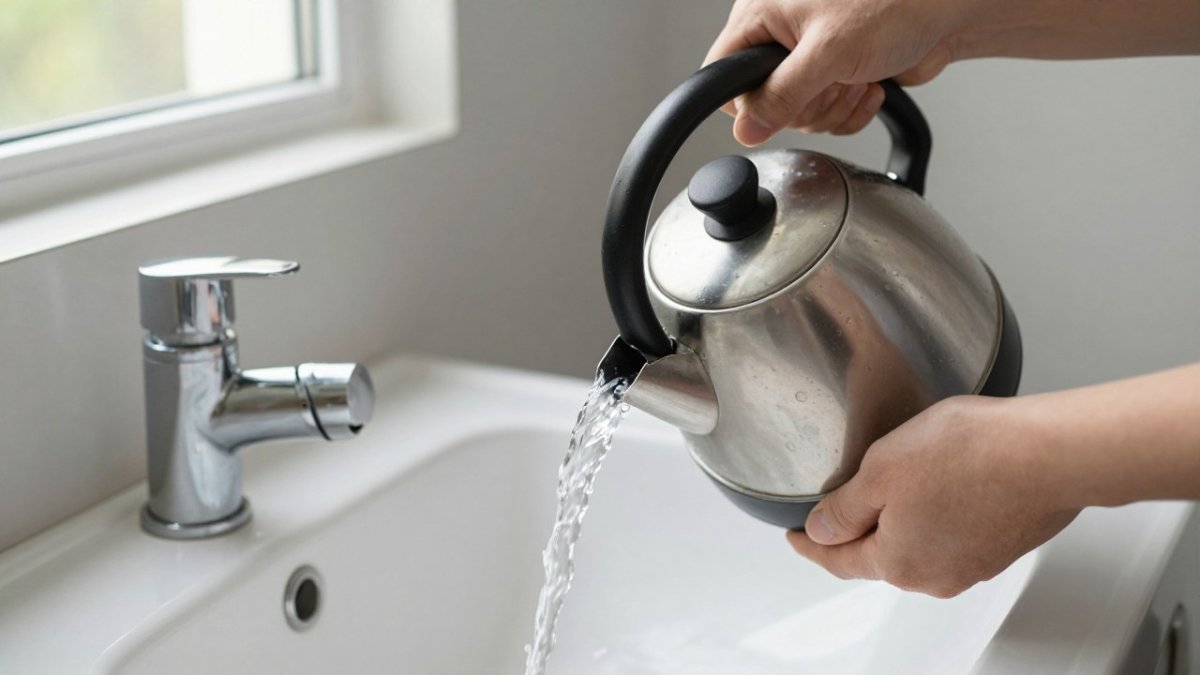
- Flush with hot water. Run the hottest tap water for two minutes to loosen soap buildup.
- Pour baking soda. Add half a cup of baking soda straight down the drain.
- Add white vinegar. Pour one cup of white vinegar over the baking soda. It will fizz, so keep the drain covered with a stopper or cloth for a few minutes.
- Let it sit. Wait 15 to 30 minutes so the mixture can loosen residue.
- Flush again. Run very hot water for several minutes to rinse everything out.
A common mistake is skipping the rinse. Leftover baking soda can mix with later cleaners and cause problems, so always finish with plenty of hot water.
This method works best on light buildup. It will not clear a solid hair clog or a blockage deep in the pipe.
The article's no-tools method comes down to a few steps, each with a timing you can follow.
| Step | What to do | Time |
|---|---|---|
| Flush with hot water | Run the hottest tap water | Two minutes |
| Pour baking soda | Add half a cup straight down the drain | Immediately |
| Add white vinegar | Pour one cup over the baking soda | Keep drain covered for a few minutes |
| Let it sit | Allow the mixture to loosen residue | 15 to 30 minutes |
| Flush again | Run very hot water to rinse out | Several minutes |
Best Tools for Unclogging Sink Drains
Some tools make the job easier than others. A basic cup plunger is the best starting point for most sinks, since it costs very little and works well on fresh clogs.
A drain snake, sometimes called an auger, reaches deeper clogs. Feed it into the drain, turn the handle, and pull out what it catches. Small hand-held snakes work well for bathroom sinks.
Avoid long, heavy tools in a small sink opening. They can scratch the pipe or push the clog further down.
Removing the Stopper and Cleaning the P-Trap
If the drain is still slow after plunging and a household mixture, the clog is likely sitting in the stopper assembly or the P-trap, the curved pipe below the basin.
Before you touch anything, set up the work area. Place a bucket directly under the P-trap, lay a towel or shallow pan on the cabinet floor, and clear out bottles and boxes so you have room to turn a wrench.
Identify your stopper type first. Pop-up stoppers come in a few common styles, and the removal method differs:
- Lift-and-turn stoppers pull straight up and twist out by hand.
- Push-button stoppers often unscrew counterclockwise from the top.
- Stoppers held by a pivot rod require reaching under the sink, loosening the retaining nut on the back of the drain body, and pulling the pivot rod out so the stopper lifts free.
If you force a pivot-rod stopper upward, you can bend the rod or crack the drain body. When in doubt, look under the sink before pulling.
Clean the stopper and the drain opening. Hair and soap residue collect on the stopper's underside and around the drain flange. Pull off what you can with gloved fingers or tweezers, rinse the stopper under hot water, and wipe the flange opening with a rag.
Loosen the P-trap slip nuts by hand. Most plastic traps have two slip nuts, one at each end of the curved section. Turn them counterclockwise by hand; if they are stuck, use slip-joint pliers with a rag wrapped around the nut to avoid cracking the plastic. Do not force metal nuts on older brass traps, which can strip or deform.
Empty and clean the trap. Lower the trap into the bucket, dump the water, and scrape out the debris with a small brush or rag.
Reassemble with care. Seat each slip nut washer flat against the pipe, hand-tighten the nuts, then give each a quarter turn with pliers. Over-tightening cracks plastic washers and is a common cause of leaks.
Run water and check every connection. Turn on the hot tap and let it run for a full minute while you watch each slip nut with a flashlight and a dry paper towel.
Watch out: never use pliers to crank down on a plastic slip nut that already feels tight; if it still drips, the washer is likely misaligned or worn and should be replaced rather than tightened further.
Chemical Cleaners: When They Help and When They Don't
Chemical drain cleaners are a tool many homeowners misunderstand. They can dissolve some organic buildup, but they fail on the two most common bathroom-sink clogs, solid hair masses and deep blockages, and they carry real risks that the label does not fully explain.
What chemical cleaners can and cannot do. Most consumer drain cleaners fall into two groups: caustic (lye-based) products that break down grease and soap scum, and acidic products that attack mineral and organic matter. Both work best on thin, smeared buildup along pipe walls. Neither reliably dissolves a dense hair clog wrapped around a stopper, and neither can push past a blockage that is physically plugging the pipe.
Never mix chemical cleaners, with each other or with household remedies. Combining a caustic cleaner with an acidic one, or adding vinegar or baking soda after a commercial cleaner, can trigger a violent reaction that releases heat, fumes, and splashing liquid. The same applies to using two different commercial products back to back.
Chemical cleaners and your plumbing. Repeated use of caustic cleaners can soften and degrade older plastic pipes, accelerate corrosion in metal drain lines, and damage rubber gaskets and washers in the P-trap. If you use them, read the label for the maximum contact time and never leave a cleaner sitting in the trap overnight.
When chemical cleaners are the wrong choice. Skip them entirely if:
- The sink has standing water that will not drain at all.
- You have already tried a plunger or snake, or plan to.
- The drain is served by older metal or questionable plastic piping.
- Anyone in the home has respiratory sensitivity, and the bathroom lacks ventilation.
- The clog is clearly hair at the stopper, mechanical removal is faster and safer.
If you do use one, handle it safely. Wear gloves and eye protection, open a window or run the exhaust fan, pour slowly to avoid splashing, and never lean over the drain while the product is reacting. Keep children and pets out of the bathroom until the drain is flushed and the area is rinsed.
Watch out: if a chemical cleaner has been sitting in the sink and the drain still will not clear, do not plunge or snake it, call a plumber and tell them what product was used so they can handle it safely.
When to Call a Professional Plumber for Drain Issues
Call a plumber if the drain stays slow after the methods above, or if more than one fixture backs up at once. Those signs can point to a problem in the main line rather than the sink itself.
Other warning signs include gurgling sounds from other drains, sewage odors, and water backing up into the tub or toilet. These issues can cause damage fast, so do not wait.
A professional may have tools such as power augers and camera inspection systems for deep blockages.
Booking Colby Plumbing for a Drain Problem That Won't Clear
If your sink still drains slowly after you have tried these steps, Colby Plumbing Company LLC can help. We have served the Denver metro area since 1996, and our licensed team handles both repairs and emergency calls.
Our team is family owned and operated. We aim to be fast and to stand behind our work. Contact us today to schedule a visit and get your drains flowing again.
Frequently Asked Questions
What is the best way to unclog a slow-draining sink?
Start with the least invasive method. Remove the stopper and clear visible hair with gloves or a bent wire. Then pour boiling water down the drain in short bursts, or try a half cup of baking soda followed by a cup of white vinegar, covered for 15 to 20 minutes and flushed with hot water. If the water still drains slowly, use a cup-style plunger with enough water to cover the cup, then clean the P-trap. Most slow drains clear within these first steps.
Is it safe to pour bleach down the sink to clear a clog?
Bleach is not a good choice for a slow drain. It does not dissolve hair or grease well, and it should never be mixed with vinegar, ammonia, or other drain cleaners because the combination can release toxic gases. If you have used a chemical drain cleaner, avoid following it with a plunger or another cleaner, since splashback can cause burns. Read the product label, ventilate the room, and wear eye protection. If a chemical product fails to clear the drain, stop and call a plumber rather than adding more.
Why is my sink draining slowly even when there is no visible clog?
A slow drain without a visible blockage usually points to buildup farther down the line. Soap scum and hair can coat the inside of the P-trap or drain pipe, narrowing the opening over time. A partially blocked vent can also slow drainage because air cannot enter the pipes properly. If removing the stopper and flushing with hot water does not help, clean the P-trap. If several fixtures in the home drain slowly, the problem may be in the main line and should be evaluated by a professional.
When should I call a professional plumber for a slow drain?
Call a plumber if the drain stays slow after you have tried the plunger and P-trap cleaning, if water backs up into other fixtures such as a tub or toilet, if you notice gurgling sounds from other drains, or if you smell sewage. Repeated clogs in the same sink also suggest a problem beyond the trap. Colby Plumbing Company LLC is a licensed plumbing company serving the Denver metro area, and you can contact us for help with your drain.