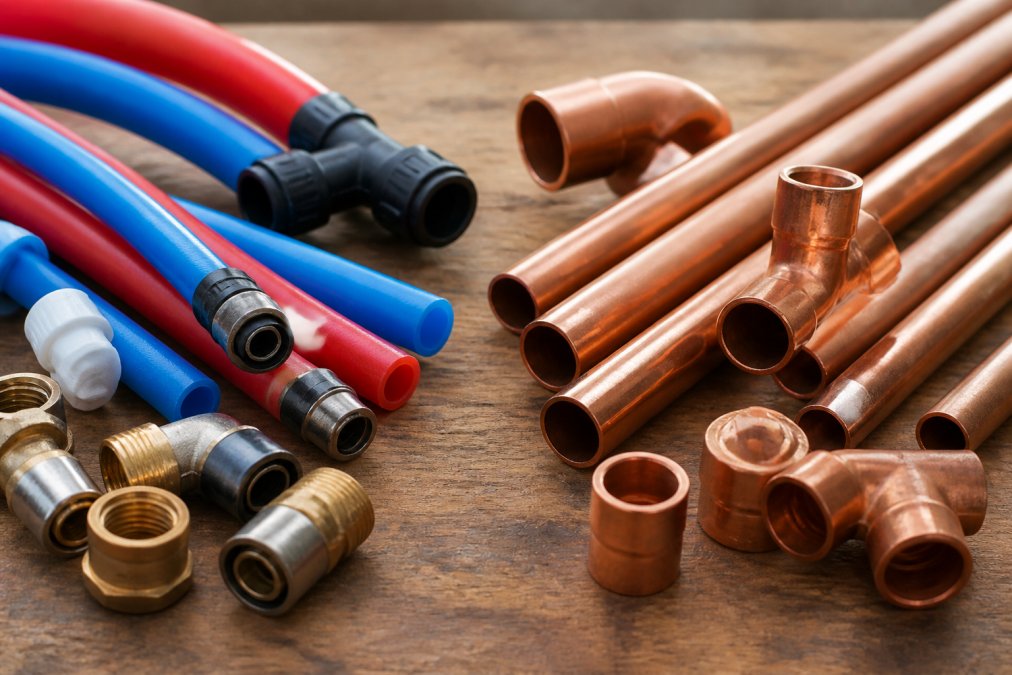
 comparison
PEX vs Copper Plumbing: Pros, Cons & Cost
Table of Contents
- PEX vs Copper Plumbing: Quick Comparison
- Material Cost Comparison and Installation Labor
- Durability, Lifespan, and Corrosion Resistance
- PEX Plumbing Installation Best Practices
- Environmental Impact, Water Quality, and Health
- Insurance, Resale Value, and Regional Climate Suitability
- Which Piping System Should You Choose?
- Frequently Asked Questions
Last Updated: September 17, 2026
PEX vs Copper Plumbing: Quick Comparison
The choice between PEX and copper plumbing shapes your project's cost, timeline, and long-term performance. Both materials have legitimate strengths, but they solve different problems. Colby Plumbing Company LLC has installed both systems across residential and commercial projects in the Denver metro area. The decision depends on your budget, climate, and how long you plan to stay in the home.
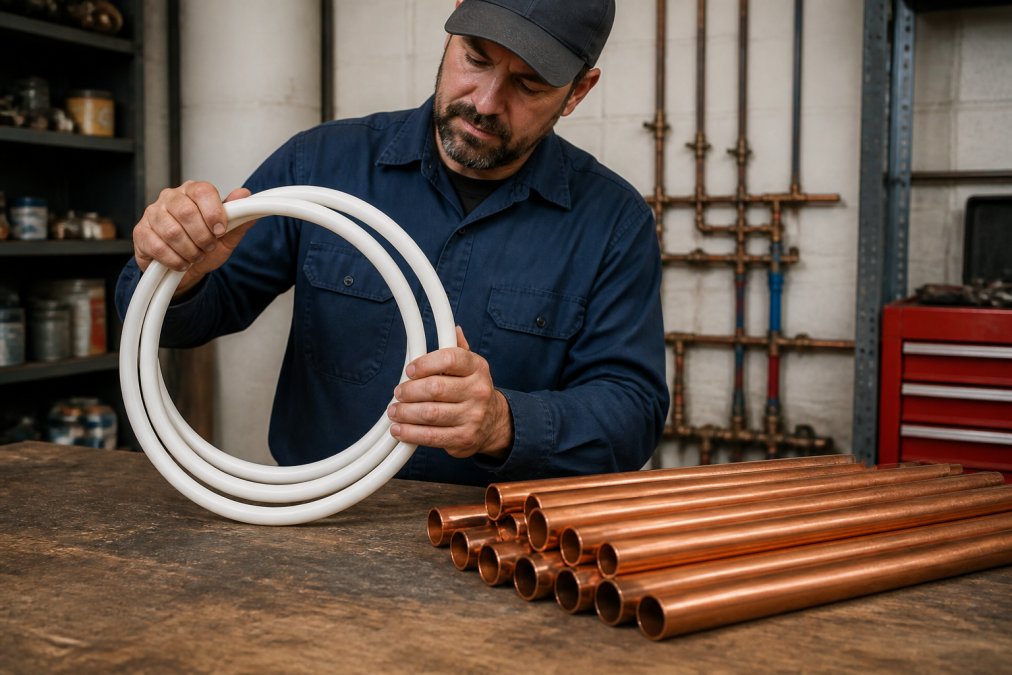
PEX (cross-linked polyethylene) is flexible, corrosion-resistant, and cheaper to install. Copper is proven, durable, UV-resistant, and carries higher resale value in many markets. The question is which aligns with your specific situation.
| Feature | PEX | Copper | Winner |
|---|---|---|---|
| Material Cost | Lower | Higher | PEX |
| Installation Labor | Faster, less skilled | Slower, requires soldering | PEX |
| Lifespan | 40-50 years typical | 50-70 years proven | Copper |
| Corrosion Resistance | Excellent | Susceptible over time | PEX |
| UV Resistance | None (indoor only) | Excellent | Copper |
| Freeze Protection | Good (expands safely) | Poor (can burst) | PEX |
| Resale Appeal | Growing acceptance | Traditional preference | Copper |
Material Cost Comparison and Installation Labor
PEX costs roughly 30-50% less than copper for materials and installs faster because it requires fewer fittings and no soldering, typically days rather than weeks.
Copper requires skilled labor for soldering or press-fit connections. A single cold solder joint can lead to leaks months later. For a 2,000-square-foot home, the labor difference can represent thousands of dollars.
Copper trades as a commodity and prices swing with global markets. PEX pricing is more stable because it's petroleum-based, though it still moves with energy costs.
PEX can be routed through walls and tight spaces without additional fittings thanks to its flexibility. Copper requires elbow fittings at every direction change, adding material and labor costs. In retrofit situations, PEX's adaptability saves both time and money.
Durability, Lifespan, and Corrosion Resistance
Copper has a documented 50-70 year service life. Many homes built in the 1970s still have original copper plumbing performing flawlessly.
PEX is warranted for 40-50 years and performs well beyond that in protected indoor environments. The material doesn't corrode like copper does.
Copper's weakness is electrolysis and mineral scaling. In areas with aggressive water chemistry, copper develops pinhole leaks over time. Mineral build-up inside copper pipes also restricts water flow as the system ages, especially in hard water regions.
PEX is immune to electrolysis and mineral scaling. The smooth interior surface resists buildup that would restrict flow in copper pipes.
PEX Plumbing Installation Best Practices
Installation Methods and Connection Systems
Three main connection systems exist: crimp connections, clamp rings, and expansion fittings.
Crimp connections use a specialized crimping tool ($150-$400) to compress a copper or stainless-steel ring onto the tubing and fitting. Crimp rings cost $0.50-$1.50 each. Every connection requires tool precision, too loose and it leaks immediately; too tight and you damage the fitting. This is the most common failure point in DIY installations.
Clamp systems (like Sharkbite) use a band that tightens with a screw or lever. They're slower than crimping but more forgiving and cost $2-$4 each. They're popular for repairs and small projects because they require minimal tool investment.
Expansion fittings (like Uponor's ProPEX) rely on thermal memory: the tubing expands onto the fitting and shrinks back as it cools, creating a permanent seal. The expansion tool costs $500-$1,200, making it impractical for homeowners but justified for professional installers across multiple jobs.
DIY vs. Professional Installation: A Realistic Assessment
DIY-friendly tasks: Replacing a single fixture supply line using clamp fittings, extending an existing PEX line, repairing a small section of damaged tubing, or installing PEX in new construction with open walls. These require basic tools (tubing cutter, crimper or clamp tool, adjustable wrench) and $200-$400 tool investment.
Professional-only tasks: Full-home repiping, connecting to the main water line or water heater, installing a manifold system, soldering or press-fit connections to existing copper lines, and repairs behind walls or in crawlspaces. Building codes require licensed plumbers for this work and permits. Unpermitted work voids insurance coverage and triggers fines.
Support, Routing, and System Design
PEX must be supported every 32 inches horizontally and at every direction change to prevent sagging or kinking. Use plastic or foam clips designed for PEX; metal clips can abrade the tubing.
Route tubing away from sharp edges, hot surfaces, and areas where it could be punctured. Keep PEX at least 6 inches away from furnace vents, hot water heater flues, or other heat sources.
Manifold systems centralize all connections in one location, reducing connection points, improving water pressure consistency, and simplifying repairs. Professional installers prefer manifold systems for new construction because they reduce labor time and improve reliability. For retrofit projects, manifolds are more complex because you must route all lines from a central point.
Code Compliance and Inspection
Local plumbing codes govern PEX installation and requirements vary by jurisdiction. Contact your local building department before starting work to confirm permit requirements and inspection checkpoints. Unpermitted work voids insurance coverage and creates problems when you sell the home.
Environmental Impact, Water Quality, and Health
PEX manufacturing produces less waste than copper mining and refining. However, PEX is petroleum-based, which carries environmental considerations around fossil fuel extraction.
Copper is infinitely recyclable without degradation and recycled copper content in new piping is common.
Water quality concerns around PEX focus on leaching under certain conditions, particularly with chlorinated water or elevated temperatures. Research shows amounts are well below EPA safety thresholds. Copper doesn't leach chemicals, though it can leach copper ions into soft water.
Both materials meet code requirements. Hard water favors PEX because mineral scaling won't accumulate. Soft water with high chlorine levels might favor copper to avoid leaching concerns, though the risk is minimal.
Insurance, Resale Value, and Regional Climate Suitability
Insurance Implications
Insurance companies treat PEX and copper differently depending on the underwriter and your home's age. Some major insurers accept PEX without premium adjustments on homes built after 2000, but may charge 5-15% higher premiums for PEX in older homes. Some insurers still mandate copper for any home seeking coverage.
Before committing to full PEX repiping, contact your homeowner's insurance agent to confirm whether PEX affects your premium, coverage limits, or deductibles. Some policies impose higher deductibles for water damage claims if PEX is installed, adding $500-$2,000 over the life of your policy.
Resale Value and Buyer Perception
Copper commands a modest resale premium in established neighborhoods, typically 2-4% higher sale price. This matters most in markets where homes sell above $400,000 and buyers conduct detailed inspections.
Regional Climate Performance
Freeze-prone climates: PEX is the clear winner. When water freezes inside PEX tubing, the material expands safely without rupturing. Copper pipes will crack or burst under ice pressure, causing $5,000-$25,000 in water damage. In regions with hard freezes, Denver, Minneapolis, Buffalo, PEX's freeze tolerance is a genuine safety advantage, especially for exposed pipes in unheated crawlspaces, attics, or exterior walls.
Which Piping System Should You Choose?
Choose PEX if you're repiping on a budget, live in a cold climate, have high mineral content water, or are installing a manifold system for better pressure consistency.
Frequently Asked Questions
Why do some insurance companies have concerns about PEX plumbing?
Some insurers historically questioned PEX due to its relative newness compared to copper's 70+ year track record. However, modern PEX systems have proven reliable for decades. A few insurers may charge slightly higher premiums for PEX or require specific installation standards, but most now recognize PEX as acceptable. Check with your insurer before choosing a piping system for a major repiping project, as requirements vary by region and policy.
What is the cost of repiping a house with PEX vs copper?
PEX typically costs 30-50% less than copper for material and labor combined, primarily because PEX requires no soldering and installs faster. However, final pricing depends on your home's size, layout, local labor rates, and whether you need to remove old piping. Contact Colby Plumbing for a detailed quote tailored to your specific repiping needs.
How does the lifespan of PEX vs copper pipes compare?
Copper pipes typically last 50-70 years with minimal maintenance, while quality PEX systems are rated for 50+ years. Both can perform well beyond their rated lifespan if properly installed. The key difference: copper degrades predictably from corrosion and electrolysis, while PEX's long-term performance depends on proper UV protection and avoiding exposure to certain chemicals during installation.
Can PEX be used for outdoor or exposed installations?
No. PEX cannot be exposed to direct sunlight because UV light degrades the material over time. Copper is UV resistant and suitable for outdoor lines, roof penetrations, and visible installations. If you need outdoor piping or exposed runs, copper is the better choice. PEX must be installed inside walls, under floors, or in protected areas.