 how-to
How to Choose the Right Water Heater Size for Your Home
Table of Contents
- Why Getting Your Water Heater Size Right Matters
- Start With Household Size and Occupancy
- Peak Hour Demand Calculation: The Step Most Homeowners Skip
- First-Hour Rating Explained (And Why Tank Capacity Alone Misleads)
- Tank vs Tankless Water Heater Sizing: Different Math, Different Constraints
- Sizing for Your Climate, Smart Home Setup, and Retrofit Reality
- Common Sizing Mistakes That Cost You Money
- Frequently Asked Questions
Last Updated: September 10, 2026
Why Getting Your Water Heater Size Right Matters
Sizing a water heater correctly is the difference between endless hot showers and a cold surprise halfway through. Get it wrong and you either run out of hot water at peak demand or pay to heat a tank larger than your household will ever use. This guide walks through how to choose the right water heater size: start with occupancy, calculate peak hour demand, then match the unit's first-hour rating to that number.
The stakes are higher than most homeowners expect. An undersized unit fails during the exact moments you need it most, while an oversized tank wastes energy keeping water hot that nobody uses. Department of Energy guidance on water heating notes that water heating is typically the second-largest energy expense in a home, which makes sizing a financial decision as much as a comfort one.
Start With Household Size and Occupancy
Household size sets the floor for your sizing calculation. A single occupant and a family of five have fundamentally different hot water profiles, and occupancy is the first number every sizing formula needs.
Count the people who live in the home, then adjust for how they actually use water:
- One to two people: a smaller tank or a modest demand-type unit often suffices
- Three to four people: mid-range tank capacity with a solid recovery rate
- Five or more: high first-hour rating, or a tankless system sized to run multiple fixtures at once
Occupancy alone isn't enough. A household of three with two teenagers taking long showers draws more hot water than a household of four with staggered morning routines. Daily consumption patterns matter as much as headcount.
Peak Hour Demand Calculation: The Step Most Homeowners Skip
Peak hour demand is the maximum hot water your household uses in a single busy hour, usually the morning rush. Most homeowners skip this step and size by tank gallons instead, which is exactly how undersized systems get installed.
How to Build Your Peak Hour Demand Number
Add up the hot water each fixture uses during your busiest hour. Typical flow rates:
- Shower: roughly 2.0 to 2.5 gallons per minute
- Bathroom faucet: about 0.5 to 1.5 gallons per minute
- Kitchen faucet: about 1.0 to 2.0 gallons per minute
- Dishwasher: draws a fixed volume per cycle, not a continuous flow
- Washing machine: also a fixed volume per cycle
Multiply each fixture's flow rate by the minutes it runs during that peak hour, then total them. Two showers running simultaneously for 10 minutes each at 2.5 GPM is 50 gallons before you've counted a single faucet.
A Worked Example: Family of Four, Morning Rush
Here's the math for a household of four, two adults and two teenagers, getting ready between 6:30 and 7:30 a.m.:
| Fixture | Flow Rate | Minutes in Peak Hour | Gallons Used |
|---|---|---|---|
| Shower 1 (adult) | 2.5 GPM | 10 | 25 |
| Shower 2 (teen) | 2.5 GPM | 12 | 30 |
| Bathroom faucet (shaving) | 1.0 GPM | 5 | 5 |
| Kitchen faucet (breakfast) | 1.5 GPM | 4 | 6 |
| Dishwasher (one cycle) | fixed | , | 6 |
| Washing machine (one cycle) | fixed | , | 7 |
| Total peak hour demand | 79 gallons |
That 79-gallon figure is your target, and your water heater's first-hour rating must meet or exceed it. The two showers alone account for 55 of the 79 gallons, simultaneous shower use is almost always the dominant driver of peak demand.
Adjusting for Your Climate's Groundwater Temperature
This is where most online calculators get it wrong. The peak hour demand number above assumes a certain incoming water temperature, but groundwater temperature varies dramatically by region and season, changing how hard your water heater has to work.
Groundwater entering a home in the upper Midwest or Northeast can arrive in the 40s during winter, while Sun Belt groundwater often sits in the 60s or low 70s year-round (energy.gov). That 20- to 30-degree difference means the same water heater delivers noticeably less hot water in a cold-climate home, because more of the burner's output goes toward raising the incoming water to the target temperature.
Treat your peak hour demand number as a floor, not a ceiling, in a region with cold winter groundwater, a unit that exactly matches 79 gallons in July may fall short in January. Many installers add a 10 to 15 percent buffer for cold-climate homes.
Converting Peak Demand Into an FHR Target
Once you have your peak hour demand, add your climate buffer if applicable, then look for a water heater whose first-hour rating meets or exceeds that adjusted number. Do not shop by tank gallon label alone, a 50-gallon tank with a high-BTU burner can carry a higher FHR than a 60-gallon tank with a weak one.
First-Hour Rating Explained (And Why Tank Capacity Alone Misleads)
First-hour rating (FHR) is the total gallons of hot water a tank can deliver in one hour, starting from a fully heated tank. It combines stored tank capacity with recovery speed, which is why two 50-gallon tanks can perform very differently.
A 50-gallon tank with a weak burner might deliver 60 gallons in the first hour; with a strong burner, 80 (energy.gov). Tank capacity tells you the storage; FHR tells you real-world performance.
This is the number to match against your peak hour demand. If your peak demand is 70 gallons, a unit with an FHR of 65 will leave someone in the cold.
Recovery Rate, BTU Input, and Groundwater Temperature
Recovery rate is how many gallons the unit can reheat per hour, driven by BTU input on gas models or wattage on electric resistance units. Higher BTU input means faster recovery and a higher FHR.
Groundwater temperature sets the starting point. Water entering the tank in a cold climate arrives colder, so the unit must add more heat to reach your target temperature rise, meaning slower recovery and a lower effective FHR than in a warmer region.
| Factor | What It Affects | Why It Matters |
|---|---|---|
| Tank capacity | Stored hot water | Sets your buffer, not your hourly output |
| BTU input | Recovery rate | Higher input means faster reheating |
| Groundwater temperature | Temperature rise | Colder intake slows recovery |
| First-hour rating | Total hourly delivery | The number to match against peak demand |
Tank vs Tankless Water Heater Sizing: Different Math, Different Constraints
Tankless water heater sizing is about flow rate and temperature rise, not storage. A demand-type unit heats water as it passes through, so it has no tank capacity to fall back on.
Flow Rate, Temperature Rise, and Venting Requirements
Tankless units are rated by gallons per minute (GPM) at a specific temperature rise. A unit rated at 8 GPM at a 35-degree rise delivers less GPM when the incoming groundwater is colder and the required rise is larger.
To size a tankless unit, add the flow rates of the fixtures you expect to run simultaneously, then confirm the unit can hit that combined GPM at your climate's temperature rise. Two showers plus a dishwasher at once demands far more flow than a single shower.
Venting also constrains installation. Gas tankless units need specific ventilation space and vent runs, which can rule out certain closets, basements, or retrofit locations. Electric tankless units avoid venting but demand heavy electrical service. Check local plumbing code before committing to a location.
Sizing for Your Climate, Smart Home Setup, and Retrofit Reality
Climate-specific sizing is the angle most guides ignore. A unit that performs well in a mild region may fall short where groundwater enters significantly colder, because the required temperature rise is larger and recovery slows. This section covers the practical constraints that decide whether your calculated size actually works in your home.
Climate and Groundwater Temperature: The Variable Most Guides Skip
Groundwater temperature is the starting point for every recovery calculation, and it varies more than most homeowners realize. Water entering a northern home can arrive in the 40s during winter, while southern groundwater often sits in the 60s or low 70s year-round. That 20- to 30-degree spread changes how much of your water heater's output goes toward raising incoming water to the target temperature versus delivering hot water to your fixtures.
The practical effect: the same model delivers a lower effective first-hour rating in a cold-groundwater home than a warm-groundwater one. If you sized your unit with a generic online calculator assuming a national average groundwater temperature, you may have undersized it, cold-climate homeowners often discover their new unit runs out of hot water in January even though it performed fine in July.
The fix is straightforward: when you calculate peak hour demand, use your region's winter groundwater temperature as the starting point, not a summer or annual average. If you don't know it, a licensed plumber or your local utility can typically provide it, and many state extension services publish regional groundwater temperature maps.
Smart Home Integration and Usage Patterns
Smart water heater controllers and connected thermostats let you schedule heating around actual demand, reducing standby heat loss during low-use hours. If you're installing one, factor it into your sizing: you may be able to run a slightly smaller unit because you're no longer heating water around the clock.
But smart controls also change the shape of your peak demand. A household that schedules showers around a controller's recovery windows may concentrate hot water use into a narrower band, which can actually raise peak hour demand even as it lowers total daily consumption. Size for the peak, then use the smart controller to manage the off-peak, not the other way around.
Some utilities offer demand-response programs that briefly cycle your water heater during grid peaks. If you enroll, confirm your unit's recovery rate can catch up after a cycling event without leaving you short during your own peak hour.
Retrofitting: When the Right Size Won't Fit
Retrofitting brings its own constraints. Replacing a tank with a tankless unit often requires upgraded gas lines, new venting, or added electrical capacity, while replacing like-for-like locks you into the original footprint.
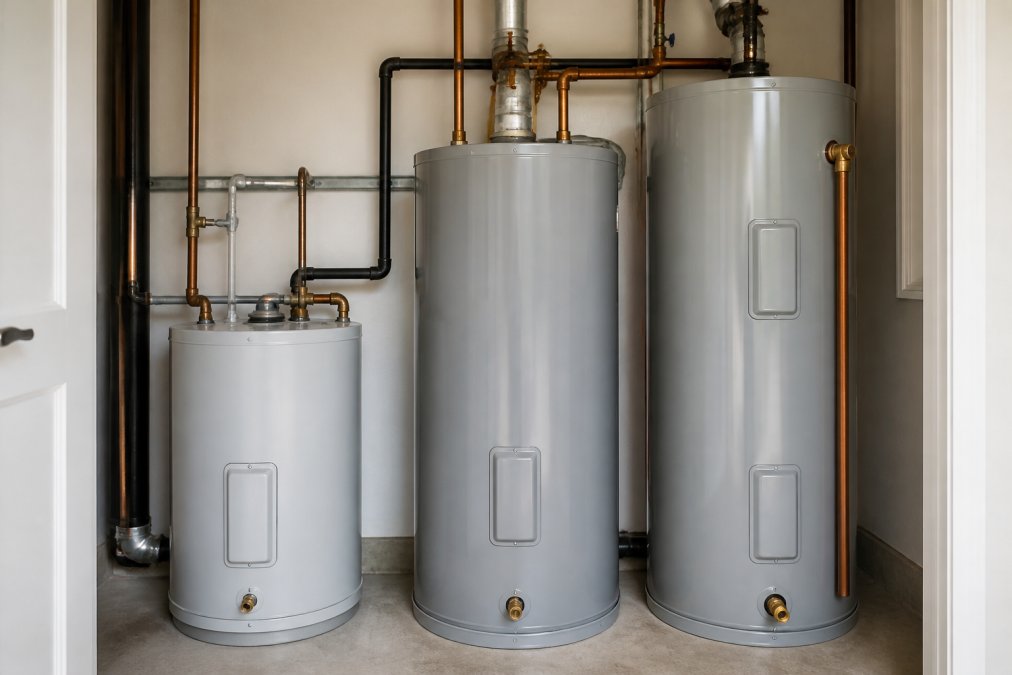
The most common retrofit problem is a utility closet or basement corner sized for the original tank that can't accommodate a larger unit, even when the math says you need one. Options include:
- Choosing a tank with a higher first-hour rating in the same physical footprint (higher BTU input, same tank size)
- Switching to a tankless unit that mounts on a wall and frees up floor space, if gas, venting, and electrical service allow
- Relocating the unit to a different space with adequate clearance and venting
- Adding a second smaller unit in a split system if the home's layout supports it
Measure your available installation clearance and unit footprint before you buy, and confirm venting requirements fit the space. Gas tankless units in particular need specific vent runs that can rule out certain closets and basements.
Lifecycle Cost Analysis: Oversized vs. Undersized Over 10 Years
Sticker price is the least useful number in the decision. A cheaper unit with a low energy factor costs more to run over its lifespan, and the gap between a slightly oversized and a slightly undersized unit shows up in different places on your utility bill.
An oversized tank wastes energy on standby heat loss, keeping water hot that nobody uses 24 hours a day. An undersized unit runs longer and harder to keep up, accelerating wear and shortening service life, and it risks the cold-shower failure that prompted the replacement in the first place.
A practical way to compare: estimate each candidate's annual operating cost using its energy factor or uniform energy factor rating, multiply by expected service life (typically 8 to 12 years for a tank, 15 to 20 for a well-maintained tankless), and add the purchase and installation price. The lowest total is usually the unit sized correctly for your actual peak demand, not the cheapest upfront and not the largest available.
Common Sizing Mistakes That Cost You Money
Oversizing and undersizing both carry real costs, and both trace back to the same shortcut: guessing instead of calculating.
The most frequent mistakes we see:
- Sizing by tank capacity instead of first-hour rating
- Ignoring groundwater temperature and temperature rise
- Forgetting that simultaneous fixture use drives peak hour demand
- Overlooking installation clearance and venting requirements
- Skipping lifecycle cost analysis and buying on sticker price alone
Oversizing wastes energy on standby heat loss and costs more upfront. Undersizing means cold showers, early tank failure from overwork, and a replacement sooner than necessary. Neither is a bargain.
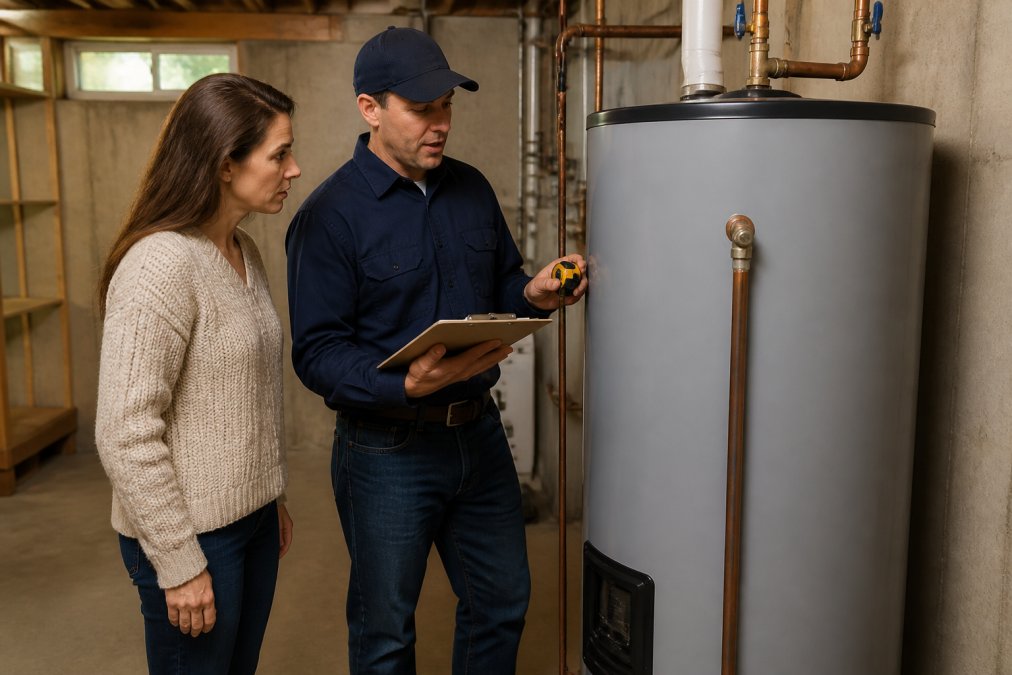
If you'd rather not run the math yourself, a licensed plumber can measure your peak demand and confirm the right unit for your home. Colby Plumbing Company LLC has handled residential and commercial water heater installations across the Denver metro area since 1996, and our team can verify your sizing before you buy.
| Mistake | Fix | Impact |
|---|---|---|
| Sizing by tank gallons | Match first-hour rating to peak demand | Prevents cold-water shortfalls |
| Ignoring groundwater temp | Adjust for your climate's temperature rise | Keeps recovery realistic in winter |
| Skipping fixture math | Add simultaneous flow rates | Avoids undersized tankless units |
| Overlooking venting | Check installation clearance first | Prevents failed retrofits |
Getting water heater size wrong means living with the consequences every single day, from cold showers to higher utility bills. Colby Plumbing Company LLC takes the guesswork out of the decision: our licensed technicians calculate your peak hour demand, match it to the right first-hour rating, and confirm venting and clearance before installation. With a 100% satisfaction guarantee and service across the Denver metro area since 1996, we'll size your system correctly the first time. Contact us today to schedule your water heater assessment.
Frequently Asked Questions
Is a 40-gallon water heater enough for a family of four?
A 40-gallon tank works for some families of four, but it depends on usage patterns and the unit's first-hour rating. If everyone showers back-to-back in the morning, a 40-gallon tank with a low recovery rate will run cold. Check the FHR on the yellow EnergyGuide label: you want it to meet or exceed your peak hour demand. A family of four typically needs 50 to 75 gallons of hot water during the busiest hour.
What is the difference between first-hour rating and tank capacity?
Tank capacity is simply how much water the tank holds at one time. First-hour rating (FHR) measures how much hot water the unit can deliver in one hour starting from a fully heated tank, factoring in recovery rate. A 50-gallon tank with a strong burner might deliver 80 gallons in an hour. Two tanks of the same capacity can have very different FHRs, which is why FHR is the number that actually tells you whether the heater keeps up.
Do tankless water heaters require different sizing considerations?
Yes. Tankless sizing uses flow rate in gallons per minute and temperature rise, not tank capacity. You add up the GPM of all fixtures you might run at once, then match that to the unit's rating at your incoming groundwater temperature. Cold groundwater in northern states means a bigger temperature rise and a larger unit. Venting requirements and gas line capacity also differ from tank installations.
How does the number of bathrooms impact water heater sizing?
Each bathroom adds potential simultaneous demand. A home with two full bathrooms where showers overlap needs a higher peak hour demand calculation than a one-bath home with the same number of occupants. Count showerheads, not bathrooms, for the most accurate number. If two people regularly shower at the same time, your sizing must cover both fixtures running together, plus any laundry or dishwasher use.