 how-to
5 Reasons Your Bathtub Drain Keeps Clogging and How to Fix It
Last Updated: October 24, 2026
Quick Summary
Bathtub drain clogging is caused by hair, soap scum, and mineral deposits accumulating inside your pipes. Use a drain snake or zip-it tool to physically remove the blockage, or try natural solutions like baking soda and vinegar for gentler maintenance.
- Hair is the biggest culprit; it tangles and traps other debris in the drain.
- A zip-it tool is a cheap plastic rod with barbs that grabs hair effectively.
- Pour half a cup of baking soda followed by one cup of white vinegar, let sit 30 minutes, then flush with hot water.
- Monthly maintenance includes removing visible hair from the stopper and strainer weekly.
- Call a plumber if the drain stays clogged after snaking or if water backs up into multiple fixtures.
Table of Contents
- Why Your Bathtub Drain Keeps Clogging
- How to Snake a Bathtub Drain Effectively
- Bathtub Drain Hair Clog Removal Without Removing Parts
- Natural Cleaning Solutions for Your Drainage System
- Bathtub Drain Clog Prevention and Long-Term Maintenance
- Signs of a Deep Plumbing Blockage
- When to Call a Plumber for a Clogged Bathtub Drain
- Schedule a Professional Drain Inspection Today
- Frequently Asked Questions
Why Your Bathtub Drain Keeps Clogging
Bathtub drain clogging backs up water and forces you to take action repeatedly.
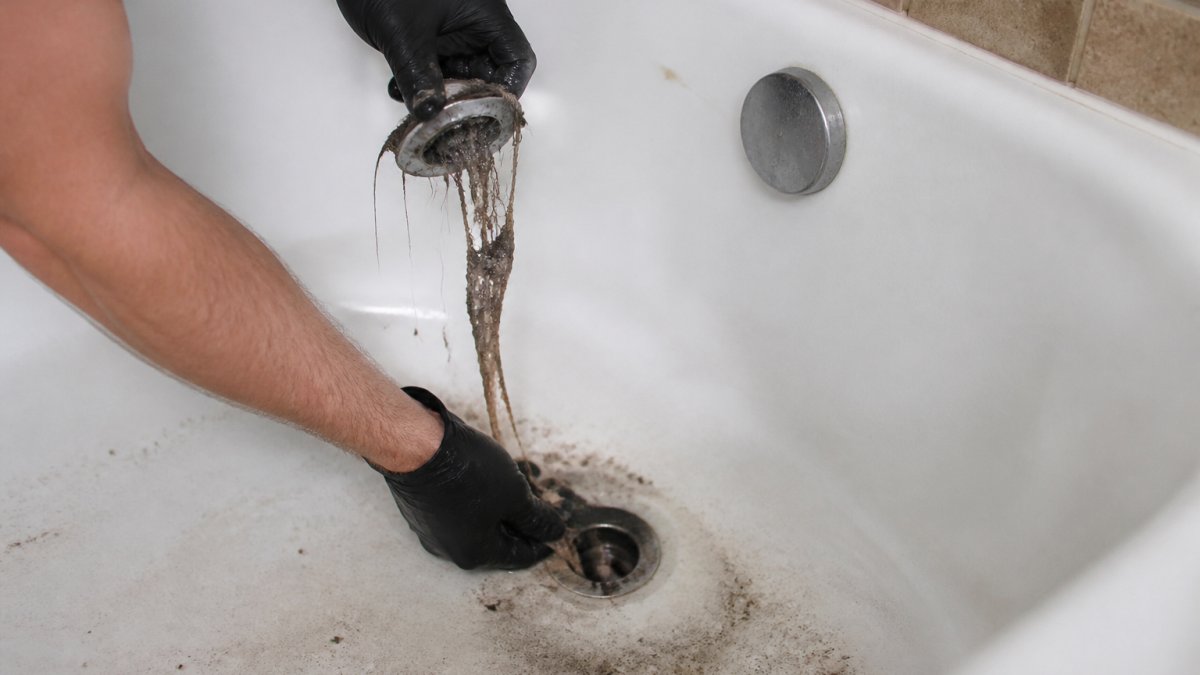
Hair is the biggest culprit. Soap scum builds up next. Mineral deposits from hard water add to the mess.
You can break that cycle. Understanding the causes of bathtub drain clogging is the first step toward choosing the right fix.
Hair, soap scum, and mineral deposits are the main causes of repeated bathtub clogs.
| Cause | What It Is | Why It Clogs |
|---|---|---|
| Hair | Strands from washing | Tangles and traps other debris |
| Soap scum | Residue from soap | Builds up on pipe walls |
| Mineral deposits | Hard water minerals | Accumulate and combine with other materials |
How to Snake a Bathtub Drain Effectively
Snaking a bathtub drain is one of the most reliable DIY methods. A drain snake physically removes the blockage instead of just dissolving it, which works well for hair clogs and debris.
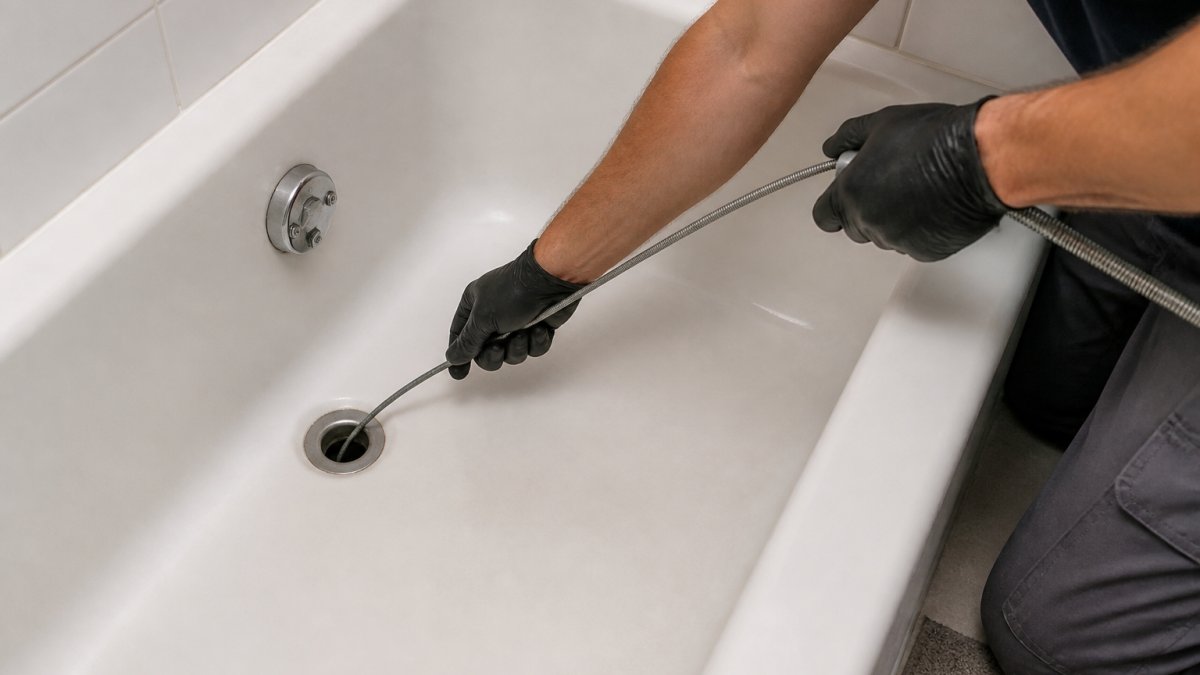
What You'll Need Before You Start
Gather these tools before you start:
- Drain snake or zip-it tool (the most common choice for bathtub clogs)
- Bucket (to catch water and debris)
- Rubber gloves (hair removal gets messy)
A zip-it tool is a cheap plastic rod with barbs that grab hair. A motorized drain snake gives you more power for stubborn blockages. Both are worth having on hand.
Step-by-Step Drain Snake Process
Step 1: Remove the stopper assembly (Time: 2-3 minutes)
Most bathtub stoppers pull straight up. Some twist counterclockwise.
Step 2: Insert the snake slowly (Time: 1-2 minutes)
Feed the snake into the drain opening. Push gently at first.
Step 3: Reach the clog (Time: 3-5 minutes)
Keep feeding the snake down the drain.
Step 4: Break up the clog (Time: 2-3 minutes)
Twist the snake slowly, pulling back slightly then pushing forward again.
Step 5: Flush with hot water (Time: 1-2 minutes)
Remove the snake. Run hot water down the drain for 30 seconds.
Step 6: Reinstall the stopper assembly (Time: 1 minute)
Once drainage improves, put the stopper back.
Watch out: Don't push the snake too hard into the drain.
Bathtub Drain Hair Clog Removal Without Removing Parts
You don't always need to remove the stopper assembly. Hair often tangles just below the drain opening. Insert a zip-it tool, wiggle it around, and pull up, you'll be amazed at how much hair comes out.
This works best for fresh clogs; deeper or compacted blockages need the full snaking process. After removing the hair, pour boiling water down the drain to dissolve soap scum stuck to the pipe walls.
Natural Cleaning Solutions for Your Drainage System
Chemical drain cleaners work fast, but they're harsh on pipes and the environment.
Baking soda and vinegar is the classic combination. Pour half a cup of baking soda down the drain.
Boiling water alone clears many minor clogs. Pour it slowly down the drain; the heat melts soap scum and loosens hair.
You can use baking soda and vinegar for clogged drains with detailed instructions on mixing ratios and timing.
Bathtub Drain Clog Prevention and Long-Term Maintenance
Prevention beats fixing, but effective prevention starts with knowing what kind of drain assembly you have, because maintenance steps differ by stopper type.
Identify Your Stopper Type First
Most guides assume a standard drain. In practice, four stopper styles dominate residential bathtubs, and each one fails differently:
- Lift-and-turn stopper: A flat or slightly domed cap that you rotate a quarter turn to raise or lower. The stopper threads onto a post; hair wraps around that post and the strainer crossbars. To remove it, turn counterclockwise until it lifts free. These are common in builder-grade tubs and are the easiest to service.
- Push-pull stopper: A cap you pull up to open and push down to close. It sits on a stem held by a set screw or friction ring. To remove it, pull the cap to the open position, then unscrew the cap from the stem (usually counterclockwise). Hair tends to collect on the underside of the cap and around the stem seal.
- Toe-touch (foot-actuated) stopper: A spring-loaded cap you press to open or close. The spring cartridge sits inside the drain body. To remove it, the cap usually unscrews from the cartridge; the cartridge itself may need a small retaining nut loosened. These are the most common source of 'the stopper won't stay open' complaints and trap hair in the spring housing.
If you cannot tell which type you have, look at the overflow plate: a trip-lever assembly has a lever handle, while the other three types have a plain cover. Matching your stopper type to the correct removal method prevents the most common DIY damage: stripping stem threads or breaking the spring cartridge.
Monthly Maintenance Schedule by Stopper Type
Make drain care a habit, but tailor it to your assembly:
- Week 1: Pour a kettle of very hot (not boiling) water down the drain after your last shower of the day. This melts soap scum before it hardens.
- Week 2: Remove the stopper (using the method for your type above) and pull visible hair off the strainer and stem with a zip-it tool or needle-nose pliers. Rinse the stopper parts in the sink.
- Week 3: Flush with a half cup of baking soda followed by one cup of white vinegar. Let it sit 30 minutes, then flush with very hot water. This addresses the biofilm that hair anchors to.
This schedule takes minutes but prevents most clogs and catches stopper wear before it becomes a repair.
Pipe Material Still Matters
Stopper type tells you how to clean; pipe material tells you what cleaners are safe:
- PVC pipes (white or gray plastic) are common in newer homes. They resist corrosion but can soften under boiling water. Use very hot tap water, not a rolling boil.
- Cast iron pipes (dark, heavy) are found in older homes. They are strong but prone to internal rust scale that snags hair. Avoid acidic cleaners; enzymatic cleaners work best here.
- Galvanized steel pipes (silver-gray) corrode from the inside over time. Gentle maintenance is essential, and harsh caustic cleaners can accelerate pitting.
When in doubt, use gentle methods. They work for all pipe types and all stopper types.
Signs of a Deep Plumbing Blockage
Not all clogs are in your bathtub drain. Some live deeper in your plumbing system, and the difference determines whether you can fix it yourself or need a plumber. Run a short diagnostic before you buy another tool. Establishing a consistent maintenance routine remains the most effective way to prevent drain clogs before they escalate into complex obstructions requiring professional intervention.
The Fixture Test
Turn on the bathtub faucet and let it run for two minutes. Then flush the toilet in the same bathroom and run the sink. Watch and listen:
- Only the tub drains slowly: The clog is local to the tub drain or its P-trap. This is the most common scenario and is usually solvable with a snake or zip-it tool.
- The tub and the bathroom sink both drain slowly: The clog is likely in the shared branch line that serves that bathroom. A longer snake (15 to 25 feet) may reach it, but a cable machine is often needed.
- The tub backs up when the toilet flushes, or the toilet gurgles when the tub drains: This points to a blockage downstream of the bathroom group, possibly in the main line. Stop using water in that bathroom and call a plumber.
The P-Trap vs. Branch Line Test
If snaking the tub drain did not restore flow, the clog is probably past the P-trap, which sits below the drain and is often accessible through a wall or ceiling access panel. If you can reach the trap, you can often diagnose the clog directly:
- Water standing in the trap and not draining: The clog is between the trap and the branch line. Snake from the trap's cleanout or from the drain opening with a longer cable.
- Trap is clear but the drain still backs up: The clog is in the branch line or main line. A 25-foot hand snake may reach a branch-line clog; a main-line clog usually requires a motorized auger or hydro-jetting.
Other Red Flags
- Gurgling from the toilet or another drain when the tub drains indicates a venting problem or a partial main-line blockage.
- Foul smells that persist after cleaning the tub drain suggest sewer gas escaping through a dry or failed trap, or a blockage holding waste in the line.
- Multiple slow fixtures across the house point to the main line, not the tub.
These signs mean you need professional help. A plumber can run a camera through the line to see exactly where the blockage is and whether the pipe is damaged. Learn more about main sewer line clogs to understand when the problem goes beyond your bathtub drain.
When to Call a Plumber for a Clogged Bathtub Drain
DIY methods work for most bathtub clogs. But some situations require professional expertise.
Call a plumber if:
- Your drain stays clogged after trying snaking and natural cleaners
- You suspect damage to your pipes
- The clog is in your main sewer line
A professional plumber has tools you don't and can clear stubborn blockages quickly while identifying underlying problems you might miss.
The cost of a service call is less than the damage from a burst pipe or sewage backup. Professional drain cleaning services explain what to expect during a service visit and how long the process typically takes.
Schedule a Professional Drain Inspection Today
Repeated clogs mean something deeper is wrong, a pipe defect, improper slope, or a structural issue you can't see.
Colby Plumbing Company LLC has served the Denver metro area since 1996. Our licensed professionals diagnose drainage problems accurately.
We offer fast service, transparent pricing, and a 100% satisfaction guarantee.
Don't wait for the next backup. Contact us today to schedule a professional drain inspection.
Frequently Asked Questions
What causes a bathtub drain to keep clogging repeatedly?
Repeated bathtub drain clogs typically result from hair accumulation, soap buildup, and debris becoming trapped in the P-trap or stopper assembly. Over time, these materials combine to restrict drainage flow. Slow draining worsens the problem by allowing more debris to settle. Regular preventative maintenance and hair removal can significantly reduce recurrence. If clogs return within weeks despite your efforts, a deeper pipe obstruction or structural issue may require professional assessment.
Can you use a drain snake in a bathtub safely?
Yes, a drain snake is one of the safest DIY tools for unclogging a bathtub drain. Unlike caustic chemicals that risk pipe damage and injury, a drain snake physically removes debris without harming your drainage system. A standard 25-foot snake works well for most residential clogs in the P-trap and drain trap areas. Avoid forcing the snake if it meets resistance; gentle, steady pressure is more effective. For extremely stubborn blockages, professional-grade equipment may be necessary.
Do baking soda and vinegar actually work to unclog drains?
Baking soda and vinegar create a chemical reaction that can help clear slow draining caused by minor buildup, but they rarely solve significant clogs. This method works best for preventative maintenance and maintaining drainage efficiency between cleanings. The fizzing action can dislodge light debris, but hair and solid obstruction require mechanical removal. For best results, combine this natural cleaning solution with a drain snake or zip-it tool for debris removal rather than relying on either method alone.
How do you stop a bathtub drain from clogging repeatedly?
Long-term clog prevention requires a consistent maintenance schedule: install a hair trap or drain strainer, remove visible hair weekly, flush the drain with hot water twice monthly, and use enzymatic cleaners monthly to break down organic buildup. Avoid pouring grease or thick products down the drain. Identify your drain type (pop-up, lever, or standard) and clean the stopper assembly quarterly. These steps maintain drainage efficiency and reduce the need for frequent unclogging.
A bathtub drain that keeps clogging wastes your time and creates frustration. Snaking, natural cleaners, and preventative maintenance solve most problems. But when DIY methods fail, professional help saves you money and stress. Colby Plumbing Company LLC handles stubborn clogs with proven techniques, licensed expertise, and reliable emergency service.