 how-to
How to Drain and Flush a Hybrid Water Heater Safely
Last Updated: October 23, 2026
Quick Summary
To drain and flush a hybrid water heater, first set the control panel to Off, cut the dedicated breaker, and shut off the cold-water supply. Then attach a garden hose to the drain valve, open a hot-water faucet to break the vacuum, drain the tank, and run a cold-water flush until the water runs clear before refilling and restoring power.
- Flush a hybrid water heater once a year, or every six to twelve months in hard-water homes.
- Plan on 45 to 90 minutes for the job, with draining alone taking 20 to 40 minutes.
- Never restore power to an empty or partly filled tank, since the heating elements will burn out in seconds.
- Keep the hose and water away from the top-mounted heat-pump components and condensate line.
- If the drain valve won't reseal after closing, shut off the cold-water supply and call a licensed plumber.
Table of Contents
- Why a Hybrid Water Heater Needs a Different Flush Routine
- Tools Needed to Flush a Water Heater Before You Start
- Step 1: Shut Down the Heat-Pump Unit Correctly
- Step 2: Drain the Tank and Flush Out Sediment
- Step 3: Refill and Restart Your Hybrid Water Heater
- How Often to Flush a Hybrid Water Heater
- How Long It Takes to Flush a Water Heater
- Frequently Asked Questions
Why a Hybrid Water Heater Needs a Different Flush Routine
A hybrid water heater is a storage-tank unit that heats water with a heat pump first and falls back on electric-resistance elements when demand spikes.
The heat pump pulls warmth out of the surrounding air and moves it into the tank.
There's a second reason. The heat-pump components sit on top of the tank, and the condensate drain and air pathways need to stay clear.
Water Heater Sediment Buildup Symptoms to Watch For
Sediment is mineral deposits that settle out of hard water and collect on the tank floor. You won't see it, but the unit tells you it's there. Watch for:
- Popping or rumbling sounds during heating, caused by steam trapped under the sediment layer
- Hot water that runs out faster than it used to
- Higher electric bills with no change in how much hot water you use
- Cloudy or gritty water at the tap
If you notice two or more of these, it's time to drain and flush. Catching it early keeps the heat pump working the way it should.
For a plain-language primer on how the heat-pump side actually works, see our guide on how a hybrid water heater works and its key benefits.
Tools Needed to Flush a Water Heater Before You Start
Gather everything first so you're not running to the hardware store mid-job. Here's the short list:
- Garden hose long enough to reach a floor drain or safe discharge location
- Flathead screwdriver for the drain valve
- Bucket for the first burst of water and any drips
- Work gloves and safety glasses
One more thing: check the drain valve and pressure-relief valve for corrosion before you start. A valve that's already crusted over may not close again, and that turns a maintenance job into a repair.
Step 1: Shut Down the Heat-Pump Unit Correctly
Kill the power at the circuit breaker before anything else. Hybrid units have a control panel, a compressor, and a fan, and you never want any of them running while the tank drains. Unlike a standard electric tank, a hybrid unit can restart its heat pump on its own if power returns while the tank is empty, so the shutdown order matters.
Here's the order we use:
- Set the unit to Off or Standby on the control panel, if your model offers it. Most hybrid controls have a mode button that cycles through Heat Pump, Hybrid, Electric, and Off or Vacation. Setting it to Off first tells the controller to stop calling for heat before you cut power.
- Flip the dedicated circuit breaker to the off position. Label it with tape so nobody flips it back while you're working. Hybrid units typically run on a dedicated 240-volt circuit, and some models have a separate breaker or disconnect for the resistance elements.
- Turn off the cold-water supply at the shutoff valve above the tank.
- Wait a few minutes for the compressor and fan to spin down completely. A hybrid compressor can take a minute or two to coast down after the control panel is set to Off.
Model-Specific Shutdown Checks
Before you open the drain valve, confirm three things about your specific unit:
- Locate the control panel mode button. On most hybrid models it's a labeled button or touchpad on the top shroud. If your unit has a digital display, note the current mode so you can restore it later.
- Check the owner's manual for a required shutdown sequence. Some manufacturers specify setting the unit to Off and waiting a set time before cutting the breaker. Following the manual protects your warranty.
- Confirm the breaker is dedicated. A hybrid water heater should be on its own circuit. If you can't find a dedicated breaker, stop and call a licensed electrician rather than guessing.
If you're unsure how to cut water to the whole house safely, our guide on how to shut off the main water supply walks through it step by step.
Protecting the Condensate and Air Pathways
This is the step most generic guides skip. A hybrid unit pulls air through intake and exhaust pathways and drains condensate through a small line. Before you open anything:
- Don't tip or rock the unit. Condensate can back up into places it shouldn't go.
- Keep the hose and water away from the top-mounted components. Water and circuit boards don't mix.
- Check that the condensate line is clear while you have access. A clogged line causes shutdowns later.
- Leave clearance around the air intake and exhaust. Hybrid units need airflow to run efficiently, and blocking the pathways during the job can trip a safety switch on restart.
Step 2: Drain the Tank and Flush Out Sediment
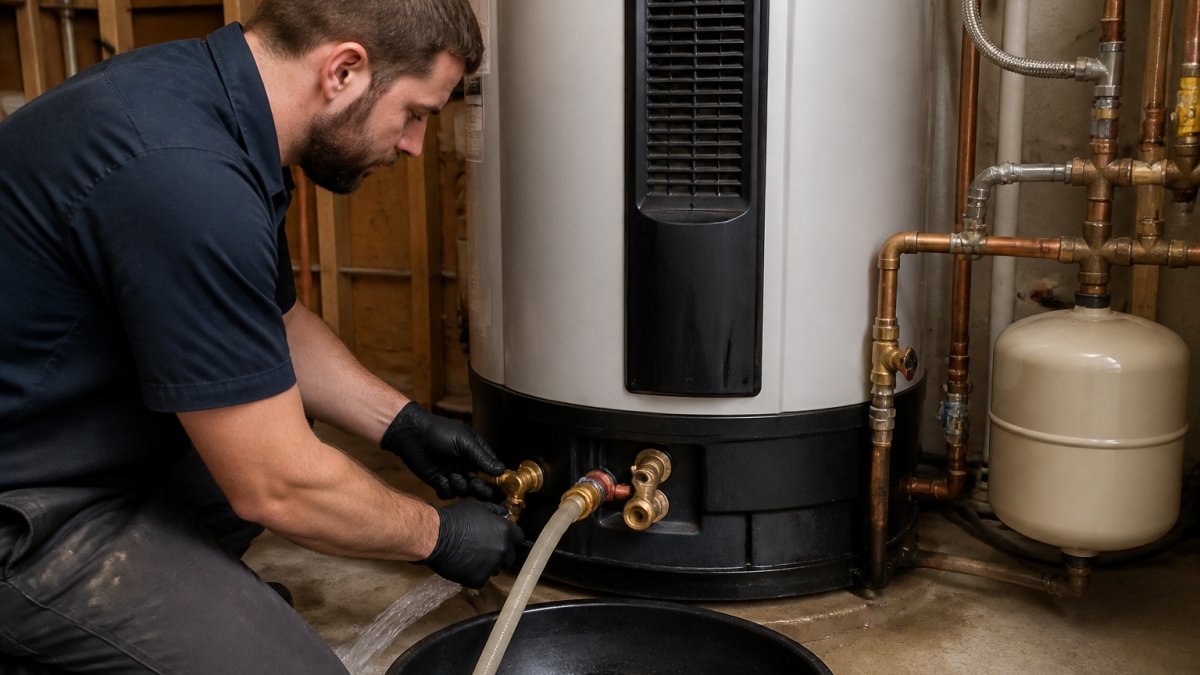
With power and water off, connect your garden hose to the drain valve at the bottom of the tank.
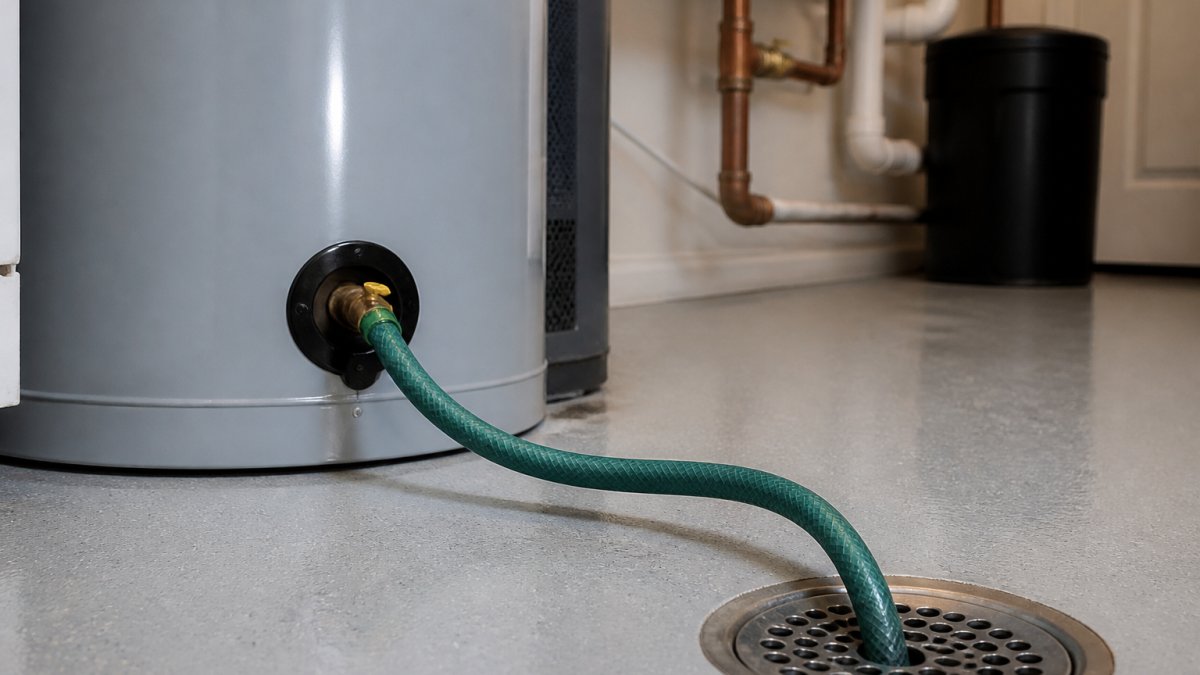
Open a hot-water faucet at the nearest sink. This breaks the vacuum and lets water flow. Then open the drain valve and let the tank empty.
Once the tank drains, turn the cold-water supply back on briefly to run a cold-water flush through the tank and out the hose.
Safe Discharge and Scald Prevention
A hybrid tank holds water hot enough to cause serious burns, and the flush water carries that heat out the hose. Practical precautions:
- Route the hose away from walkways and pets. Secure the end so it can't whip or spray.
- Check the discharge temperature by feel at the hose end before you move it. If it's too hot to touch, wait.
- Don't discharge onto grass or garden beds until the water runs cool and clear. Hot, mineral-heavy water can damage plants.
- Keep water off the unit's electrical components and control panel. A splash on the top shroud can trip a breaker or damage the board.
When the Drain Valve Is Clogged or Won't Flow
A clogged drain valve is common on tanks that haven't been flushed in years. Sediment packs into the opening and blocks flow. Try these fixes in order:
- Poke gently with a thin wire through the valve opening to break up the plug. Don't use a screwdriver blade; you can score the valve seat.
- Open the pressure-relief valve to add air and pressure to the tank and help push the plug loose.
- Backflush by briefly running water in through the hot side with the drain valve open.
- Call a pro if the valve won't open or won't reseal, since a broken valve means a leak you can't stop.
Don't force a stuck valve with pliers. You'll snap the stem and end up draining the tank through an open hole. If the valve is plastic and feels brittle, stop and replace it before you flush. A replacement drain valve is a small part, and swapping it now is far cheaper than a flooded utility room.
Step 3: Refill and Restart Your Hybrid Water Heater
Close the drain valve and remove the hose. Open the cold-water supply and let the tank fill completely. Keep the hot-water faucet open at the sink so air in the lines can escape. When water runs steady with no sputtering, the tank is full.
Once the tank is full, close the faucet, restore power at the breaker, and set your control panel back to heat-pump mode. Give the unit time to recover. If it won't produce hot water after restart, our guide on troubleshooting an electric water heater with no hot water covers the common causes.
How Often to Flush a Hybrid Water Heater
Flush a hybrid water heater once a year in most homes. If your water is hard or your area has heavy mineral content, flush every six to twelve months. Annual maintenance keeps sediment from hardening on the tank floor and protects the heat pump's efficiency.
Water quality is the biggest factor. If you're weighing the effort against the savings, our breakdown of how water heater energy efficiency is calculated shows what efficiency losses actually cost you. And if lower bills are the goal, these ways to lower water heating bills pair well with a regular flush schedule.
| Situation | Flush Frequency | Why |
|---|---|---|
| Soft water, light use | Once a year | Sediment builds slowly |
| Hard water, average use | Every 6-12 months | Mineral deposits collect faster |
| Hard water, heavy use | Every 6 months | High volume speeds buildup |
| Unknown water quality | Test first, then yearly | Confirm hardness before scheduling |
How Long It Takes to Flush a Water Heater
Plan on 45 to 90 minutes for a hybrid unit. Draining a full tank takes 20 to 40 minutes depending on size.
Add extra time if the drain valve is clogged or the tank hasn't been flushed in years. Rushing the refill is the most common mistake.
Sediment doesn't wait, and a hybrid unit that's running hot costs you every month.
Frequently Asked Questions
Do hybrid water heaters need to be drained?
Yes. A hybrid water heater still holds a storage tank, so sediment and mineral deposits collect at the bottom just like in a standard electric model. Draining and flushing the tank clears that buildup so the heating elements and heat-pump components work efficiently. Skipping it lets sediment harden, which can clog the drain valve and shorten the unit's life. Most manufacturers recommend flushing at least once a year, and more often if your water is hard.
How often should you flush a hybrid water heater?
Once a year is a solid baseline for most households. If you have hard water, a large family, or you notice popping sounds or slower recovery, flush every six to eight months. Check your owner's manual first, since some manufacturers tie warranty coverage to documented maintenance. In areas with heavy mineral content, annual flushing may not be enough, and a qualified plumber can tell you whether your water quality calls for a shorter interval.
How do you turn off a hybrid water heater before draining it?
Start at the circuit breaker and switch off the dedicated power supply to the unit. On most hybrid models, you should also confirm the control panel is dark before proceeding. Then close the cold-water inlet shutoff valve so no new water enters the tank. Never drain a hybrid water heater while the power is still on, because the heating elements can run dry and fail. If you are unsure which breaker controls the unit, trip the main and test the panel.
When should you call a plumber to flush a hybrid water heater?
Call a licensed plumber if the drain valve is clogged or won't flow, if you see leaks around the tank or fittings, or if the unit won't restart after a refill. A hybrid water heater also has condensate lines and air pathways that need proper handling, and a botched shutdown can void the warranty. If your unit is more than a decade old or the sediment is hardened, professional flushing is the safer choice than forcing the valve.