 how-to
How to Detect Hidden Water Leaks: 7 Methods
Table of Contents
- Visual Signs That Indicate a Hidden Water Leak
- How to Read a Water Meter for Leaks
- Listening for Leak Sounds
- Water Leak Detection Tools for Homeowners
- Signs of a Slab Leak vs. Other Hidden Leaks
- DIY vs. Professional Detection: When to Call a Plumber
- Documenting Leaks for Insurance Claims
- Frequently Asked Questions
Last Updated: September 25, 2026
Visual Signs That Indicate a Hidden Water Leak
To detect hidden water leaks, watch for discoloration, soft spots, and musty smells, early warning signs that prevent thousands in structural damage.
Damp or discolored walls and ceilings
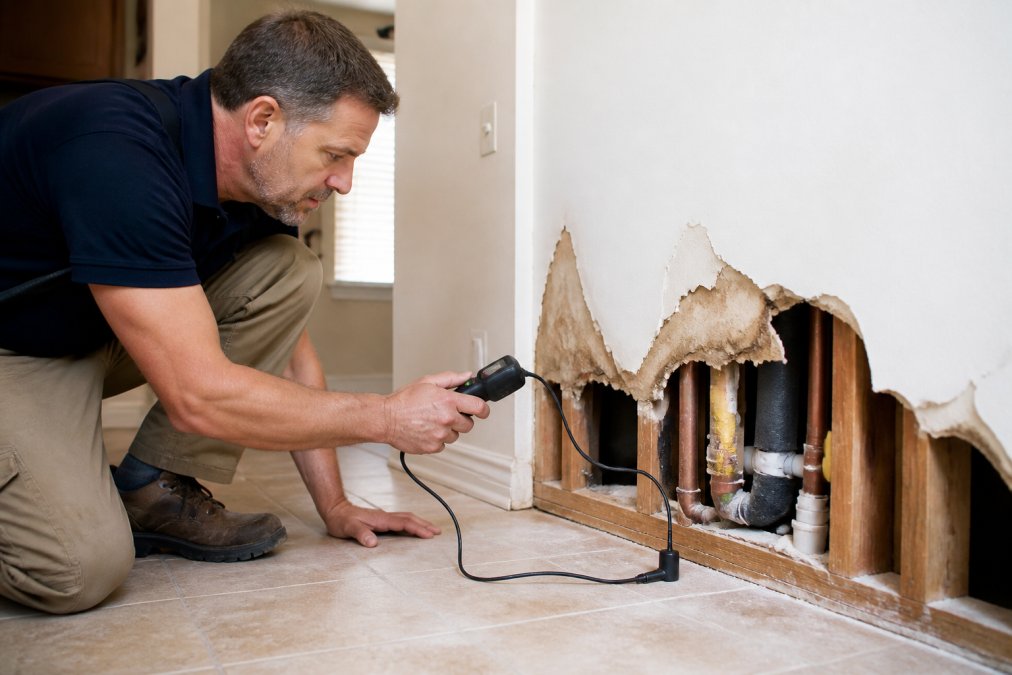
Water stains appear as brown, yellow, or dark patches on walls and ceilings, often in rings or irregular shapes. Paint may bubble, peel, or blister, and stains may feel soft or spongy when touched.
These marks indicate water moving through materials where it shouldn't be. Check behind toilets, under sinks, around bathtubs, and upper-floor bathrooms first, as they often leak into ceilings below.
Check basement walls and crawl spaces; a stain often indicates the leak is above it, sometimes several floors up.
Musty odors and mildew growth
Mold and mildew grow where moisture hides. A musty smell in a closed room signals trapped moisture inside walls or under floors, growing stronger near the leak source (the CDC).
Visible mold appears as black, green, or white spots on drywall, wood, insulation, and carpet. Widespread mold indicates a serious moisture problem.
Mildew smells like wet earth or old gym clothes and thrives in darkness. If you smell it but see no visible growth, moisture is likely inside walls.
Spongy or unusually green lawn patches
When water leaks underground, grass grows faster in wet soil and appears greener than surrounding areas.
Spongy patches feel soft underfoot, with grass taller and greener. In winter, these areas may not freeze like the rest of the lawn.
Puddles without rain and sunken areas indicate underground leaks and soil erosion from water pressure.
How to Read a Water Meter for Leaks
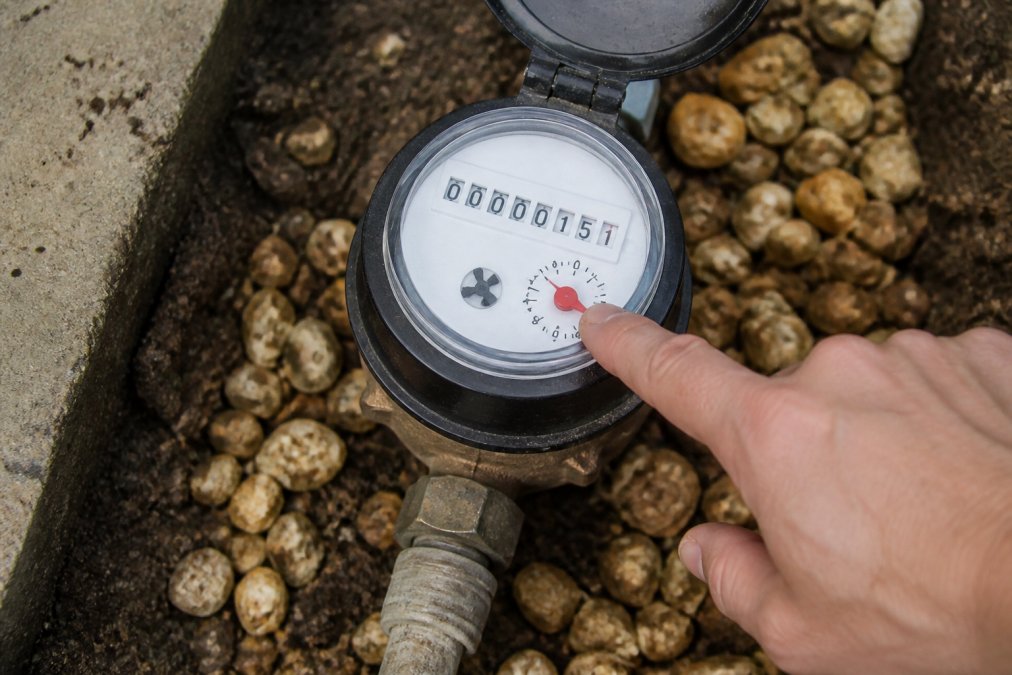
Your water meter is your best leak detector, measuring every gallon flowing through your plumbing system. Reading it takes five minutes and requires no special tools.
Locating and understanding your meter
Find your water meter outside your home, usually near the street or in a basement in a concrete box. The box lid may say "water" or show a symbol.
Open the lid carefully. The main dial shows gallons used since installation. Below it is the flow indicator, a thin needle or small dial that moves when water flows.
Write down the numbers you see. This is your baseline reading. You'll compare future readings to this number to check for leaks.
Performing the meter test
Turn off all water in your home by closing the main shut-off valve. Don't run toilets, washing machines, or faucets.
Wait 30 minutes and check the meter again. If the numbers have changed, you have a leak.
Watch the flow indicator dial. Any movement while all water is off indicates a leak.
Repeat this test early morning before anyone wakes to eliminate guessing about water use.
Listening for Leak Sounds
Water moving through pipes makes noise. Unusual sounds indicate problems.
Hissing sounds suggest high water pressure or a pinhole leak spraying from walls, under floors, or in crawl spaces.
Dripping or gurgling sounds indicate water pooling or draining slowly, dripping from falling water, gurgling from trapped air.
Listen near walls, under sinks, and in basements. Press your ear against the wall or use a stethoscope to detect faint leak sounds.
Persistent sounds indicate a real problem; one-time sounds may be normal water use.
Water Leak Detection Tools for Homeowners
Technology makes leak detection easier. Some tools cost nothing. Others are affordable and worth the investment.
Moisture meters and thermal imaging
A moisture meter measures water content by detecting electrical resistance. Press the pins into drywall, wood, or carpet; higher readings indicate greater moisture. These tools cost $30-$100 and work best on porous materials, less reliably on tile, concrete, or metal.
Thermal imaging cameras detect temperature differences, displaying water-damaged areas as blue (cold/wet) and dry areas as red or yellow. Professional-grade cameras cost $300-$1,000; rentals run $50-$100/day. Smartphone attachments cost $200-$400 and work adequately for basic detection.
Both tools pinpoint leaks without cutting walls, useful when you suspect a leak but see no visible staining.
Smart home leak detection devices
Modern water sensors detect moisture and send real-time smartphone alerts via Wi-Fi or Bluetooth. Small battery-powered devices sit near water heaters, under sinks, behind toilets, in basements, or along foundation walls, triggering alerts within seconds.
Devices cost $20-$50 each; a comprehensive setup requires 4-6 sensors ($80-$300 total). Battery life ranges 2-5 years with standard AA or AAA batteries.
Some systems integrate with Amazon Alexa, Google Home, or Apple HomeKit. Advanced systems offer automatic shut-off valve integration that triggers within 30 seconds to 2 minutes, preventing catastrophic damage. Automatic shut-off systems cost $200-$600 but can save thousands in water damage claims.
Water leak sensors are most effective paired with smart meter readers that track consumption and alert you to unusual spikes. These systems cost $100-$300 and help spot slow leaks developing over weeks.
Signs of a Slab Leak vs. Other Hidden Leaks
A slab leak is a crack in water pipes under your home's foundation, serious because they're difficult to access and cause structural damage.
Slab leaks show specific warning signs: sudden water bill spikes, running water sounds when all taps are off, and warm floor spots from leaking hot water pipes.
Cracks appear in walls, ceilings, or floors as the foundation shifts from soil erosion. Doors and windows may stick or won't close properly.
Unlike wall leaks, slab leaks hide beneath your feet. Water pressure from below causes serious structural problems over time.
Wall and attic leaks create visible stains within days. Slab leaks may go undetected for months, allowing significant damage.
If you suspect a slab leak, call a professional immediately. They use specialized equipment to locate the exact leak. Repairs require cutting through concrete and accessing pipes underground.
DIY vs. Professional Detection: When to Call a Plumber
You can handle some leak detection yourself: water meter tests, listening for sounds, and visual inspection work well for obvious leaks, active dripping, visible stains, or audible hissing.
Hidden leaks often require professional-grade equipment and expertise to prevent costly delays and structural damage.
When DIY detection is sufficient
DIY methods work when you see visible stains, hear clear dripping or hissing, trace a leak to an obvious source (running toilet, dripping faucet, leaking supply line), find localized mold (under 10 sq ft), or have a moderate bill increase (10-20%) tied to a known event. You may make repairs yourself or provide clear information to a plumber, reducing diagnostic time and cost.
When to call a professional
Call a licensed plumber when:
The leak is hidden or unlocated. Your water meter test shows water flowing when all fixtures are off, but you cannot find the source after visual inspection and listening. Professional acoustic leak detection equipment uses sensitive microphones to pinpoint the exact location of water movement inside walls, under concrete slabs, or underground. This equipment costs $2,000-$5,000; plumbers typically charge $150-$300 for a diagnostic visit. Beyond acoustic detection, identifying hidden moisture in walls remains a critical step for preventing structural degradation and long-term mold growth.
You suspect a slab leak. Slab leaks occur in water lines running beneath your home's concrete foundation.
Cost-benefit threshold
A professional leak detection visit typically costs $150-$300 for diagnosis. If your water bill is running $50-$100 per month higher than normal, a professional visit pays for itself in 2-4 months by stopping the leak. If the leak is small (a few dollars per month in wasted water), DIY detection may be cost-effective. If the leak is large or you've already spent time and money on failed DIY attempts, professional detection is the smarter investment.
Documenting Leaks for Insurance Claims
If water damage is extensive, your insurance may cover repairs. Documentation is essential. Start photographing and recording details immediately.
Frequently Asked Questions
How can I use my water meter to check for a leak?
Turn off all water-using appliances and fixtures inside and outside your home. Read your water meter, wait 30 minutes without using any water, then read it again. If the meter has advanced, you have a leak. Some meters have a small triangular flow indicator that spins when water moves through the system, if it's moving with all fixtures off, that's a sign of a leak.
What are the early warning signs of a hidden water leak?
Watch for unexplained increases in your water bill, soft spots in walls or ceilings, musty odors, visible mold or mildew, hissing or dripping sounds in walls, and unusually green patches in your lawn. Discolored drywall or paint bubbling are also common indicators. These signs often appear weeks or months before structural damage becomes severe.
What's the difference between a slab leak and other hidden water leaks?
A slab leak occurs in water pipes running beneath your home's concrete foundation. Signs include warm spots on the floor, cracks in the foundation, higher water bills without visible leaks, and wet patches in the yard near the foundation perimeter. Other hidden leaks typically occur in walls, under floors, or behind fixtures and may show water stains or mold first.
When should I hire a professional plumber instead of trying DIY detection?
If your water meter shows a leak but you cannot locate it visually, if you suspect a slab leak, if you've found water damage in walls or ceilings, or if the leak is in an inaccessible area, contact a professional. Professionals use specialized equipment to pinpoint leaks accurately. This prevents unnecessary wall removal and ensures proper repair.