 how-to
How to Use Baking Soda and Vinegar for Clogged Drain
Table of Contents
- What You'll Need: Supplies for Baking Soda and Vinegar Drain Cleaning
- How to Use Baking Soda and Vinegar for Clogged Drain: Step-by-Step
- How to Clear a Slow Drain Before It Becomes a Blockage
- Pipe Material Compatibility and Chemical Safety
- Preventative Drain Maintenance Tips for a Healthier Plumbing System
- When to Hire Professional Plumbing Services for a Clogged Drain
- Frequently Asked Questions
Last Updated: September 26, 2026
What You'll Need: Supplies for Baking Soda and Vinegar Drain Cleaning
Baking soda and vinegar can clear a lightly clogged drain, but only if you use the right amounts and the right water temperature. This guide from Colby Plumbing Company LLC walks through the full process, the limits of the method, and the warning signs that mean you should stop.
Gather these supplies before you start:
- Baking soda: about 1/2 cup
- White vinegar: about 1 cup
- Hot water: a full kettle or large pot
- A plunger
- A bucket or towel for overflow
- Gloves and eye protection
How to Use Baking Soda and Vinegar for Clogged Drain: Step-by-Step
Here is the core process. It works best on slow drains with soft buildup, not on a fully blocked pipe.
Step 1: Remove Standing Water and the Drain Stopper
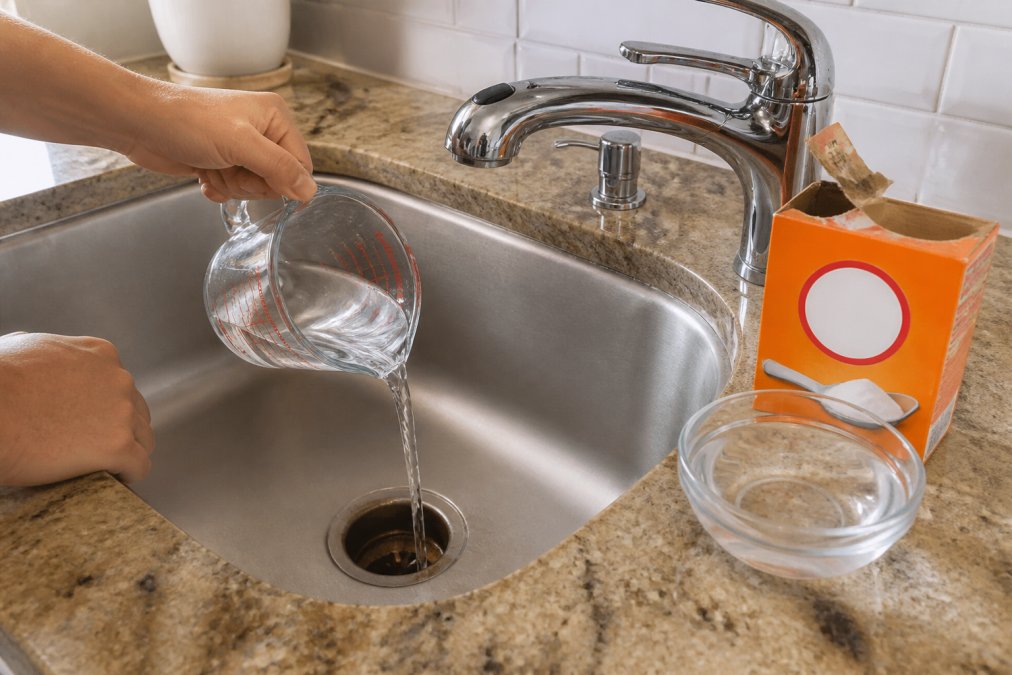
Pull the drain stopper out first. If water sits in the sink basin, bail it into a bucket until the sink is mostly empty.
Step 2: Pour Baking Soda and Vinegar Down the Drain
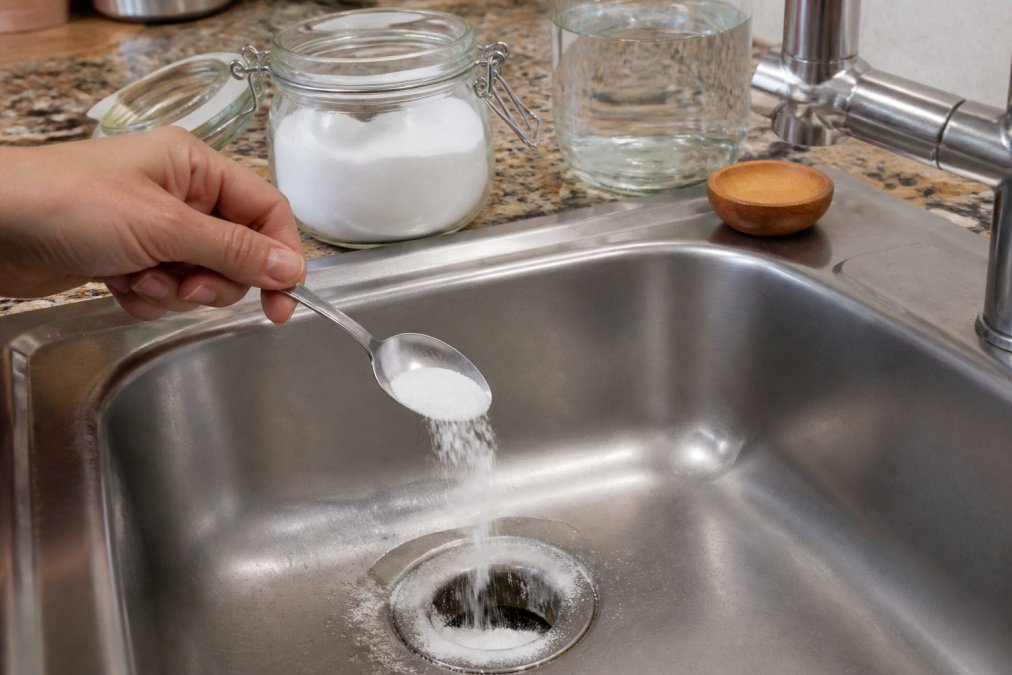
Pour 1/2 cup of baking soda straight into the drain. Follow it with 1 cup of white vinegar. Cover the drain with the stopper or a rag to trap the fizz.
Step 3: Flush with Hot Water and Repeat
Boil a full pot of water and pour it down the drain in stages. Hot water is what actually moves most soft clogs. Repeat the whole cycle two or three times if the drain is still slow.
| Step | What It Does | Time |
|---|---|---|
| Remove water and stopper | Clears the path for the mixture | 2-5 min |
| Add baking soda and vinegar | Loosens soft buildup | 15-30 min |
| Flush with hot water | Pushes debris through the trap | 5 min |
| Repeat cycle | Handles stubborn slow drains | 20-40 min |
How to Clear a Slow Drain Before It Becomes a Blockage
A slow drain is a warning, not a crisis. Catch it early and you can often avoid a full blockage. But the baking soda and vinegar method fails more often than videos admit, and almost no guide tells you what to do next. Here is the full sequence, including the troubleshooting most articles skip.
The escalation ladder
Work these in order. Stop as soon as the drain runs free.
- Run hot water for two full minutes. This melts grease that has not yet hardened. If the drain speeds up, you caught it early.
- Plunge with a good seal. A cup plunger works on a single sink; a flange plunger seats better on a tub or shower drain. Block the overflow hole with a wet rag so pressure goes down the drain, not out the overflow. Hydrostatic pressure from a plunger often does more than any home remedy.
- Pull the stopper and clear hair mechanically. A zip tool or a bent wire hook removes the hair-and-soap mat that sits just below the stopper, the single most common cause of a slow bathroom sink.
- Run the baking soda and vinegar cycle as described above, then flush with hot water.
- Repeat the cycle two or three times if the drain is still slow. Beyond three attempts, you are not making progress; move to the next step.
What to do when the mixture does not work
This is the part most guides leave out. If you have poured baking soda and vinegar down the drain and the water still will not move, here is how to recover without making things worse.
- Do not pour a chemical drain cleaner on top of the mixture. The trap now holds a weak acid plus whatever was already in the pipe. Adding caustic soda or sulfuric acid can create heat, fumes, or both. Flush the drain with several pots of hot water first to dilute what is sitting there, then wait before considering any other product.
- Bail out standing water. If the sink is full, the mixture is just sitting on top of the clog. Remove the water with a cup or bucket so you can see the drain opening and work on it directly.
- Try a drain snake. A hand-crank drum auger (often under $30 at a hardware store) reaches 15 to 25 feet and physically breaks up or pulls out the clog. This is the tool that actually solves most blockages the fizz cannot touch.
- Check the P-trap. If you are comfortable with basic plumbing, place a bucket under the trap, unscrew the slip nuts by hand, and clean out the debris. This is where grease and hair collect. Reassemble hand-tight and run water to check for leaks.
- Call a plumber if the drain is still blocked after snaking. A clog that survives a snake is past the trap and into the branch or main line.
How to tell whether it actually worked
Fizzing is not success. The reaction fizzes whether or not the clog moves. Watch for these signals instead:
- Success: Water drains in a steady swirl and empties the basin in under a minute. The drain may gurgle once as the trap refills, then go quiet.
- Partial success: Water drains slowly but faster than before. Run another hot-water flush and repeat the cycle once.
- Failure: Water still stands, or drains at the same rate as before. The clog is likely solid, hair, grease that has hardened, or a foreign object, and needs mechanical removal.
- Clog moved deeper: The sink drains but a nearby fixture now backs up or gurgles. That means the blockage shifted into the branch line. Stop pouring anything down the drain and call a plumber.
Pipe Material Compatibility and Chemical Safety
Not every pipe handles every cleaner, and not every pipe tolerates hot water the same way. This is where most online guides stay quiet, so here is the material-by-material breakdown.
What each pipe material can take
- PVC and ABS plastic: The most forgiving common drain material. Baking soda, vinegar, and hot water are all fine. The one caution is temperature, PVC softens as water approaches boiling, and repeated full-boil flushes can stress solvent-welded joints over years. Let boiled water cool for a minute or two before pouring.
- Copper: Chemically compatible with baking soda and vinegar, but copper drain lines are joined with solder. Very hot water plus a weak acid is not an immediate threat, yet a steady habit of near-boiling flushes is harder on soldered joints than on plastic. Warm-to-hot water is the safer default.
- Galvanized steel: Common in homes built before the 1970s. These pipes corrode from the inside, and the interior roughs up as they age, which catches debris and narrows the bore. Baking soda and vinegar will not dissolve that scale, and any acidic or caustic product accelerates the corrosion already underway. If your drain lines are galvanized, treat this method as a light maintenance flush at most and plan for eventual replacement.
- Cast iron: Found in older homes and generally durable, but the interior can be pitted. The mixture itself is mild on iron; the bigger risk is the clog returning because the rough surface keeps snagging debris.
- Orangeburg and other obsolete materials: If your home still has these, no home remedy is appropriate. Call a plumber.
Why the chemistry matters for your pipes
Baking soda is sodium bicarbonate, a mild base. Vinegar is dilute acetic acid. When they meet, they neutralize into water, a sodium salt, and carbon dioxide, that is the fizz. The reaction consumes both ingredients quickly, so what reaches the clog is mostly salty water and gas bubbles, not an active cleaner. That is why the method is gentle on pipes: it is not strong enough to do much damage, and for the same reason it is not strong enough to dissolve a hard clog.
Safety rules to follow every time
- Never mix baking soda and vinegar with a commercial drain cleaner. Residual caustic soda or sulfuric acid can react with the vinegar and release dangerous fumes or heat. The EPA guidance on household chemical safety explains why household chemicals should never be combined.
- Open a window and run the exhaust fan for ventilation.
- Wear gloves and eye protection, vinegar splashes sting, and any residual chemical cleaner in the trap is far worse.
- Skip the method entirely if you smell rotten eggs. That is a sign of a sewer gas or line problem, not a surface clog.
- Do not use this method as a follow-up to a failed chemical cleaner. Once a caustic product is in the trap, the drain belongs to a plumber.
Pipe integrity matters more than a quick fix. When in doubt about your material, flush with warm water instead of boiling, and keep the mixture as a maintenance habit rather than a rescue attempt.
Preventative Drain Maintenance Tips for a Healthier Plumbing System
Preventative drain maintenance tips save you from emergency calls. A few habits keep your plumbing system clear year-round.
- Run hot water for 30 seconds after every kitchen use.
- Never pour grease, oil, or coffee grounds down the sink.
- Use a mesh strainer to catch hair and food.
- Once a month, flush drains with hot water and a little baking soda.
- Avoid flushing wipes, even "flushable" ones.
When to Hire Professional Plumbing Services for a Clogged Drain
Call a licensed plumber when the clog returns, when multiple fixtures back up, or when you smell sewage. These point to a problem past the drain trap.
Watch for these signs:
- Water backs up in more than one sink or tub
- A gurgling sound comes from other drains
- The drain stays slow after several cleaning cycles
- You see standing water with a bad odor
Frequently Asked Questions
Does baking soda and vinegar actually unclog drains?
It works best on light clogs caused by grease buildup, soap scum, or organic matter near the drain opening. The fizzing action from the chemical reaction between sodium bicarbonate and acetic acid can loosen debris, but it will not clear a solid blockage deep in the drain trap or sewer line. If water still stands after two or three attempts, the clog is likely beyond what a DIY solution can reach.
Can baking soda and vinegar damage PVC pipes?
No. Baking soda and vinegar are non-toxic and safe for PVC, copper, and most plumbing fixtures when used in normal household amounts. The concern is boiling water, not the mixture itself. Boiling water can soften PVC joints and warp pipes, so use hot tap water instead. Avoid combining baking soda and vinegar with caustic soda or commercial chemical drain cleaners, since the reaction can create dangerous fumes.
How long should you let baking soda and vinegar sit in a drain?
Let the mixture sit for 15 to 30 minutes after it stops fizzing. This gives the acetic acid time to work on grease buildup and organic matter clinging to the pipe walls. Longer than an hour rarely helps and can leave residue in the drain trap. Follow with a hot water flush to carry the loosened debris through the plumbing system.
When should you call a professional plumber for a clogged drain?
Call a licensed plumber if the drain is still slow after two or three baking soda and vinegar treatments, if multiple fixtures back up at once, if you smell sewage, or if you see standing water rising in another drain. These signs point to a blockage in the sewer line rather than the drain trap. A plumber can inspect the pipe with a camera and clear the blockage without risking pipe corrosion or a plumbing emergency.
A clogged drain that keeps coming back is a sign, not a coincidence. When home methods stop working, the smart move is a professional diagnosis before the problem grows. Colby Plumbing Company LLC offers fast, reliable service backed by a 100% satisfaction guarantee and a team that has worked in the area since 1996. Get started with Colby Plumbing Company LLC and clear the blockage for good.