 how-to
How to Verify a Plumber's Workmanship Warranty
Table of Contents
- What Is a Workmanship Warranty and Why It Matters
- Workmanship Warranty vs. Manufacturer Warranty: Key Differences
- What Does a Plumbing Workmanship Warranty Cover
- Standard Plumbing Warranty Duration and Industry Norms
- Step-by-Step: How to Verify Your Plumber's License and Credentials
- Documentation You Need Before and After Work
- Using a Plumbing Workmanship Warranty Template
- How to File a Warranty Claim and Know Your Rights
- Frequently Asked Questions
Last Updated: October 1, 2026
What Is a Workmanship Warranty and Why It Matters
A workmanship warranty is a guarantee from a plumbing contractor that their labor and installation work will be free from defects for a specific period. It covers mistakes in how the plumber installed or repaired your plumbing system, not the parts themselves.
Workmanship warranties matter because plumbing failures can be expensive and hidden. A botched installation might leak months later and damage walls, floors, or foundation. Without a clear warranty, you pay for repairs out of pocket. A solid workmanship warranty shifts that risk to the contractor.
Many homeowners don't understand what their warranty covers and assume it protects everything. That's why verifying your plumber's workmanship warranty before work begins is critical.
Workmanship Warranty vs. Manufacturer Warranty: Key Differences
A manufacturer warranty covers defects in parts (pipe, fittings, water heater, fixture). A plumber's workmanship warranty covers how those parts were installed. If the plumber soldered a joint incorrectly and it leaks, that's a workmanship issue.
If your water heater fails after three years due to a manufacturing defect, the manufacturer covers replacement (usually 5-10 years). If the plumber installed it incorrectly, the plumber's workmanship warranty covers the repair.
Get both warranties in writing before work starts.
| Warranty Type | Covers | Duration | Responsibility |
|---|---|---|---|
| Workmanship | Installation quality, labor, craftsmanship | 1-5 years | Plumbing contractor |
| Manufacturer | Defects in parts, materials, fixtures | 1-10 years | Equipment manufacturer |
What Does a Plumbing Workmanship Warranty Cover
A typical plumbing workmanship warranty covers labor defects like:
- Improper pipe connections that cause leaks
- Soldering or threading mistakes
- Incorrect slope on drainage lines
- Faulty installation of fixtures or appliances
- Improper venting in drain lines
- Leaks caused by poor workmanship during repairs
It does NOT cover damage from freezing pipes, homeowner neglect, normal wear and tear, part failures, tree roots, or unlicensed subcontractors.
The scope of work document should list exactly what the warranty includes. If vague, ask for clarification.
Standard Plumbing Warranty Duration and Industry Norms
Plumbing workmanship warranties typically run 1-5 years, with 2 years most common for standard repairs.
New construction and major remodels often carry 3-5 year warranties. Simple repairs typically have 1-year coverage; full repipes or remodels include 2-3 years.
The warranty period should be clearly stated in your service agreement.
The warranty must be in writing. A verbal promise is worthless if the contractor goes out of business or becomes unreachable.
Step-by-Step: How to Verify Your Plumber's License and Credentials
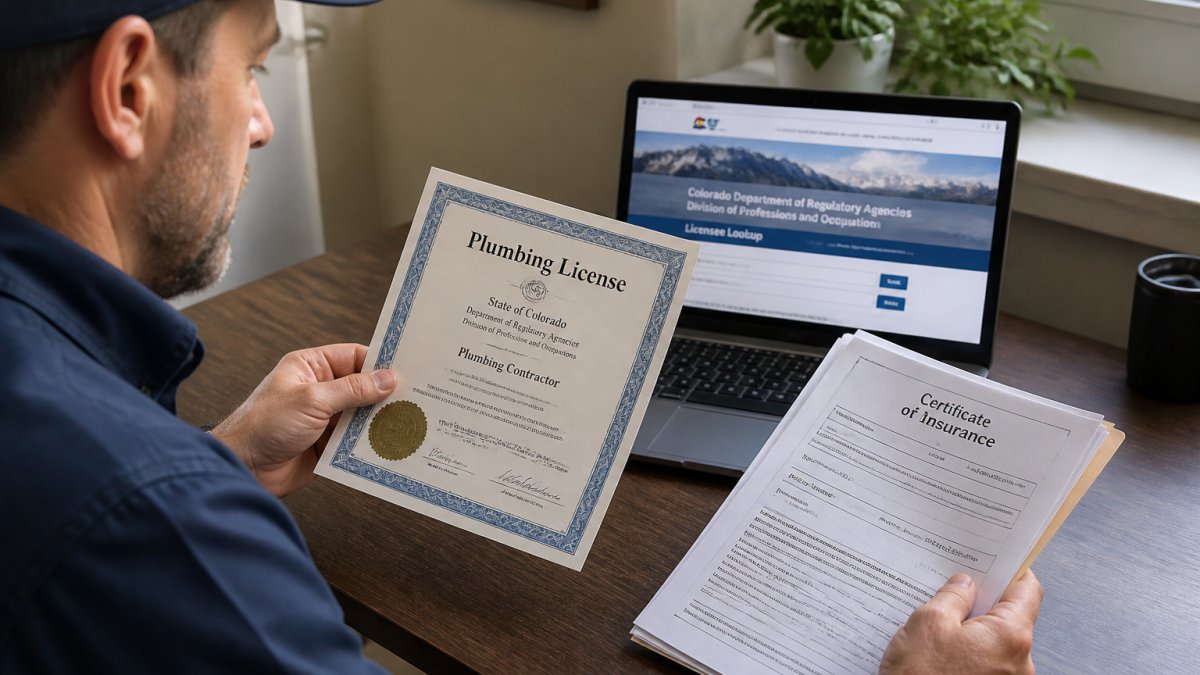
Before hiring any plumber, verify they're licensed. A licensed plumber's workmanship warranty is enforceable; an unlicensed plumber's is not.
Check State Licensing Records
Every licensed plumber must be registered with their state's licensing board. Go to your state's Department of Regulatory Agencies website, search for the plumber's name or license number, and confirm the license is active. Check the license type:
- Apprentice: Requires supervision. Never hire as primary contractor.
- Journeyman: Can work independently. Minimum level for residential work.
- Master: Highest level; can own a business and pull permits.
Verify the license scope matches your project (residential vs. commercial).
Check the license status: Active (currently licensed), Inactive/Expired (do not hire), Disciplinary history (red flag if multiple complaints), and Restrictions (ensure they match your project).
If the plumber doesn't appear in the database or has an inactive license, they're not legally authorized.
Verify Insurance and Bonding
Ask the plumber for an insurance certificate and call the insurer to confirm it's active. Check coverage limits, most states require $300,000 to $1,000,000 minimum.
Verify the bond is active with the bonding company.
Review Service Agreement and Written Estimate
Before work begins, get a written service agreement that includes: scope of work, timeline, total cost, payment terms, warranty details (duration, coverage, exclusions, claim process), cancellation policy, contractor's license/insurance/contact info, and permit responsibility.
Documentation You Need Before and After Work
Keep records of everything related to your plumbing work. Poor documentation is the #1 reason homeowners lose warranty claims.
Pre-Work Documentation
Before work begins, gather: written estimate, service agreement with warranty terms, contractor's license/insurance info, before photos, and permit documentation.
Post-Work Documentation
After work, request: invoice, warranty certificate, parts receipts, appliance serial numbers, after photos, testing reports, and permit sign-off.
Organizing Records for Long-Term Warranty Tracking
A warranty is only useful if you can find the documentation when you need it. Create a system to organize and store records:
Physical file:
- Use a labeled folder or binder for each major plumbing project
- Store originals in a safe, dry place (not the basement, where water damage could destroy them)
- Include a cover sheet with the contractor's name, phone number, license number, and warranty end date
- Arrange documents chronologically: estimate, agreement, invoice, warranty certificate, photos
Digital storage:
- Scan all documents and store them in a cloud service (Google Drive, Dropbox, OneDrive)
- Create a folder structure: Year > Project Name > Documents
- Name files clearly: "2026-10-01_Estimate_MainLineRepair.pdf", "2026-10-15_Invoice_MainLineRepair.pdf"
- Store serial numbers in a spreadsheet with the appliance name, model, serial number, installation date, and warranty end date
- Take photos and videos with your smartphone; back them up to the cloud immediately
| Project | Contractor | License # | Work Date | Warranty End Date | Coverage | Contact Info |
|---|---|---|---|---|---|---|
| Main line repair | ABC Plumbing | PL-12345 | 10/15/2026 | 10/15/2028 | Labor defects | 555-0123 |
| Water heater install | ABC Plumbing | PL-12345 | 11/01/2026 | 11/01/2031 | Parts + labor | 555-0123 |
What to Do If You Lose Documentation
If you've lost your warranty paperwork, take these steps:
- Contact the contractor immediately. Ask them to provide a copy of the warranty agreement, invoice, and any warranty certificate they issued. Most contractors keep copies.
- Check your email. Search for emails from the contractor with attachments or warranty information.
- Review your bank or credit card statements. The transaction date and amount can help reconstruct the timeline.
- Request records from your homeowner's insurance. If the work was covered under a claim, your insurer may have copies.
- File a complaint with the licensing board. If the contractor refuses to provide documentation, file a complaint. The board may compel them to provide records.
Without documentation, proving a warranty claim becomes difficult. A contractor can claim the work was done differently than you remember, or that the warranty period has expired. Documentation protects you from this dispute.
Using a Plumbing Workmanship Warranty Template
A warranty template keeps you and your contractor on the same page. It should include these elements:
- Contractor information: Name, license number, contact details
- Scope of work: Specific description of what's being done
- Warranty period: Start and end dates
- What's covered: List of items or systems covered by the warranty
- What's excluded: Clear list of exclusions
- How to claim: Steps for reporting an issue and getting it fixed
- Response time: How quickly the contractor will respond to a claim
- Repair or replacement: Will they fix it or replace it?
- Signature line: Both contractor and homeowner signatures with date
How to File a Warranty Claim and Know Your Rights
Step 1: Document the problem. Take photos and videos of the issue. Write down when you first noticed it and what's happening (leak, poor drainage, noise, etc.).
Frequently Asked Questions
What is the standard warranty for plumbing work?
Most plumbing workmanship warranties range from 1 to 5 years, depending on the contractor and the type of work. Labor guarantees typically last 1 to 2 years, while parts warranties vary by manufacturer. Always ask your plumber for a written warranty document that specifies the coverage period, what is included, and the process for filing a claim. This protects both you and the contractor by setting clear expectations.
How can I confirm a plumber's warranty coverage before hiring them?
Request a written service agreement or contract that details the warranty terms before work begins. Ask the plumber to explain what is covered under their labor guarantee and what is not. Verify their license through your state's licensing board, check their insurance status, and ask for references from previous customers. A reputable contractor will provide this information upfront and explain the scope of work and warranty period in writing.
Does a workmanship warranty cover parts and labor or just labor?
A workmanship warranty typically covers labor only, meaning the contractor guarantees their installation work and craftsmanship. Parts warranties come separately from the manufacturer of the fixture or equipment. Your written estimate should clearly distinguish between labor guarantees and manufacturer warranties on parts. Some contractors bundle both, so always ask for clarification to avoid confusion when issues arise.
What documentation should I keep to prove my plumbing warranty?
Keep the original invoice, written estimate, service agreement, warranty certificate, and any photos of completed work. Store these in a digital folder or filing system for easy access. If the plumber provided a serial number for installed parts, record that as well. Maintain records of any maintenance you perform and keep receipts for related service calls. This documentation is essential if you need to file a warranty claim or dispute work quality.