 how-to
When to Replace a Tankless Water Heater: Signs & Timeline
Table of Contents
- Typical Lifespan of Tankless Water Heaters
- Factors That Affect How Long Your Unit Lasts
- Signs a Tankless Water Heater Is Failing
- Repair or Replace: Making the Right Decision
- Understanding Tankless Water Heater Replacement Cost
- Steps to Take Before Replacing Your Unit
- Frequently Asked Questions
Last Updated: October 18, 2026
Typical Lifespan of Tankless Water Heaters
A tankless water heater typically lasts between 15 and 20 years, though some units can exceed this range with proper care.
Understanding your unit's age is one of the first steps in determining whether you need to replace tankless water heater systems. Most manufacturers print the installation date or model year on the unit's label, typically found on the side of the heater.
The reality is that tankless water heater lifespan varies significantly based on how well the unit has been maintained and the conditions it operates under. A well-maintained unit in an area with soft water might easily reach 20 years or beyond.
Factors That Affect How Long Your Unit Lasts
Several key factors determine whether your tankless water heater will reach the typical 15-20 year lifespan or fail sooner. These aren't just theoretical concerns, they directly impact your unit's reliability and your household's access to hot water.
Water quality and mineral buildup
Hard water is one of the most common culprits behind premature tankless water heater failure. When water contains high levels of minerals like calcium and magnesium, those minerals accumulate inside the heat exchanger over time.
Over months and years, mineral deposits can severely restrict water flow through the exchanger. Eventually, the unit may overheat, trigger error codes, or shut down completely. Homeowners in areas with naturally hard water often see their tankless units fail 3 to 5 years earlier than expected.
Installing a water softener is one of the most effective ways to protect your tankless water heater investment. Soft water eliminates the minerals that cause scaling, which directly extends unit lifespan.
Maintenance and regular flushing
Regular flushing is the single most important maintenance task for a tankless water heater. Flushing removes mineral deposits and sediment before they cause serious problems. Most manufacturers recommend flushing your unit annually, or more frequently if you have hard water.
A professional flushing typically involves running a descaling solution through the system to dissolve mineral buildup. This process takes a couple of hours and costs significantly less than replacing a failed unit. Homeowners who skip this maintenance often face expensive repairs or premature replacement within 10 to 12 years.
Beyond flushing, basic maintenance includes:
- Checking for visible leaks or corrosion
- Inspecting inlet filters for debris
- Verifying that venting is clear and unobstructed
- Testing the pressure relief valve annually
Neglecting these simple steps is a common reason tankless units fail ahead of schedule. Maintenance doesn't require special skills, a licensed professional can handle it quickly during an annual service visit.
Usage patterns and household demand
How much hot water your household uses affects the stress on your tankless water heater. A unit that runs continuously at maximum capacity ages faster than one with moderate, intermittent use.
Additionally, the temperature rise your unit must achieve impacts longevity. If incoming water is very cold (as it is in winter in many regions), the heater works harder to reach your desired temperature. This increased workload accelerates wear on electrical or gas components depending on your unit type.
Commercial applications, where tankless heaters run almost constantly, often see shorter lifespans than residential units. Understanding your household's actual demand helps predict when your unit might start showing signs of age.
Signs a Tankless Water Heater Is Failing
Recognizing failure symptoms early gives you time to plan for replacement rather than facing an emergency without hot water. Some warning signs are obvious, while others require a professional to diagnose properly.
Insufficient hot water or inconsistent temperature
If your showers are running cold sooner than they used to, or if the water temperature fluctuates unpredictably, your tankless water heater is likely struggling. This is often the first sign homeowners notice.
Inconsistent temperature typically points to a few possible issues. Mineral scaling inside the heat exchanger reduces its ability to transfer heat efficiently. Alternatively, the unit's thermostat or temperature sensor may be failing.
Before assuming the worst, check whether the issue is specific to one fixture or affects all hot water in your home. If only one shower is cold, the problem might be a faulty mixing valve or a clogged aerator rather than the water heater itself.
Leaks and visible water damage
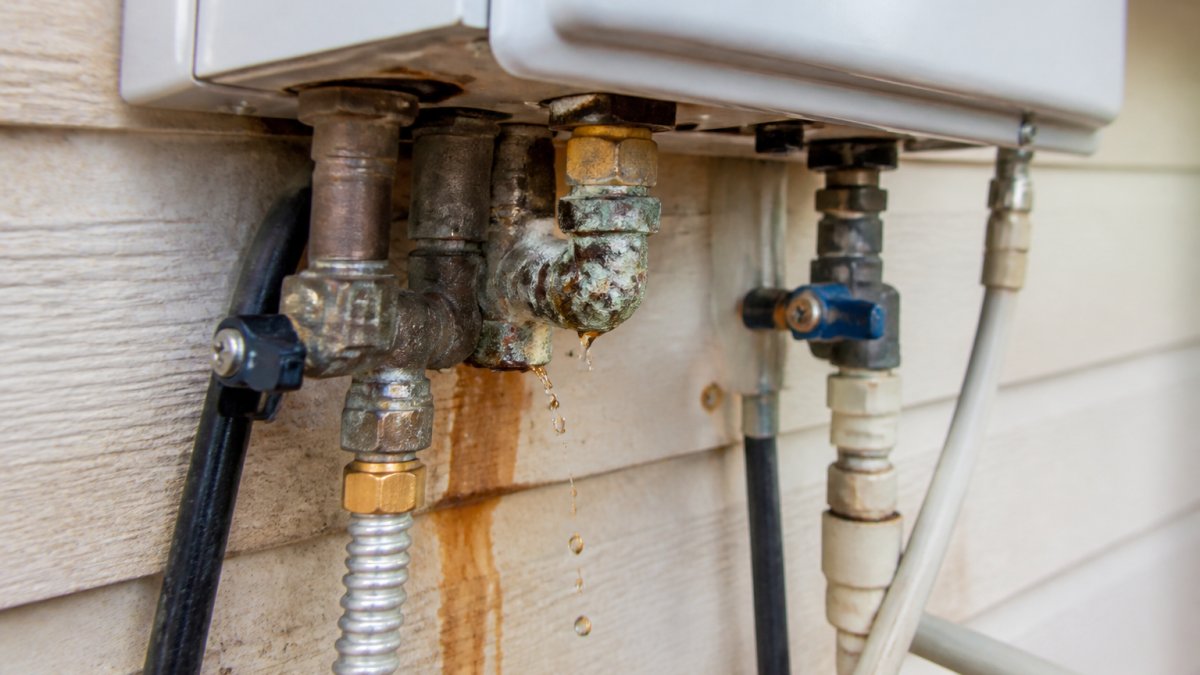
Any leak from your tankless water heater is a serious warning sign. Unlike conventional tank heaters, tankless units have no storage tank that might develop a slow drip over time. A leak in a tankless unit usually indicates a failing component that needs immediate attention.
Common leak sources include:
- Corroded or loose pipe connections
- A failed pressure relief valve
- Cracks in the heat exchanger
- Deteriorated seals or gaskets
Water pooling beneath the unit or visible moisture on the wall behind it demands professional inspection. Continuing to operate a leaking tankless heater risks water damage to your home and potential electrical hazards. In most cases, a leak signals that replacement is imminent, though occasionally a simple repair (like tightening a connection) can buy you more time.
Rust, cloudy water, or sediment
Rust-colored or cloudy hot water is a red flag. This usually means sediment or mineral deposits are breaking loose inside the heat exchanger or pipes.
If the discoloration appears only when you first turn on the hot water and clears after a few seconds, the problem may be limited to the pipes leading from the heater. However, if the cloudiness persists, the issue is likely inside the heater itself.
Some homeowners attempt to flush the system themselves, but professional flushing is more thorough and safer. If flushing doesn't resolve the issue, the heat exchanger may be too corroded to repair, making replacement the practical choice.
Strange noises and error codes
Unusual sounds coming from your tankless water heater, such as popping, rumbling, or high-pitched whistling, indicate internal problems. These noises often result from mineral deposits vibrating as water flows through the system or from overheating.
Modern tankless heaters display error codes on a digital panel when something goes wrong. Common codes point to specific issues like temperature sensor failure, gas ignition problems, or water flow restrictions. Consulting your unit's manual or calling a professional to decode the error helps determine whether repair or replacement makes sense.
A single error code that clears after a reset might be a temporary glitch. Recurring codes or codes that appear frequently suggest a persistent problem that will likely worsen.
Repair or Replace: Making the Right Decision
When your tankless water heater starts showing signs of trouble, you face a critical decision: repair the existing unit or replace it with a new one. This choice depends on several factors that go beyond just the age of the unit.
Age of the existing water heater
Age is the most straightforward factor in the repair-versus-replace equation. If your unit is under 10 years old and the repair cost is reasonable, fixing it usually makes financial sense. Most components are still available, and the unit has years of useful life ahead.
Once you need to replace tankless water heater units that reach 12 to 15 years old, the calculus shifts. Repairs at this stage often feel like throwing money at a problem that will resurface soon. Replacement parts become harder to source, and repair costs climb.
If your unit is 17 years or older, replacement is almost always the better choice. The risk of another failure within months of a repair is simply too high.
Frequency and cost of repairs
If you've called for repairs multiple times in the past year, your unit is signaling that it's near the end of its service life. Each repair is a temporary fix, not a solution. Replacing the unit stops the cycle of recurring problems and restores reliability.
A useful rule: if the cost of a single repair approaches 50% of a new unit's price, replacement typically makes more sense. You're paying a large sum to extend the life of an aging system rather than investing in a new one with a full warranty and years of reliability ahead.
Energy efficiency and operating costs
Older tankless water heaters become less efficient as components degrade and mineral buildup restricts water flow. Your energy bills may creep higher even though your household's hot-water usage hasn't changed. Modern tankless heaters are significantly more efficient, which means lower monthly operating costs.
The energy savings from upgrading to a new, efficient unit can offset the replacement cost over several years. If your current unit is 15 years old and your energy bills have risen noticeably, a replacement will likely pay for itself through reduced utility expenses.
Understanding Tankless Water Heater Replacement Cost
Replacing a tankless water heater involves more than just the unit itself. Installation, venting modifications, gas or electrical upgrades, and labor all factor into the total expense. The exact cost depends on your home's setup, your location, and the specific model you choose.
Professional installation is essential for tankless water heater replacement. Improper installation can void the warranty, create safety hazards, and reduce the unit's lifespan.
For a detailed estimate tailored to your home's needs, contact us today. We provide transparent pricing with no surprise charges, and we'll explain exactly what's involved in your replacement project.
Steps to Take Before Replacing Your Unit
Before committing to a replacement, take these steps to confirm that a new unit is truly necessary and to ensure you choose the right one.
Professional inspection and diagnosis
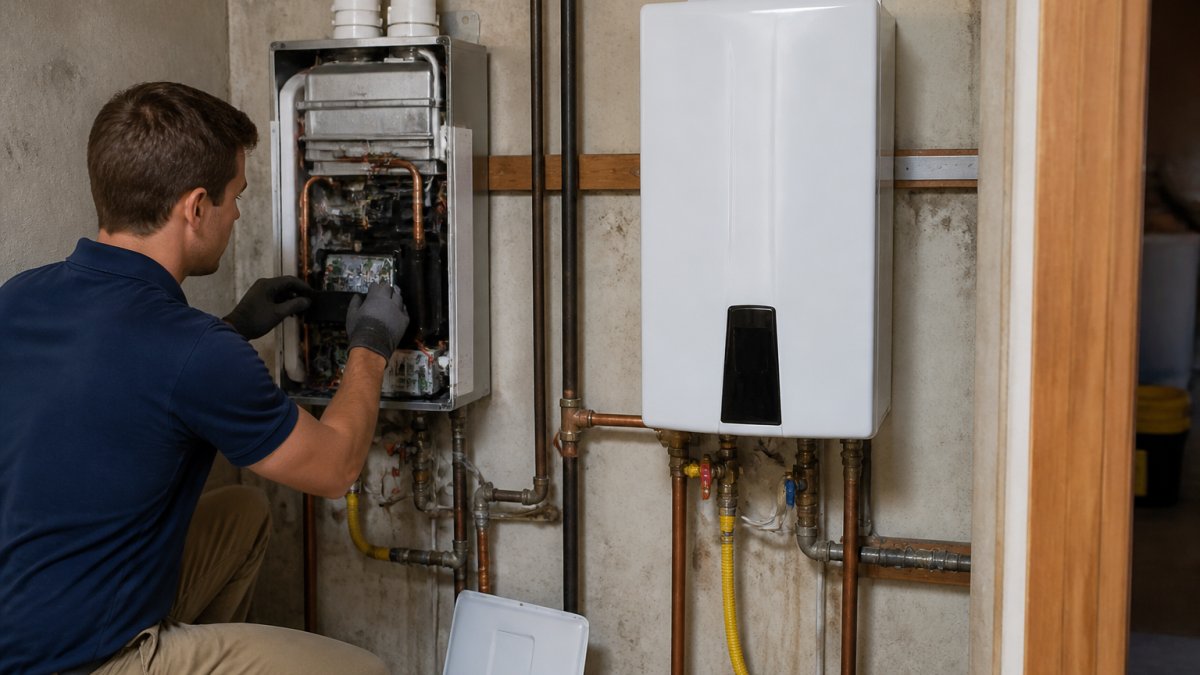
A licensed plumber can diagnose your unit's exact problem and recommend whether repair or replacement makes sense. During an inspection, we check for mineral buildup, test temperature and pressure readings, review error codes, and assess the overall condition of the unit.
Sometimes what appears to be a heater problem is actually a venting issue, a gas supply problem, or a faulty mixing valve downstream of the heater. A thorough inspection rules out these possibilities and confirms that the water heater itself is the culprit.
Warranty review and parts availability
Before replacing your unit, check whether any remaining warranty covers the repair. Some warranties are transferable to new owners if you've recently purchased your home, which might offset repair costs.
Additionally, verify that replacement parts are still available for your current model. If your unit is an older or discontinued model, parts may be scarce or expensive, making replacement the practical choice even if repair is theoretically possible.
When your tankless water heater shows signs of age or failure, the decision to replace it shouldn't be rushed. However, delaying replacement when the unit is clearly failing risks leaving your family without hot water at the worst possible time.
Frequently Asked Questions
How long does a tankless water heater last?
Most tankless water heaters have a service life of 15-20 years with proper maintenance. Some units can last longer if installed in homes with good water quality and regular descaling. The actual lifespan depends on water hardness, usage frequency, and how consistently you perform maintenance like annual flushing. Hard water and high mineral content can shorten the unit's lifespan significantly.
What are the signs a tankless water heater is failing?
Warning signs include insufficient hot water or inconsistent temperature, visible leaks or water damage, rust or sediment in the water, strange noises, and error codes on the display. Declining hot-water performance or a sudden drop in flow rate also indicates the unit may need professional inspection. If you notice any of these symptoms, contact a licensed plumber to diagnose whether repair or replacement is necessary.
Should I repair or replace my tankless water heater?
Consider the unit's age, repair frequency, and repair costs. If your heater is under 10 years old and the repair cost is less than half the replacement cost, repair is usually worthwhile. For units over 15 years old or those requiring frequent repairs, replacement often makes more economic sense. A professional inspection can help you weigh the repair-versus-replace decision based on your specific situation and energy efficiency goals.
Does hard water shorten the life of a tankless water heater?
Yes, hard water significantly reduces tankless water heater lifespan. Mineral buildup from calcium and magnesium causes scaling inside the heat exchanger, reducing efficiency and forcing the unit to work harder. Regular descaling and flushing can extend the service life, and installing a water softener helps prevent mineral accumulation. Without maintenance, hard water can cut your unit's lifespan by several years.