 ultimate-guide
Is Emergency Plumbing Covered by Insurance? 2026 Guide
Table of Contents
- Quick Verdict: When Insurance Pays for Emergency Plumbing
- Sudden vs Gradual Water Damage Insurance: The Line That Decides Your Claim
- What Homeowners Insurance Typically Covers and Excludes
- How to File a Plumbing Insurance Claim: Step-by-Step
- Emergency Plumbing Repair Costs: What You Pay Out of Pocket
- The Claims Process Timeline and How Claim History Affects Premiums
- Conclusion: Protect Your Home Before the Emergency Happens
- Frequently Asked Questions
Last Updated: September 13, 2026
Quick Verdict: When Insurance Pays for Emergency Plumbing
The answer to "is emergency plumbing covered by insurance" depends almost entirely on one word: sudden. According to the Insurance Information Institute's homeowners insurance guide, a standard homeowners policy covers sudden and accidental water damage, such as a burst pipe flooding a kitchen. It does not cover damage from gradual leakage, corrosion, or neglect. At Colby Plumbing Company LLC, we have responded to emergency calls across the Denver metro area since 1996, and the pattern holds: the event is covered, the slow decline that caused it usually is not.
Emergency plumbing is covered by insurance when the failure is sudden and accidental, and excluded when the damage developed gradually through wear and tear or improper maintenance. The pipe repair itself is often on you; the water damage it caused is often on the insurer.
Covered vs. Not Covered at a Glance
| Scenario | Typically Covered? | Why |
|---|---|---|
| Burst pipe floods a room | Yes | Sudden and accidental damage |
| Pipe freezes and splits overnight | Yes | Sudden event, not gradual |
| Slow leak under a sink for months | No | Gradual leakage, maintenance issue |
| Corroded pipe finally gives way | Usually no | Pipe corrosion is wear and tear |
| Sewer backup into a basement | Only with endorsement | Standard policy exclusions apply |
The distinction matters: one outcome pays for drywall, flooring, and remediation; the other pays nothing.
Sudden vs Gradual Water Damage Insurance: The Line That Decides Your Claim
Insurers draw a hard line between sudden and accidental damage and gradual leakage because the two carry different risk profiles. A sudden failure is unpredictable and unavoidable; a gradual leak is something routine inspection could have caught, making it a maintenance question, not an insurance one.
Why Insurers Distinguish Sudden and Accidental Damage from Gradual Leakage
Policies are built to cover catastrophic events, not deferred upkeep. According to the National Association of Insurance Commissioners homeowner resources, property policies routinely exclude damage the owner could reasonably have prevented. A pinhole leak that has been staining a ceiling for weeks is a classic gradual leakage claim, and adjusters are trained to spot it.
What Counts as a Plumbing Emergency for Coverage Purposes
A plumbing emergency for coverage purposes is a sudden, unintentional failure causing immediate property damage, such as a burst pipe, an overflowing fixture, or a failed supply line. A clogged drain, dripping faucet, or running toilet is a repair, not a claim. Note that Colby Plumbing Company LLC does not perform drain cleaning, so a blockage is a separate call.
What Homeowners Insurance Typically Covers and Excludes
The coverage split comes down to cause, not cost: a homeowners policy responds to the event that damaged your home, so the same wet floor can be covered or denied depending on what produced it.
Covered: Burst Pipes, Water Damage, and Structural Repairs
When a supply line fails suddenly, dwelling coverage pays to repair the structure, and personal property coverage handles damaged belongings. This includes burst pipes, water damage to walls and floors, and structural damage from the released water. The FEMA flood insurance guidance is worth checking too, because water that enters from outside, such as a rising creek, is flood damage and sits outside a standard policy.
Excluded: Wear and Tear, Gradual Leakage, and Improper Maintenance
Policy exclusions are where most denied claims live: pipe corrosion, gradual leakage, seepage, mold remediation tied to long-term moisture, and improper maintenance all fall outside standard coverage. Sewer backup is excluded unless you added an endorsement, and the pipe itself is rarely covered.
How to File a Plumbing Insurance Claim: Step-by-Step
Filing a plumbing insurance claim correctly comes down to speed and evidence. These steps mirror what we walk customers through when an emergency hits.
- Shut off the water at the main emergency shut-off valve. Every minute of flow adds damage and adds to the adjuster's argument that you failed to mitigate.
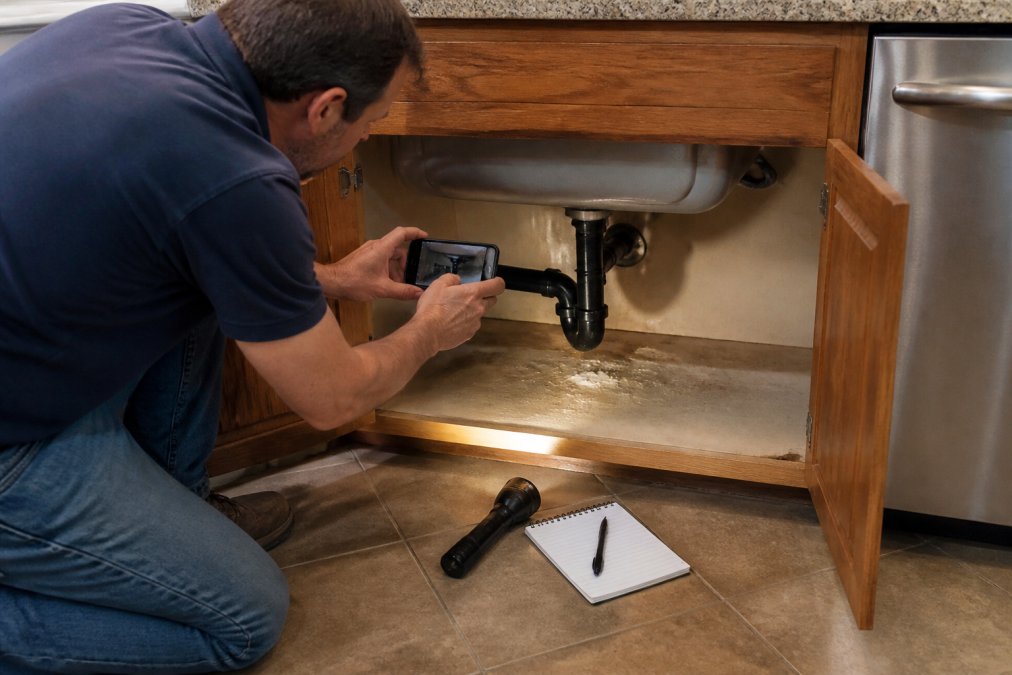
- Document everything with photos and video before cleanup. Wide shots of the room, close shots of the failure point, and a short video panning from the source to the damaged area. Timestamp everything.
- Call a licensed plumber to stop the source and provide a written diagnosis. The plumber's report is the single most important document in the file.
- Contact your insurer and open the claim. You can open the claim before the plumber arrives; do not wait for a final repair estimate to report the loss.
- Keep every receipt, including emergency mitigation costs, hotel stays if the home is uninhabitable, and equipment rentals.
- Meet the adjuster and provide your documentation package. Have the plumber's report, your photos, and your receipts organized in one folder, digital or physical.
What Actually Happens After You File: The Claims Timeline
Most homeowners expect a check within days; the realistic timeline runs weeks. Knowing the stages keeps you from missing deadlines.
- Day 0, Mitigation. You stop the water, document, and call a plumber. Insurers expect mitigation to begin immediately; delaying it is the most common reason a legitimate claim gets reduced.
- Days 1-3, First notice of loss and claim assignment. Your insurer opens the file and assigns an adjuster. You will usually get a claim number and a point of contact within this window.
- Days 3-10, Adjuster inspection. The adjuster visits, photographs the damage, and may ask for the plumber's report and your receipts. This is the stage where a written failure-mode diagnosis does the most work.
- Days 10-30, Estimate, negotiation, and approval. The adjuster prepares a repair estimate. If your contractor's estimate is higher, expect a back-and-forth. Supplemental claims for hidden damage discovered during repairs are common and normal.
- Days 30+, Payout and repairs. Payment is typically issued once the scope is agreed. If you have a mortgage, the check may be made out to you and your lender, adding a step.
Timelines stretch when documentation is incomplete or the cause is disputed, and compress when you hand the adjuster a clean file on day one.
DIY vs. Professional Documentation: What Adjusters Want to See
Adjusters want a verifiable cause-and-effect story. Your photos prove the damage existed; a licensed plumber's written report proves why it happened, establishing the failure as sudden rather than gradual, the document that separates a paid claim from a disputed one.
A documentation package that survives adjuster scrutiny usually contains:
- Photos of the failure point itself, not just the wet floor, the split supply line, the cracked fitting, the burst section of pipe.
- A written statement of the failure mode from the licensed plumber who responded, including the date and time of the call.
- Photos of the affected area before cleanup, showing the spread of water.
- Receipts for emergency mitigation, such as water extraction or a rented dehumidifier.
- A maintenance record if you have one, recent inspections or fixture replacements help rebut a "neglect" finding.
What "Gradual Damage" Actually Means in a Policy
"Gradual" is a defined concept insurers apply to decide whether a loss is covered. A loss is gradual when damage developed over time through a process the homeowner could reasonably have detected or prevented: slow seepage, repeated moisture, corrosion, or a leak that left visible staining before it failed.
A loss is sudden when the failure occurred at a specific, identifiable moment with no prior warning signs. The test adjusters apply: was there a point when a reasonable homeowner could have caught this? If yes, the claim leans gradual; if not, sudden.
This is why the same wet floor can be covered in one home and denied in another, and why the plumber's written diagnosis matters, it is your evidence that the failure had a specific moment, not a slow decline.
Emergency Plumbing Repair Costs: What You Pay Out of Pocket
Emergency plumbing repair costs vary widely by scope, access, and time of day, so treat any single figure with suspicion. What you pay out of pocket is the repair bill minus whatever the policy covers, and the repair itself is usually the part you own.
When the Repair Bill Falls Below Your Deductible
If the repair bill falls below your deductible, filing is pointless and can hurt you. A small fix paid out of pocket keeps your claim history clean. The deductible applies per claim, so a modest repair is almost always a cash decision.
| Cost Type | Who Typically Pays | Notes |
|---|---|---|
| Pipe repair or replacement | Homeowner | Wear and tear exclusion |
| Water damage remediation | Insurer (if sudden) | Subject to deductible |
| Mold remediation | Often homeowner | Tied to gradual moisture |
| Emergency call-out premium | Homeowner | Not a covered loss |
For an accurate number on your specific repair, contact Colby Plumbing Company LLC directly.
The Claims Process Timeline and How Claim History Affects Premiums
The claims process timeline runs from immediate mitigation through adjuster inspection to final payout, usually taking weeks rather than days. Speed on your end compresses the back half considerably. The bigger question is whether filing is worth it, and that depends on how insurers weigh claim history.
How Insurers Actually Weigh a Claim
Insurers track two things: frequency and severity. Severity is the dollar amount of the loss; frequency is how often you file. Most underwriting models care more about frequency, because a homeowner who files three small claims looks riskier than one who files a single large one.
That is why a $600 water claim can cost you more over time than paying out of pocket. A single claim may not move your premium, but multiple claims within three to five years can trigger an underwriting review, a surcharge, or a non-renewal notice. Thresholds vary by carrier and state, so ask your agent how your policy treats a first claim versus a second.
The Break-Even Question: File or Pay Out of Pocket?
There is no universal rule, but the decision usually comes down to three numbers:
- Your deductible. If the repair and damage total is close to or below the deductible, filing accomplishes nothing except putting a claim on your record.
- The likely premium impact. A surcharge often persists for several years. A small claim paying out a few hundred dollars above your deductible can be erased by a modest multi-year increase.
- Your claim-free discount. Many policies include a claims-free credit. Filing can forfeit it, which compounds the premium impact.
A common pattern: homeowners file a small claim, get a modest payout, then see a premium increase at renewal that exceeds the payout within two to three years. The math rarely favors filing for small losses.
When Filing Is Clearly the Right Call
Filing is almost always right when the damage is large, the cause is clearly sudden and accidental, or a third party is involved. If a burst supply line floods a finished basement, remediation and rebuild costs dwarf any premium impact. If a contractor or appliance defect caused the failure, the claim may also support recovery against that party.
The rule of thumb: file when the loss is significant relative to your deductible and financial cushion, and pay out of pocket when it is not.
Alternatives to Standard Insurance: Home Warranties and Service Plans
A home warranty or service plan is a separate product from homeowners insurance. Where insurance responds to sudden damage, a home warranty typically covers repair or replacement of systems and appliances that fail from normal wear and tear, plumbing systems, water heaters, and fixtures, subject to the plan's terms.
The trade-offs are real: home warranties usually require a service call fee per visit, exclude pre-existing conditions and code violations, and route repairs through the warranty company's contractor network rather than your chosen plumber. For a homeowner with aging plumbing and no emergency fund, a warranty can smooth out repair costs; with newer systems, the annual premium plus service fees often exceeds the expected repair cost.
Neither product replaces the other. Insurance handles the sudden catastrophe; a warranty handles the gradual failure insurance excludes. Some homeowners carry both; some carry neither and self-insure with a dedicated savings fund.
Conclusion: Protect Your Home Before the Emergency Happens
The gap between a covered claim and a denial is almost always preventative maintenance: inspecting supply lines, replacing aging fixtures, and knowing where your shut-off valve is before water spreads across the floor. When a failure happens, fast action and clean documentation decide the outcome.
If you are facing a sudden plumbing failure in the Denver metro area, Colby Plumbing Company LLC has handled emergency repairs since 1996. Our licensed, seasoned professionals provide fast, reliable service, a 100% satisfaction guarantee, and transparent pricing so you know exactly what you owe. CONTACT US TODAY
Frequently Asked Questions
What is considered a plumbing emergency for insurance purposes?
A plumbing emergency typically involves sudden and accidental damage, such as a burst pipe, a failed water heater, or an overflowing toilet that causes immediate water damage. Insurance companies distinguish these events from gradual issues like slow leaks or corrosion. If the damage happened without warning and you acted quickly to stop it, your emergency plumbing insurance claim is more likely to be approved. Routine clogs or drain cleaning are not emergencies under most policies.
Will homeowners insurance pay for a busted water pipe?
In most cases, yes. Homeowners insurance covers sudden and accidental damage from burst pipes, including the water damage that follows. However, the pipe repair itself may not be covered if the break resulted from wear and tear, freezing that could have been prevented, or improper maintenance. Your deductible applies, and coverage limits vary by policy. Review your dwelling coverage and personal property sections to understand what is included.
Does homeowners insurance cover water damage from a slow leak?
Usually not. Slow leaks that develop over time are classified as gradual leakage, which most policies exclude. Insurers expect homeowners to perform preventative maintenance and address minor issues before they become major problems. If a slow leak causes mold remediation or structural damage, the claim may be denied. The key distinction is whether the damage was sudden and accidental or the result of long-term seepage and neglect.
How do I document plumbing damage for an insurance claim?
Start by taking clear photos and videos of the damage before any repairs. Capture the source of the leak, the affected areas, and any ruined belongings. Keep receipts for emergency repairs, hotel stays, or rented equipment. Write down dates, times, and a description of what happened. If possible, have a licensed plumber provide a written assessment. Professional documentation carries more weight with adjusters than DIY notes alone.
How does filing a claim affect my future premiums?
Filing a plumbing insurance claim can increase your premium, especially if you have filed multiple claims in recent years. Insurers view frequent claims as a sign of higher risk. A single claim for a burst pipe may have a modest impact, but repeated water damage claims could lead to higher rates or difficulty renewing your policy. Consider paying out of pocket if the repair cost is close to your deductible.