 listicle
5 Licensed Plumbing Experts in Denver Metro You Can Trust
Table of Contents
- Compare the Best Licensed Plumbing Experts in Denver Metro
- 1. Colby Plumbing Company LLC: Family-Owned Service Since 1996
- 2. A Perfect Plumber: Transparent Hourly Rates for Standard Repairs
- 3. Mr Perfect Plumbing: Master Plumber Oversight for Complex Jobs
- 4. Blue Sky Plumbing: Upfront Pricing and Background-Checked Techs
- 5. bluefrog Plumbing + Drain of Denver: Specialists in Drain Cleaning
- How to Verify Plumbing License Credentials Before Hiring
- Emergency Plumbing Services: What to Expect and How to Prepare
- Frequently Asked Questions
Last Updated: September 5, 2026
Finding a plumber you can trust often feels harder than the repair itself. At Colby Plumbing Company LLC, we know the difference comes down to verifiable credentials, transparent pricing, and a track record of showing up when promised. This guide breaks down how to verify credentials for licensed plumbing experts in Denver metro.
Compare the Best Licensed Plumbing Experts in Denver Metro
Licensed plumbing experts in Denver metro share one non-negotiable trait: they hold valid state credentials and carry proper insurance. Beyond that baseline, each company differentiates itself through service focus, pricing transparency, and response speed.
| Company | Best For | Pricing Model | Key Strength |
|---|---|---|---|
| Colby Plumbing Company LLC | Full-service residential and commercial | Project-based quote | Family-owned since 1996, 100% satisfaction guarantee |
| A Perfect Plumber | Standard repairs with clear billing | Hourly ($185 first hour) | Transparent rate structure |
| Mr Perfect Plumbing | Complex jobs needing master oversight | Project-based | Master Plumber license, same-day service |
| Blue Sky Plumbing | Cost certainty before work starts | Upfront flat-rate | Background-checked technicians |
| bluefrog Plumbing + Drain | Stubborn clogs and drain issues | Project-based | Specialized drain equipment |
1. Colby Plumbing Company LLC: Family-Owned Service Since 1996
Our top pick for most homeowners and property managers is Colby Plumbing Company LLC, a family-owned operation serving the Denver metro area since 1996. The longevity signals stability, but what earns our recommendation is the combination of licensed, seasoned professionals and a stated 100% satisfaction guarantee.
The team handles the full spectrum of work, from new construction and full remodels to emergency repairs and system maintenance. Clients consistently note that the plumber arrives when scheduled, finishes when promised, and charges exactly the amount quoted.
2. A Perfect Plumber: Transparent Hourly Rates for Standard Repairs
A Perfect Plumber offers one of the clearest billing structures in the metro. Their published rate of $185 for the first hour and $140 per hour thereafter, plus materials, removes the mystery from standard repair calls (aperfectplumber.com).
This model works well for predictable jobs like a leaky valve or running toilet. The tradeoff is that hourly billing becomes less attractive for longer projects.
3. Mr Perfect Plumbing: Master Plumber Oversight for Complex Jobs
Mr Perfect Plumbing fields a Master Plumber license holder with over 20 years of experience, making them a strong choice for complex problems. The company holds an A rating with the Better Business Bureau and operates as a fully licensed and insured business (bbb.org).
Same-day service availability sets them apart for urgent situations. The depth of experience also pays dividends on diagnostic work, where a master plumber can identify the root cause of a recurring issue rather than treating the symptom.
For complex jobs involving repiping, sewer line replacement, or major fixture installations, the oversight of a master plumber provides an extra layer of quality assurance.
4. Blue Sky Plumbing: Upfront Pricing and Background-Checked Techs
Blue Sky Plumbing addresses cost certainty with upfront flat-rate pricing. You receive the total cost before work begins, eliminating the anxiety of watching an hourly meter run. Free estimates are available.
The company also background-checks its technicians, an important safety consideration when inviting a stranger into your home.
The main limitation is that flat-rate estimates typically require an on-site visit, which adds a step before you receive a number.
5. bluefrog Plumbing + Drain of Denver: Specialists in Drain Cleaning
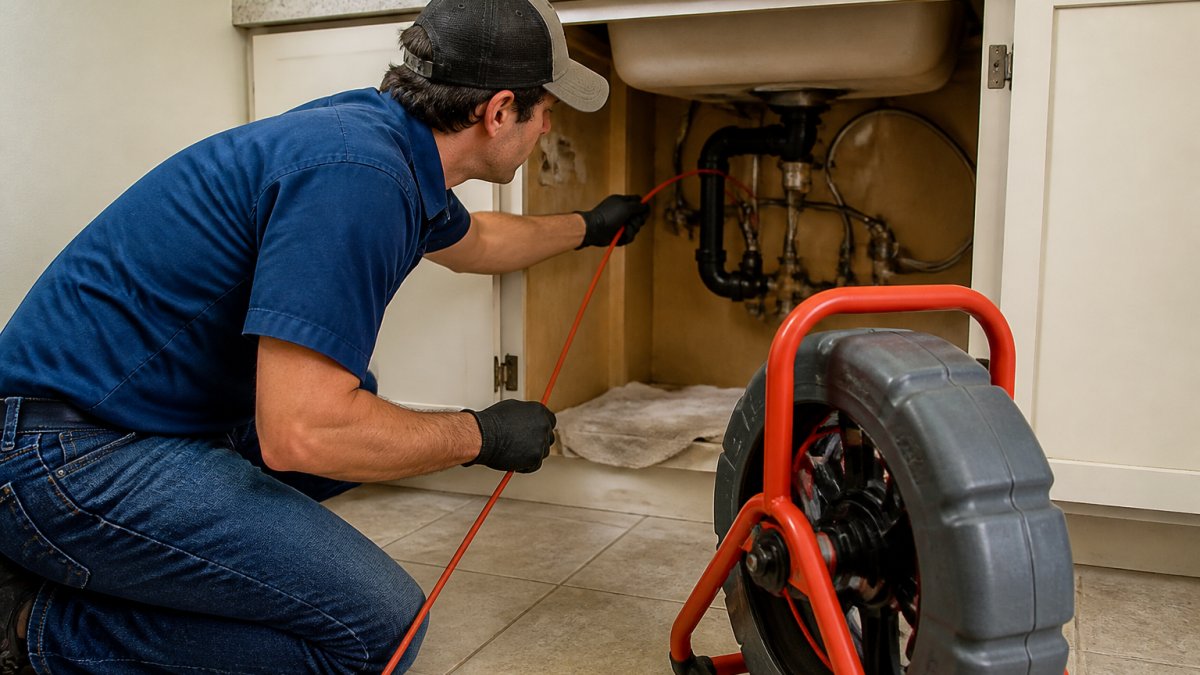
bluefrog Plumbing + Drain of Denver brings specialized equipment to tackle recurring clogs and slow drains. Their focus on drain cleaning and repair means they carry the tools and expertise for stubborn blockages that standard augers cannot clear.
For a drain issue that has resisted multiple attempts at resolution, their focused approach and commercial-grade equipment often succeed where generalist plumbers fail.
However, if your issue spans multiple systems, you may need to coordinate with a second contractor.
How to Verify Plumbing License Credentials Before Hiring
In this state, the regulatory framework is specific enough that a little homework separates a true professional from a handyman with a truck.
The State License: More Than a Piece of Paper
The state issues two relevant credentials: a Journeyman Plumber license and a Master Plumber license. A journeyman has completed a multi-year apprenticeship and passed a state exam, but they must work under the supervision of a master plumber. A master plumber has additional years of experience and has passed a more advanced exam.
Ask not just for the company's license number, but for the license number of the individual who will actually perform the work. If a company cannot name the master plumber who will supervise your project, that is a red flag.
The Verification Process, Step by Step
The state's Department of Regulatory Agencies (DORA) maintains an online license lookup tool. The process takes about two minutes:
- Go to the DORA license search portal.
- Enter the contractor's last name or license number.
- Confirm the license status reads "Active" and that there are no disciplinary actions listed.
A license that is "Delinquent" or "Expired" means the contractor is working outside the law. Disciplinary actions can range from fines for code violations to suspension for fraudulent billing.
The Permit Question: Why It Matters
Many homeowners skip the permit process to save a few dollars, but that decision can cost far more in the long run. For most plumbing modifications, moving a drain line, replacing a water heater, or adding a bathroom, the local building department requires a permit.
A licensed plumbing expert will typically handle the permit process as part of the job. If a contractor suggests skipping the permit to save time or money, find another contractor.
Insurance: The Second Half of the Equation
A license proves competence; insurance proves protection. The state requires licensed plumbers to carry workers' compensation and liability insurance, but the coverage limits vary. Ask for a certificate of insurance directly from the contractor's insurance provider. The certificate should show:
- The policyholder's exact business name (matching the license)
- The policy effective dates (must be current)
- The liability coverage limit (typically $1 million or more for a reputable operation)
If a contractor is injured on your property and lacks workers' compensation, you could be liable for their medical bills. The five-minute verification process is cheap insurance against a six-figure headache.
The Local Code Angle: Beyond the State License
The state license is the baseline, but local jurisdictions in the Denver metro often have their own amendments to the state plumbing code. A contractor who works exclusively in one municipality may be intimately familiar with those local rules.
Ask directly: "Have you pulled permits in my specific city or county before?" A confident yes, with specific examples of recent projects, indicates local knowledge that translates into fewer inspection failures and fewer callbacks.
Emergency Plumbing Services: What to Expect and How to Prepare
Plumbing emergencies in the Denver metro are also seasonal. The region's high altitude and dramatic temperature swings create a unique set of failure modes.
The Freeze-Thaw Cycle: Denver's Signature Plumbing Threat
The Front Range experiences more than 300 days of sunshine annually, but winter temperatures routinely drop below freezing. Water expands by roughly 9% when it freezes, creating immense pressure, often exceeding 2,000 psi, which is more than enough to rupture even a thick copper or PVC pipe (usgs.gov).
The most vulnerable pipes are those in unheated spaces: garages, crawl spaces, exterior walls, and attics.
The 20-Degree Rule and What It Means for Your Home
Most practitioners follow a simple guideline: when the outside temperature drops to 20°F or below, the risk of pipe freezing increases dramatically.
Before the first hard freeze of the season, which typically arrives in October or November, take these steps:
- Disconnect and drain outdoor hoses. A hose left attached can cause water to back up into the faucet and freeze, bursting the pipe inside your wall.
- Close and insulate outdoor faucet covers. These inexpensive foam covers add a layer of protection, but they are not a substitute for shutting off the water supply to exterior spigots if you have a shutoff valve.
- Insulate exposed pipes in unheated areas. Foam pipe insulation is cheap and easy to install. Focus on the garage, crawl space, and attic.
- Know your main shutoff valve location. If a pipe does burst, shutting off the water quickly limits damage. Find the valve now, not during an emergency. It is often located near the water meter, in the basement, or on an exterior wall.
- Consider a smart leak detector. Devices that monitor for moisture and alert your phone can catch a slow leak before it becomes a flood. They cost between $30 and $100 and are a worthwhile investment for any homeowner.
What to Expect When You Call for Emergency Service
When you call for an emergency, the dispatcher will ask about the nature and severity of the problem and whether you have shut off the main water valve.
Expect a clear estimate of the arrival window and a discussion of after-hours rates. Ask directly about the service call fee, the hourly rate, and whether there is an additional charge for the emergency dispatch itself.
The Spring Thaw: The Second Wave of Emergencies
The spring thaw is a peak time for plumbing emergencies. Pipes that survived the winter may have developed hairline cracks from repeated expansion and contraction. Sewer lines are particularly vulnerable, as shifting soil can separate joints or crush older clay or cast-iron pipes.
A spring inspection is a smart investment. A licensed plumbing expert can check for signs of stress, test water pressure, and use a camera to inspect sewer lines for damage.
The 2 A.M. Test: Are You Prepared?
The real test of your preparation is the 2 a.m. wake-up call when you hear water running where no water should be. At that moment, you will not have time to research contractors.
That plan starts with knowing your shutoff valve, having a list of emergency contacts, and understanding your home's specific vulnerabilities.
Frequently Asked Questions
Does Colorado require plumbers to be licensed?
Yes. Colorado requires plumbers to hold a state-issued license through the Division of Professions and Occupations. This includes journeyman and master plumber classifications. Hiring a licensed professional ensures they have passed the required exams and meet continuing education standards. You can verify a plumber's license status through the Colorado Department of Regulatory Agencies (DORA) website to confirm the credential is active and in good standing.
How can I verify if a plumbing contractor is licensed?
Ask the contractor directly for their plumbing contractor license number and the name of the qualifying master plumber. Then, visit the Colorado Division of Professions and Occupations website and use the license verification tool. Search for the company name or the individual's name to confirm the license is active. You should also ask for proof of insurance, including general liability and workers' compensation, before work begins.
What is the average hourly rate for a plumber in Denver?
The cost of residential plumbing repair varies by job complexity, materials, and the company's pricing model. Some Denver metro companies charge an hourly rate, while others provide a flat-rate quote for the entire project. For example, one provider charges around $185 for the first hour. Always request a detailed written estimate before approving work so you understand labor, materials, and any potential additional fees.
What are the benefits of hiring a family-owned plumbing company?
Family-owned plumbing companies often have a reputation to protect within their local community. This usually translates into more personalized customer service, a focus on long-term relationships rather than one-time transactions, and a deeper commitment to doing the job right the first time. Many have been serving the area for decades, like Colby Plumbing Company LLC, which has operated in the Denver metro since 1996.
This article was written using GrandRanker
Frequently Asked Questions
Q: Does Colorado require plumbers to be licensed?
A: Yes. Colorado requires plumbers to hold a state-issued license through the Division of Professions and Occupations. This includes journeyman and master plumber classifications. Hiring a licensed professional ensures they have passed the required exams and meet continuing education standards. You can verify a plumber's license status through the Colorado Department of Regulatory Agencies (DORA) website to confirm the credential is active and in good standing.
Q: How can I verify if a plumbing contractor is licensed?
A: Ask the contractor directly for their plumbing contractor license number and the name of the qualifying master plumber. Then, visit the Colorado Division of Professions and Occupations website and use the license verification tool. Search for the company name or the individual's name to confirm the license is active. You should also ask for proof of insurance, including general liability and workers' compensation, before work begins.
Q: What is the average hourly rate for a plumber in Denver?
A: The cost of residential plumbing repair varies by job complexity, materials, and the company's pricing model. Some Denver metro companies charge an hourly rate, while others provide a flat-rate quote for the entire project. For example, one provider charges around $185 for the first hour. Always request a detailed written estimate before approving work so you understand labor, materials, and any potential additional fees.
Q: What are the benefits of hiring a family-owned plumbing company?
A: Family-owned plumbing companies often have a reputation to protect within their local community. This usually translates into more personalized customer service, a focus on long-term relationships rather than one-time transactions, and a deeper commitment to doing the job right the first time. Many have been serving the area for decades, like Colby Plumbing Company LLC, which has operated in the Denver metro since 1996.