 listicle
Signs of a Failing Sump Pump: 9 Warning Signs
Table of Contents
- Signs of a Failing Sump Pump: 9 Warning Signs
- 1. Unusual Noises: Grinding, Rattling, or Humming Sounds
- 2. Pump Runs Constantly Without Stopping
- 3. Short Cycling and Frequent On-Off Behavior
- 4. Visible Rust, Corrosion, and Age-Related Wear
- 5. Water Pooling in the Sump Pit or Basement Flooding
- How to Test a Sump Pump and Verify It's Working
- 6. Tripping the Circuit Breaker Repeatedly
- 7. Signs of Battery Backup System Failure
- When to Call a Professional
- Frequently Asked Questions
Last Updated: September 2, 2026
Signs of a Failing Sump Pump: 9 Warning Signs
A failing sump pump can turn a dry basement into a flooded disaster within hours. At Colby Plumbing Company LLC, we've responded to countless emergency calls from homeowners who ignored early warning signs, only to face thousands of dollars in repairs.
Most people don't know what to listen for or watch for. A sump pump operates silently in the background, and by the time you notice something's wrong, the system may already be failing. This guide walks you through the nine most common signs that your sump pump is failing, how to test it yourself, and when to call a professional.
Quick Diagnosis:
- Unusual sounds (grinding, rattling, humming) = mechanical wear
- Constant running = float switch or check valve failure
- Water pooling = pump isn't ejecting water properly
- Rust and corrosion = age and deterioration
- Electrical issues = circuit breaker trips or motor burnout
1. Unusual Noises: Grinding, Rattling, or Humming Sounds
A healthy sump pump operates with a low, steady hum when it cycles on. Grinding, rattling, or squealing sounds indicate mechanical breakdown.
Grinding noises mean the impeller (the internal spinning component that moves water) is damaged or misaligned, usually from debris or years without maintenance. Rattling sounds indicate loose components inside the pump casing, motor mounts, discharge pipe connections, or bearings. High-pitched humming or squealing signals bearing wear and friction increasing.
If your sump pump sounds different than it did months ago, don't wait. Unusual noises are almost always a sign that internal components are deteriorating, and ignoring them makes repairs more expensive and increases the risk of failure during heavy rain.
2. Pump Runs Constantly Without Stopping
A sump pump that runs continuously, even when there's no water entering the basin, is failing.
The float switch, which tells the pump when to turn on and off, is likely stuck in the "on" position from debris or corrosion. Alternatively, water may be leaking back into the sump pit through a faulty check valve, forcing the pump to work endlessly.
A pump that never stops running will burn out its motor within days or weeks. The motor needs rest cycles to cool down; running 24/7 accelerates wear on motor windings, bearings, and electrical components.
Check if the float switch moves freely up and down inside the sump pit. If it's stuck or tangled, free it up. If the switch moves freely but the pump still runs constantly, the check valve (a one-way valve in the discharge pipe) is likely faulty and requires professional replacement.
3. Short Cycling and Frequent On-Off Behavior
Short cycling is when your sump pump turns on, runs for just a few seconds, shuts off, then immediately turns back on again.
The most common cause is check valve failure, water flows backward into the sump pit immediately after the pump shuts off, triggering the float switch to cycle the pump back on. A stuck or overly sensitive float switch can also cause erratic cycling.
Short cycling is brutal on pump motors. Each start draws a large inrush current that stresses electrical components (peer-reviewed research). Repeated starts and stops accelerate wear far more than continuous operation, often followed by motor burnout within weeks.
Listen during a quiet period, if you hear the pump cycling on and off every 5-10 seconds without heavy rainfall, short cycling is occurring.
4. Visible Rust, Corrosion, and Age-Related Wear
Sump pumps are submerged in water constantly. Light surface rust is normal, but heavy corrosion on electrical connections, motor terminals, or the discharge pipe signals the pump is nearing the end of its lifespan. Corroded connections increase electrical resistance, generating heat and risking electrical arcing.
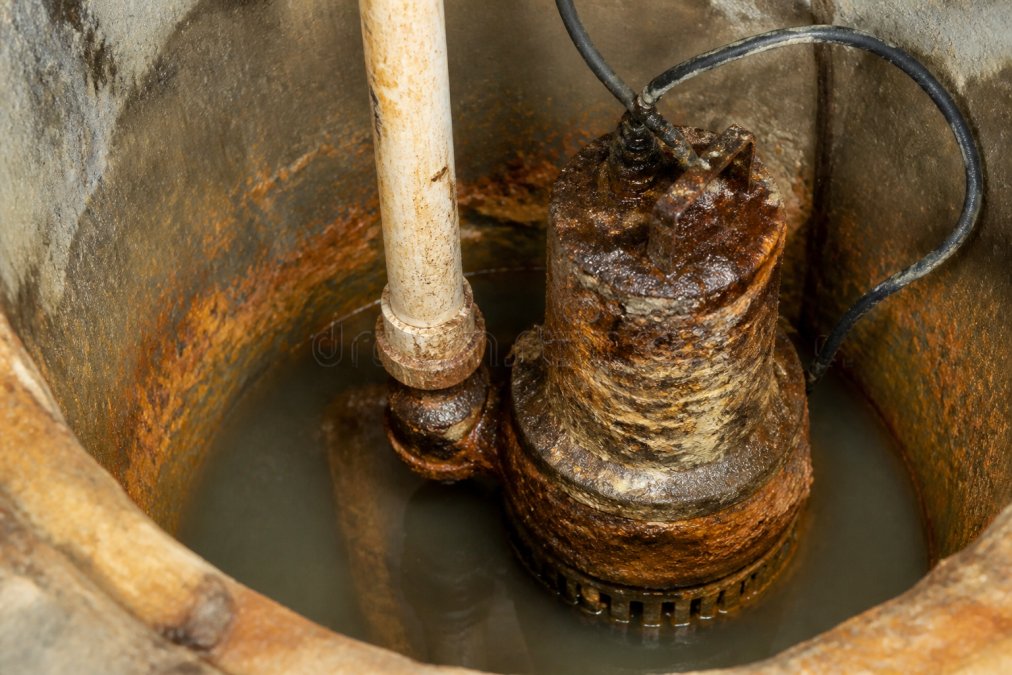
Most sump pumps last 7-10 years with regular maintenance, and 5-7 years without it. If your pump is older than 10 years, it's living on borrowed time. A pump that's 12+ years old should be replaced proactively, before it fails during a critical moment.
Check the pump housing for visible rust, white mineral deposits, or corrosion on electrical connections. If the pump casing has pitting or small holes where rust has eaten through the metal, replacement is urgent.
5. Water Pooling in the Sump Pit or Basement Flooding
If water is pooling around the sump pit or backing up into the basement despite the pump running, the pump isn't ejecting water effectively.
The discharge pipe may be clogged with sediment or debris. The check valve may be stuck partially closed, restricting water flow. The pump's intake screen may be clogged, or the impeller may be damaged, reducing pumping capacity.
The discharge pipe may also be improperly sloped or too long. A properly installed discharge pipe should slope downward at least 1/8 inch per foot and should exit the foundation at least 10 feet away from the basement wall (fema.gov).
If water is pooling in the basement, your pump is failing to do its job. Continued water intrusion will damage foundations, create mold growth, and ruin stored items.
How to Test a Sump Pump and Verify It's Working
Before calling a professional, you can perform a simple manual test to verify your pump is functioning.
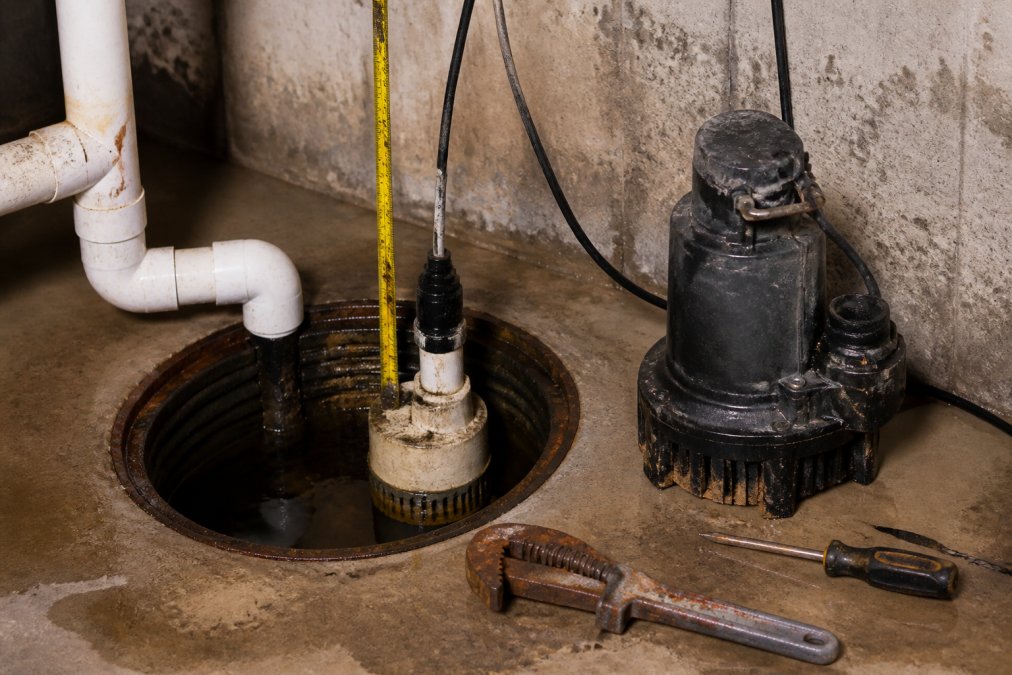
Step 1: Locate the sump pit. It's typically in the basement floor, often in a corner or along a foundation wall.
Step 2: Carefully pour water into the sump pit. Use a bucket to slowly add water until the water level rises noticeably. Watch the float switch rise as the water level increases.
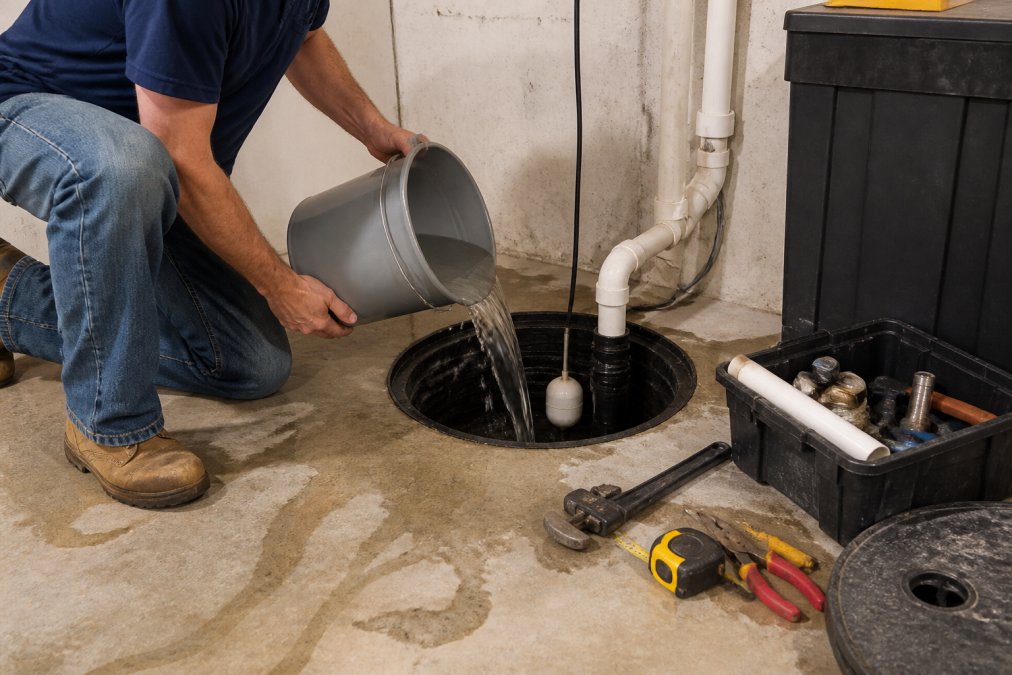
Step 3: Listen for the pump to activate. As the water level rises, the pump should turn on automatically within a few seconds.
Step 4: Verify water is being ejected. Walk outside to the discharge pipe exit point. You should see water flowing out. If no water is flowing, the pump is running but the discharge pipe is blocked.
Step 5: Let the water level drop. The water level should drop steadily. Once it falls below the float switch, the pump should shut off automatically. If it cycles back on immediately, short cycling is occurring.
If the pump responds to rising water, turns on, ejects water, and shuts off when the water level drops, the basic system is working. If any of these steps fail, a component is failing and needs professional attention.
6. Tripping the Circuit Breaker Repeatedly
If your sump pump circuit breaker trips frequently, an electrical problem is developing inside the pump or in the wiring.
A motor with failing windings draws excessive current as it struggles to operate, triggering the breaker. Corrosion on electrical connections increases resistance and causes heat buildup. Water infiltration into the motor housing creates short circuits.
A tripping breaker is your home's electrical system protecting itself from damage or fire. Don't simply reset the breaker repeatedly, if the pump trips more than once, the motor is failing and needs replacement.
7. Signs of Battery Backup System Failure
If your sump pump system includes a battery backup pump, watch for signs that the backup system is failing.
Dead or failing battery. The battery typically lasts 3-5 years depending on how often it's cycled (energy.gov). If the battery isn't being charged properly, the backup pump won't function during power outages. Many systems have a low-battery indicator light or chirp alarm.
Corroded battery terminals. Battery connections can corrode over time, preventing proper charging and power delivery.
Failed backup pump motor. The backup pump itself can fail independently of the main pump.
Disconnected or improperly installed discharge pipe. Some backup systems use a separate discharge pipe. If this pipe becomes disconnected or clogged, water won't be ejected during a power outage.
A battery backup system is your insurance against flooding during power outages, typically when heavy rain is falling and your main pump is most needed. Test your backup system by flipping the manual test switch and verifying that water is being ejected from the backup discharge pipe.
When to Call a Professional
Call a licensed plumber if:
- The pump makes grinding, rattling, or squealing noises
- The pump runs constantly without stopping
- Water is pooling in the basement despite the pump running
- The circuit breaker trips repeatedly
- The pump is older than 10 years
- Your manual test shows the pump isn't responding to rising water
- The discharge pipe is clogged or corroded
Colby Plumbing Company LLC has been serving the Denver metro area since 1996. Our licensed professionals respond to sump pump emergencies with urgency, understanding that water damage doesn't wait, and neither do we.
Frequently Asked Questions
How do I tell if my sump pump needs replacing?
Your sump pump likely needs replacement if it's over 7-10 years old, makes grinding or unusual noises, runs constantly without stopping, fails the manual water test, or shows visible rust and corrosion. If you notice water pooling in the sump pit despite the pump running, or if it trips your circuit breaker repeatedly, replacement is typically the safest option. A professional can assess whether repair is possible, but older units often cost more to fix than to replace.
What is the most common reason for sump pump failure?
Float switch failure is the most common cause. The float switch controls when the pump activates based on water level. When it gets stuck or corroded, the pump either won't turn on when needed or runs constantly. Check valve failure is the second leading cause, a faulty check valve allows water to drain back into the sump pit, forcing the pump to cycle repeatedly and wear out faster. Regular inspection of these components prevents most failures.
What is the average lifespan of a sump pump?
Most sump pumps last 7-10 years with proper maintenance. Factors affecting lifespan include pump quality, how often it runs (frequency of heavy rainfall or groundwater intrusion), and maintenance. Submersible pumps like cast iron models typically outlast pedestal pumps. If your pump is approaching 10 years old and showing signs of wear, consider having a professional evaluate it before failure occurs, especially before heavy rain season.
How often should a sump pump run during a storm?
During heavy rainfall, a sump pump should cycle on and off as water accumulates in the sump pit, typically every few minutes to every 15 minutes depending on rainfall intensity and groundwater levels. If your pump runs continuously without stopping for hours, or if it cycles on and off every few seconds (short cycling), these are warning signs of a problem. Normal operation shows the pump responding to rising water levels, then stopping once the pit drains to the float switch cutoff point.
Can a sump pump be repaired or does it need to be replaced?
Some sump pump issues can be repaired, while others require replacement. Float switch problems, check valve failures, and discharge pipe blockages are often repairable. However, if the pump motor is burned out, the impeller is damaged, or the unit is corroded beyond function, replacement is necessary. A licensed plumber can diagnose the issue and recommend the most cost-effective solution. In many cases, replacement costs less than extensive repairs on older units.
A failing sump pump puts your basement at risk. The sooner you catch the warning signs, the sooner you can prevent water damage and avoid costly repairs. If you've noticed any of these signs in your system, don't delay. Contact Colby Plumbing Company LLC today for a professional inspection and get your sump pump working reliably again. Our team is ready to help with fast, affordable service and a 100% satisfaction guarantee.
This article was written using GrandRanker