 listicle
Tankless Water Heater Installation Pricing: 2026 Guide
Table of Contents
- What Drives Tankless Water Heater Installation Pricing
- Electric vs. Gas Water Heater Cost Difference
- Tankless Water Heater Installation Labor Cost Breakdown
- Site-Specific Installation Challenges and Their Cost Impact
- How to Evaluate a Plumbing Installation Quote
- Permits, Inspections, and Compliance Costs
- Tax Credits and Rebates for Tankless Installation
- Conclusion
- Frequently Asked Questions
Last Updated: September 4, 2026
Tankless water heater installation pricing is rarely a single number you can look up online. The final cost depends on a chain of site-specific variables, from the unit you choose to the condition of your existing gas lines and venting. At Colby Plumbing Company LLC, we've installed hundreds of these systems across the Denver metro area since 1996, and we've seen firsthand how two identical heaters can differ by thousands of dollars in total project cost.
Understanding the components of that price is the difference between a smooth upgrade and a budget surprise. This review breaks down the tankless water heater installation pricing structure into its core parts: equipment, labor, site modifications, permits, and the often-overlooked costs that catch homeowners off guard. We'll also give you a framework for auditing quotes so you can compare plumbers on apples-to-apples terms rather than just the bottom line.
What Drives Tankless Water Heater Installation Pricing
The single largest variable in tankless water heater installation pricing is not the heater itself. It's the work required to make your home compatible with the unit. A tankless system heats water on demand with high BTU capacity, which means it demands more gas and more venting than a standard tank. If your current setup was built for a 40-gallon tank, it likely wasn't designed for the load a tankless unit requires.
Three primary cost drivers dominate every project: the unit's purchase price, the labor hours, and the cost of modifications to gas lines, venting, or electrical systems. The unit itself can range from budget-friendly point-of-use models to whole-home systems from brands like Rinnai, Navien, Noritz, and Rheem. Labor and modifications, however, are where quotes start to diverge dramatically.
A common mistake is comparing quotes based on the heater model alone. Two plumbers might quote the same Rinnai unit, yet one bid comes in significantly higher because they factored in a gas line upsizing that the other plumber missed. The lower bid isn't a bargain; it's an incomplete scope of work that will surface as a change order later.
Electric vs. Gas Water Heater Cost Difference
The electric vs gas water heater cost difference starts with the unit itself but extends deep into your home's infrastructure. Gas tankless models typically cost more upfront and require venting and gas line work. Electric models are often cheaper to buy, but they can demand a significant electrical circuit upgrade that erases that savings.
For most whole-home applications, gas units are the standard recommendation because they deliver higher flow rates measured in GPM and handle simultaneous demands like a shower and dishwasher. Electric models, particularly from brands like Rheem, work well for point-of-use applications or smaller homes, but they draw enormous power. A typical electric tankless unit can require 120 to 150 amps, which often means a new electrical panel or a dedicated circuit upgrade.
Here's where the pricing picture gets clear:
| Factor | Gas Tankless | Electric Tankless |
|---|---|---|
| Unit cost | Higher | Lower |
| Venting requirements | Exhaust flue needed | None |
| Gas line modification | Often required | Not applicable |
| Electrical upgrade | Minimal | Often substantial |
| Flow rate (GPM) | Higher | Lower |
| Best for | Whole-home demand | Point-of-use or small homes |
The decision between gas and electric is not purely financial. If your home lacks a gas line entirely, running a new one can add significant cost, making electric more attractive despite the panel work. If you already have gas service, the gas unit usually wins on performance and long-term operating cost.
Tankless Water Heater Installation Labor Cost Breakdown
Labor is where tankless water heater installation labor cost becomes the most predictable yet most misunderstood line item. A straightforward replacement in an accessible location with existing proper venting and gas lines might take a licensed plumber four to six hours. A complex retrofit involving new venting, gas line upsizing, and code compliance can stretch to a full day or more.
The hourly rate for a licensed plumber reflects more than time. It covers overhead, insurance, specialized tools, and the expertise required to handle gas connections safely. Attempting to cut costs by hiring an unlicensed handyman for gas work is a serious safety and legal risk. Plumbing code compliance exists for a reason, and improper gas line installation can lead to carbon monoxide hazards or fire risk.
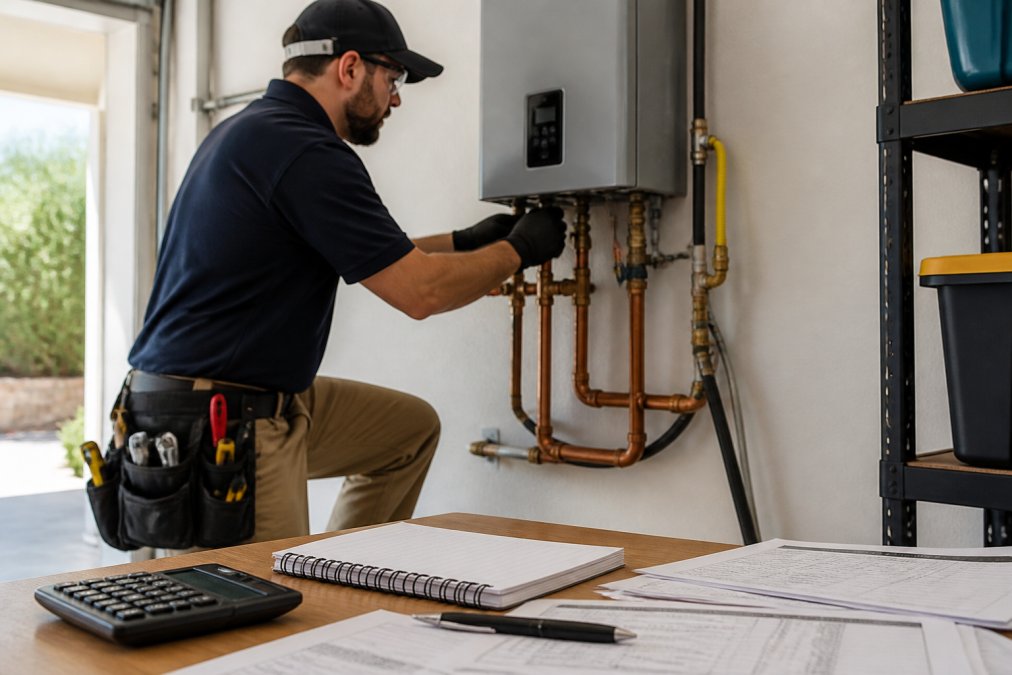
Labor costs also include the removal and disposal of your old tank water heater. That's a heavier, dirtier job than most homeowners anticipate. Hauling a 150-pound tank out of a basement or crawl space adds time and effort that should be reflected in the quote.
What most guides miss is the diagnostic and load calculation work that happens before any physical installation. A professional should calculate your home's hot water demand, verify gas line sizing, and assess venting requirements. This upfront engineering is part of the labor cost, and it's what prevents undersized installations that fail during peak usage.
Site-Specific Installation Challenges and Their Cost Impact
The condition of your home is the wildcard in any tankless water heater installation pricing review. Two identical units in two identical houses can produce wildly different final invoices because of what's behind the walls. Retrofitting challenges are the number one source of budget overruns in this category.
Gas Line Sizing and Venting Requirements
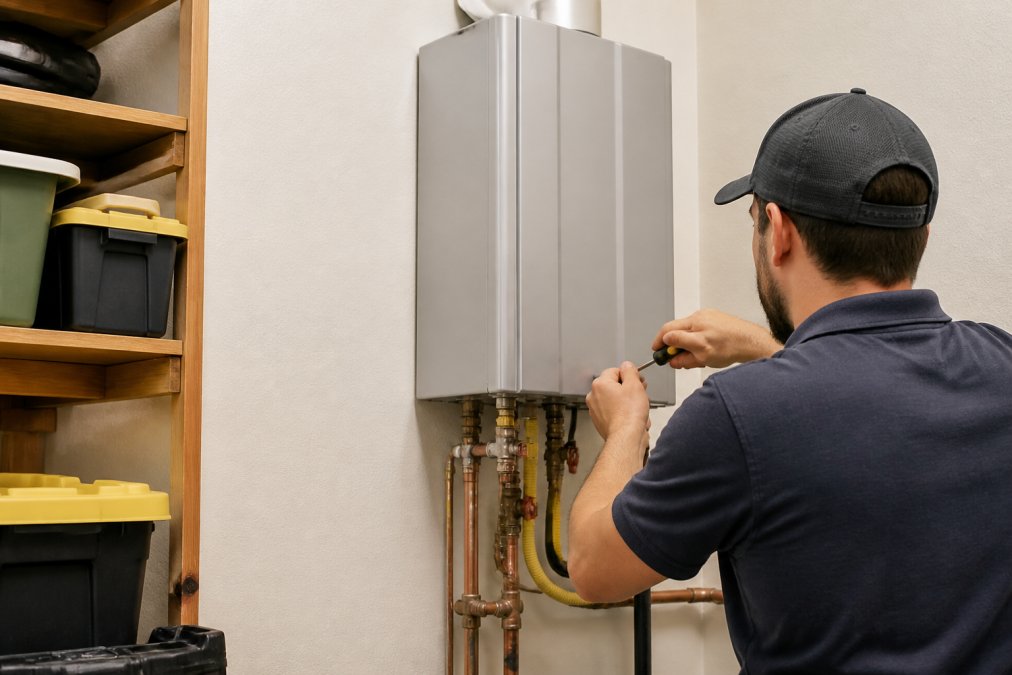
Gas tankless units require a larger gas line than storage tanks because they fire at much higher BTU capacity. If your existing line is undersized, the plumber must run a new line from the meter or manifold, which involves cutting into walls, running pipe through the attic or crawl space, and patching drywall. This is often the single most expensive modification in a retrofit.
Venting requirements are equally demanding. Tankless units use either condensing or non-condensing technology, and each has different exhaust flue needs. Non-condensing units require stainless steel venting that can handle high temperatures. Condensing units, like many Navien models, can use PVC piping because they extract more heat from the exhaust, but they also produce acidic condensate that requires neutralization. The complexity of running this venting to the exterior affects labor time significantly.
Electrical Panel Upgrades for Electric Models
Electric tankless models draw massive current, and most existing panels weren't designed for that load. Upgrading an electrical panel or adding a dedicated circuit is a job for a licensed electrician, adding another trade and another invoice to the project. The cost of this upgrade can approach the cost of the heater itself, which is why gas units often win the total cost comparison for whole-home installations.
Retrofit vs. New Construction Installation
New construction installation is the ideal scenario. The plumber can design gas lines, venting, and mounting locations from scratch, which minimizes labor and material costs. Retrofits are the opposite. Existing homes present unknown site conditions: cramped crawl spaces, finished basements, outdated venting, and gas lines sized for a previous generation of appliances.
A retrofit also means working around your schedule and your home's layout. If the new unit goes in a different location than the old tank, the plumber must run new water lines, gas lines, and venting across the house. That's a substantial increase in both materials and labor.
How to Evaluate a Plumbing Installation Quote
Learning how to evaluate a plumbing installation quote is the most valuable skill you can bring to this project. A quote is not just a price; it's a specification of what the plumber plans to do. The best quotes are detailed enough that you could hand them to a competitor and ask, "Can you match this scope for less?"
Use this checklist when comparing bids:
- Itemized unit cost with model number and manufacturer warranty terms
- Separate line for labor with estimated hours
- Gas line modification scope, including pipe material and length
- Venting materials and routing description
- Permit fees and inspection scheduling
- Removal and disposal of the old unit
- Warranty on labor, not just the manufacturer's unit warranty
- Timeline for completion and clean-up expectations
The lowest bid is not the best bid if it omits half the work. A higher quote that includes permits, proper venting, and a gas line upsizing is often the more honest and ultimately more affordable option. Quote transparency is a sign of a contractor who has done the assessment work and knows what the job actually requires.
Permits, Inspections, and Compliance Costs
Most jurisdictions require a permit for tankless water heater installation, and the cost is usually modest compared to the total project. Permit fees vary by locality, but they cover an inspection that verifies the gas connection, venting, and clearances meet code. Skipping the permit to save a small fee is a false economy. It can invalidate your homeowner's insurance, create problems when you sell the house, and leave a dangerous installation uncorrected.
The inspection process also protects you. An inspector checks that the exhaust flue is properly terminated, that gas line sizing is adequate, and that the unit is mounted with the correct clearances. If the inspector finds a violation, the plumber must fix it before the system is approved. That's a layer of accountability you lose with an unpermitted installation.
Manufacturer warranties often require professional installation to remain valid. If a unit fails and the manufacturer discovers it was installed without a permit or by an unlicensed party, the warranty claim can be denied. The service life of a tankless unit is measured in decades, so protecting the warranty is protecting a long-term investment.
Tax Credits and Rebates for Tankless Installation
Energy-efficient tankless models with an Energy Star rating may qualify for federal tax credits and local utility rebates. These incentives can offset a meaningful portion of your installation cost, but they require documentation. You need the model's Energy Star certification, proof of purchase, and in some cases, verification from the installer that the unit meets specific thermal efficiency criteria.
Utility rebates are often administered at the local level and can change frequently. Your plumber may be aware of current programs in your area, but it's worth checking with your utility provider directly. The U.S. Department of Energy's guide to energy-efficient water heaters explains the different types of tankless systems and their efficiency ratings, which helps you identify qualifying models.
Federal tax credits for energy-efficient home improvements are periodically updated by Congress. The Database of State Incentives for Renewables & Efficiency tracks both federal and state-level incentives, including rebates for high-efficiency water heaters. Checking this resource before you purchase ensures you buy a model that qualifies.
The annual energy savings from a high-efficiency tankless unit are real, but they accumulate over years, not months. The ENERGY STAR product finder for water heaters provides a comparison tool that estimates annual operating costs for specific models, helping you model the payback period against the higher upfront installation cost.
Conclusion
Tankless water heater installation pricing is not a mystery once you understand its components. The unit, the labor, the gas line and venting work, the permits, and the site-specific challenges all contribute to the final number. A detailed, transparent quote from a licensed plumber is your best defense against budget overruns and code violations.
At Colby Plumbing Company LLC, we've served the Denver metro area since 1996 with licensed, seasoned professionals who provide transparent pricing and a 100% satisfaction guarantee. We handle everything from the initial load calculation to the final inspection, ensuring your installation meets all plumbing code requirements and manufacturer specifications. Contact us today for a detailed quote that itemizes every cost, so you know exactly what your tankless upgrade will involve before work begins.
Frequently Asked Questions
What should I expect to pay for tankless water heater installation?
Installation costs vary significantly based on your home's setup, the heater type (gas or electric), and site modifications needed. Labor typically represents a substantial portion of the total project cost. To get an accurate estimate for your specific situation, contact a licensed plumber who can assess your gas line sizing, venting requirements, electrical capacity, and any necessary code compliance work. Transparent quotes should itemize labor, materials, permits, and inspections separately.
How does electric vs. gas water heater cost difference affect my total installation expense?
Gas tankless models generally have lower installation costs upfront but require proper gas line sizing and venting modifications. Electric models avoid venting needs but often demand electrical panel upgrades, which can be expensive. The total installed cost difference depends on your home's existing infrastructure. A gas conversion might need new piping and exhaust flue work, while an electric upgrade might require a new 200-amp service or dedicated circuit installation. Your plumber's quote should break down these specific modifications.
What hidden costs should I watch for in a tankless water heater installation quote?
Common hidden costs include permit fees, inspection charges, gas line pressure testing, water hardness treatment (descaling systems), recirculation pump installation for faster hot water delivery, and unforeseen structural modifications. Some quotes omit labor for removing the old tank or fail to account for code compliance upgrades. Always ask whether the estimate includes permits, inspections, and any site-specific modifications. Request a detailed breakdown so you understand exactly what each line item covers and can compare quotes accurately.
Is professional installation worth the cost compared to DIY?
Professional installation is essential for tankless systems. These units involve complex plumbing code compliance, precise gas line sizing to meet BTU capacity, proper venting to prevent carbon monoxide buildup, and electrical work that must meet local standards. Improper installation can void manufacturer warranties, create safety hazards, and result in poor performance. A licensed plumber ensures your system meets all requirements and operates efficiently. Many jurisdictions legally require licensed professionals for gas and electrical work, making DIY installation impossible anyway.
This article was written using GrandRanker