 how-to
Verify Plumbing License and Insurance: A Step-by-Step Guide
Table of Contents
- Why Verifying Plumbing License and Insurance Matters
- How to Search for a Plumber's License Number
- How to Check If a Plumber Is Insured
- Questions to Ask a Plumber Before Hiring
- Risks of Hiring Unlicensed Plumbers
- Understanding License Classifications and Bond Requirements
- What to Do If You Discover a Contractor Is Uninsured or Unlicensed
- Conclusion
Last Updated: August 18, 2026
Why Verifying Plumbing License and Insurance Matters
Before you hire any plumber, you need to verify plumbing license and insurance coverage. This isn't optional paperwork, it's your primary defense against costly mistakes, unfinished work, and liability if something goes wrong on your property.
An unlicensed plumber might seem cheaper upfront, but the real cost emerges when the work fails. A burst pipe from improper installation, a flooded basement from a failed repair, or code violations discovered during a home sale can cost thousands to fix. Insurance protects you too. If a plumber damages your home and has no liability coverage, you're stuck paying for repairs out of pocket.
Licensing requirements vary by state and municipality, but the purpose is consistent: to verify that someone has completed training, passed exams, and meets professional standards. Insurance, including workers' compensation, general liability, and sometimes bonding, protects both you and the plumber if an accident occurs on the job.
At Colby Plumbing Company LLC, we've worked with homeowners and property managers who've been burned by unlicensed contractors. The pattern is always the same: they trusted someone's word, skipped verification, and paid the price. This guide walks you through exactly how to verify plumbing license and insurance so you can hire with confidence.
How to Search for a Plumber's License Number
The most direct way to verify a plumber's credentials is to search your state's licensing database. Most states maintain public portals where you can look up active licenses by contractor name or license number.
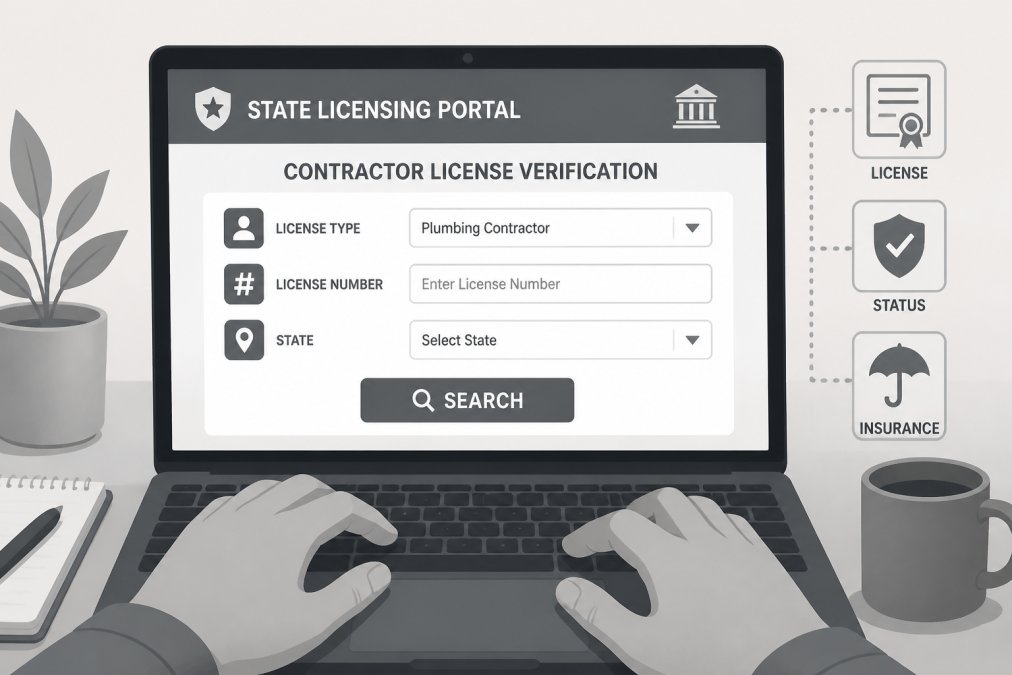
Step 1: Identify your state's licensing board. Each state regulates plumbing differently. Some have a single statewide board; others delegate to county or municipal authorities. Search "[Your State] plumbing license lookup" or "[Your State] contractor licensing board" to find the official portal.
Step 2: Gather the plumber's information. You'll need either the plumber's license number or their full business name. If they give you a license number, that's the fastest route. If you only have their name, that works too, most databases search by both criteria.
Step 3: Search the public database. Enter the information and look for results showing active status. The database should display:
- License number
- License classification (journeyman, master, contractor, etc.)
- Issue and expiration dates
- Any disciplinary actions or complaints
Step 4: Verify the license classification matches the work. A plumber's license classification determines what work they can legally perform. A journeyman plumber can install and repair plumbing under supervision, while a master plumber can work independently and supervise others. For major work like new construction or significant remodels, you want a master plumber or licensed contractor.
Step 5: Check the expiration date. An expired license means the plumber is no longer legally authorized to perform plumbing work. If the license has lapsed, ask when they plan to renew it, or hire someone else.
Many states also allow you to search by business name if the plumber operates as a company. This reveals whether the business itself is registered as a licensed contractor entity, which adds another layer of verification.
How to Check If a Plumber Is Insured
Licensing proves qualification. Insurance proves financial responsibility if something goes wrong.
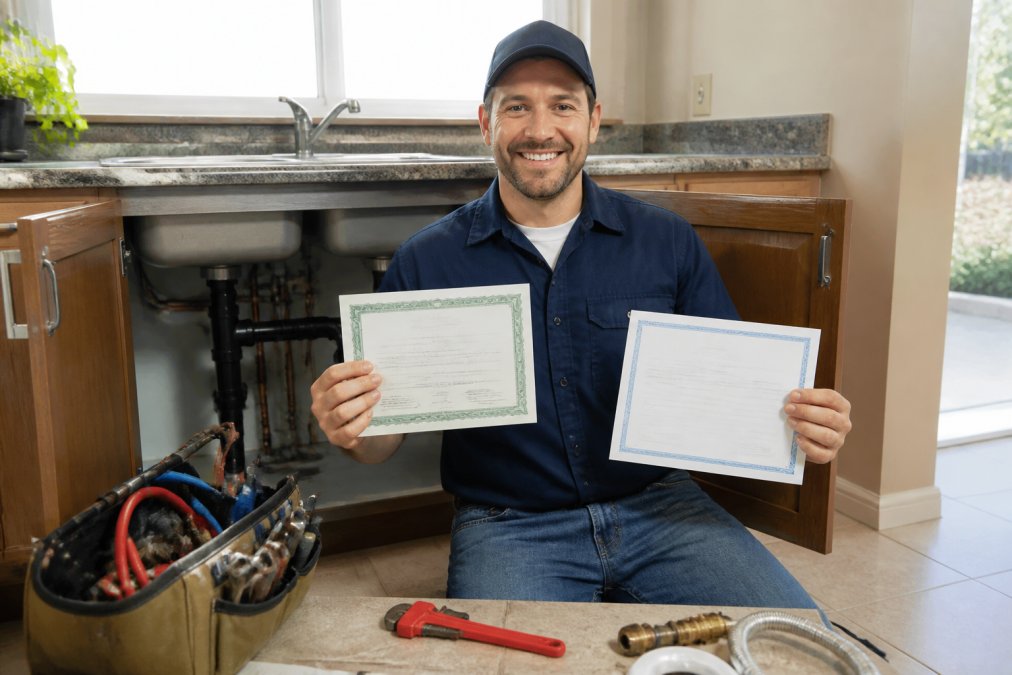
Step 1: Ask directly for proof of insurance. Before hiring, request copies of their insurance certificates. A legitimate plumber will have these on hand or can provide them within hours. If they hesitate or make excuses, that's a red flag.
Step 2: Understand the three types of coverage. Not all insurance is the same. Here's what you should see:
- General liability insurance covers property damage and bodily injury caused by the plumber's work. If they accidentally damage your kitchen cabinets or a guest slips on water they spilled, this policy covers it.
- Workers' compensation insurance protects the plumber's employees if they're injured on the job. This is legally required in most states for businesses with employees. Without it, you could be liable if a plumber's assistant gets hurt at your home.
- Surety bonds (sometimes called contractor bonds) guarantee that the plumber will complete the work as agreed. If they abandon the job or fail to pay subcontractors, the bond covers it.
Step 3: Verify the certificate details. When you receive an insurance certificate, check:
- The plumber's or company's name matches exactly
- The policy is currently active (not expired)
- The coverage limits are reasonable (typically $1 million for general liability)
- Your address or property is listed as an additional insured (optional but protective)
Step 4: Contact the insurance company directly if you're unsure. Don't rely solely on the certificate the plumber provides. Call the insurance company's phone number on the certificate and confirm the policy is active. This takes five minutes and eliminates the risk of a forged document.
Step 5: Ask about coverage limits for your specific project. A small repair might be covered under standard general liability, but a major renovation might require higher limits. Ask the plumber whether their current coverage is adequate for your project scope.
Red flags of fake insurance documents include: blurry logos, misspelled company names, generic policy numbers that don't match the insurer's format, or expiration dates that are obviously old.
Questions to Ask a Plumber Before Hiring
Beyond verifying credentials, ask these questions to assess whether a plumber is reliable and right for your project.
1. Can you provide references from recent jobs? Ask for at least three references from projects completed in the last year. Call them and ask specifically about timeliness, quality, and whether the final bill matched the estimate. References are one of the strongest predictors of future performance.
2. How do you handle unexpected issues? Plumbing often reveals surprises, hidden corrosion, code violations, structural problems. Ask how the plumber communicates when they discover something beyond the original scope. Do they call before proceeding? Do they provide a revised estimate? This answer tells you whether they'll surprise you with a bill or keep you informed.
3. What's your warranty or guarantee? Ask whether they stand behind their work. Do they offer a warranty if something fails? How long? What does it cover? A plumber confident in their work will have a clear answer. Vague responses suggest they don't plan to take responsibility if problems emerge later.
4. Are you licensed and insured in this area? Ask directly. Their answer and willingness to prove it matter. If they get defensive or vague, move on.
5. How do you handle emergency calls? If you need emergency service, ask their response time and whether they charge extra for nights, weekends, or holidays. Knowing this upfront prevents sticker shock when you need urgent help.
6. What's your pricing structure? Ask whether they charge by the hour, flat rate, or cost-plus. Ask about service call fees, travel charges, and minimum job amounts. Understanding pricing before work begins protects you from surprise invoices.
Risks of Hiring Unlicensed Plumbers
The temptation to hire an unlicensed plumber is usually price. They quote lower rates because they're not carrying licensing costs, insurance, or business overhead. But the savings evaporate quickly when problems emerge.
Code violations. Unlicensed plumbers often don't follow building codes. They might install pipes incorrectly, skip required permits, or use substandard materials. When you sell your home or file an insurance claim, inspectors discover the violations. You then face the choice of paying for corrective work or losing the sale.
Liability exposure. If an unlicensed plumber's work causes property damage or someone gets injured, there's no insurance to cover it. You become liable. A burst pipe from improper installation, a fire from faulty gas line work, or a slip-and-fall accident, you're paying out of pocket.
No recourse. If the work fails, an unlicensed plumber has no professional reputation to protect and no licensing board to answer to. They simply disappear. A licensed plumber with a business license and insurance has skin in the game, they'll fix problems to protect their license and reputation.
Insurance claim denial. If you file a homeowner's insurance claim for damage caused by unlicensed work, the insurer might deny it. Many policies require that work be performed by licensed, insured contractors. You could lose coverage when you need it most.
Health and safety risks. Plumbing mistakes can cause gas leaks, water contamination, or structural damage. These aren't just expensive, they're dangerous. Licensed plumbers have training in safety standards that unlicensed workers may not.
The upfront savings from hiring unlicensed labor typically costs three to five times more in repairs, liability, and code corrections later.
Understanding License Classifications and Bond Requirements
Plumbing licenses come in different classifications, and understanding the difference helps you hire the right person for your project.
Journeyman plumber. A journeyman has completed an apprenticeship and passed licensing exams. They can install, repair, and maintain plumbing systems, but typically work under the supervision of a master plumber. For routine repairs and standard installations, a journeyman is qualified and often more affordable than a master.
Master plumber. A master has additional experience and training beyond journeyman level. They can work independently, design plumbing systems, supervise other plumbers, and pull permits. For complex projects like new construction, major remodels, or system design, hire a master plumber.
Contractor or business license. Some states require plumbers to hold a separate contractor license in addition to their plumbing license. This verifies that the business itself meets regulatory standards. When you hire a plumbing company, confirm they hold both the plumbing license and any required contractor or business license.
Bonding requirements. A surety bond is a financial guarantee. If the plumber fails to complete work, abandons the job, or doesn't pay subcontractors, the bond covers it up to a set amount (often $10,000 to $50,000). Bonding requirements vary by state and municipality. Some require bonds for all plumbing contractors; others only for those working on public projects or large commercial jobs. Ask your local building department whether bonding is required for your project.
When you verify plumbing license and insurance, also ask about bonding. If it's required and the plumber doesn't have it, they're not legally authorized to work on your project.
What to Do If You Discover a Contractor Is Uninsured or Unlicensed
If you discover a plumber is unlicensed or uninsured after hiring them, or worse, after they've started work, act immediately.
Stop the work. Do not let them continue. Uninsured or unlicensed work creates liability for you and violates building codes. Stopping now prevents compounding the problem.
Document everything. Take photos of any completed work. Keep all emails, texts, and written agreements. Document what you've paid so far and what work remains incomplete.
Report unlicensed activity. Contact your state's licensing board or local building department. They investigate unlicensed contractors and can issue cease-and-desist orders. Reporting protects future customers and removes the plumber from the market.
File a complaint with your state's attorney general or consumer protection agency. If the plumber took payment for unlicensed work, this is a consumer fraud issue. Your complaint creates a record and may lead to enforcement action.
Hire a licensed plumber to inspect and correct the work. Have a licensed professional evaluate what was done and determine whether it meets code. If corrections are needed, get a written estimate and hire a licensed contractor to fix it.
Pursue restitution through small claims court if necessary. If you've paid the unlicensed plumber and they won't refund you or complete the work, small claims court may recover your money. Bring your documentation and proof that they were unlicensed.
Report to your homeowner's insurance. Inform your insurer about the unlicensed work. They need to know before you file a claim. They may deny coverage for that work, but transparency prevents bigger problems later.
If you hired someone through an online marketplace or referral platform, report them to that platform as well. Most platforms have policies against unlicensed contractors.
Conclusion
Verifying plumbing license and insurance takes 30 minutes and prevents thousands in liability, code violations, and failed repairs. Search your state's licensing database, request proof of insurance, ask about bonding, and check references. These steps separate qualified professionals from unlicensed operators cutting corners.
When you're ready to hire a plumber you can trust, Colby Plumbing Company LLC brings 30 years of experience, full licensing, comprehensive insurance coverage, and a 100% satisfaction guarantee. Our licensed, seasoned professionals handle everything from emergency repairs to new construction, with transparent pricing and reliable service. Contact Colby Plumbing Company LLC today for a free estimate on your plumbing project.
Frequently Asked Questions
Why is it important to verify a plumber's license?
Verifying a plumber's license ensures they meet state regulatory standards and have demonstrated competency in their trade. Licensed plumbers have completed required training, passed exams, and maintain compliance with local codes. This protects you from substandard work, code violations, and potential liability issues. A valid license also means the contractor is registered with the regulatory board and subject to disciplinary action if they violate professional conduct standards.
How do I know if a plumber is insured?
Ask the plumber directly for proof of liability insurance and workers' compensation coverage before work begins. Request to see current certificates of insurance, not just verbal assurance. Verify the policy is active by contacting the insurance company listed on the certificate. Check that coverage amounts are adequate for the scope of work. Legitimate contractors keep insurance documentation readily available and are transparent about their coverage details.
What happens if I hire an unlicensed plumber?
Hiring an unlicensed plumber exposes you to significant financial and legal risks. Unlicensed work may violate building codes, creating problems during home inspections or sales. You have no recourse if the work fails or causes damage, since unlicensed contractors typically carry no insurance or bonding. Property damage, injury liability, and code violations become your responsibility. Additionally, you may face fines for knowingly hiring unlicensed contractors in some jurisdictions.
What's the difference between a plumbing license and a business license?
A plumbing license certifies that an individual has met trade-specific requirements, including apprenticeship hours, exams, and continuing education in plumbing codes and techniques. A business license is a general registration allowing any business to operate legally in a jurisdiction, but it doesn't verify trade competency. A contractor may have a business license but no plumbing license, meaning they're not qualified to perform plumbing work. Always verify the plumbing license specifically, not just general business registration.
This article was written using GrandRanker