 how-to
How to Check Plumbing Contractor Liability Insurance
Last Updated: October 30, 2026
Quick Summary
To check plumbing contractor liability insurance, request a current certificate of insurance, then confirm the insured name matches your contract and license. Verify the policy is active and the dates cover your whole project. Finally, call the insurer directly using contact details you find yourself.
- Ask the plumber for a current certificate of insurance before work begins.
- Confirm the insured name matches your contract, the license, and the estimate.
- Check that the policy dates cover the entire length of your project.
- Compare per-occurrence limits to a realistic worst-case repair bill for your job.
- Verify the policy and license directly with the insurer and your state licensing board.
Table of Contents
- Why Verifying a Plumber's Liability Insurance Matters
- Step 1: Ask for the Plumbing Contractor Certificate of Insurance
- Step 2: Confirm the Policy Is Active and Dates Are Current
- Step 3: Review Plumber Insurance Coverage Limits for Your Job
- Step 4: Check Additional Insured Certificate of Insurance Status
- Step 5: Verify Directly With the Insurer and Your State Licensing Board
- What to Do If a Plumber's Coverage Cannot Be Verified
- Booking a Plumber With Verified Coverage at Colby Plumbing Company LLC
- Frequently Asked Questions
Hiring a plumber is easy. Confirming that plumber actually carries liability insurance is where many homeowners fall short. A single burst pipe can turn into a dispute over who pays for water damage, and that's why verifying coverage before work starts matters. Plumbing contractor liability insurance is the coverage that pays for injury to others and damage to property caused by the plumber's work.
Why Verifying a Plumber's Liability Insurance Matters
Plumbing contractor liability insurance protects you when something goes wrong on the job. Without it, you could be stuck with repair bills for flooded floors or damaged cabinets.
A common mistake is assuming that a license alone means the plumber is insured. A license and insurance are separate requirements, and a plumber can hold one without the other. Verify both.
Here is what proper coverage generally protects against:
- Property damage to your home from leaks or broken pipes
- Bodily injury to you, your family, or visitors
- Legal defense costs if a claim is filed
Step 1: Ask for the Plumbing Contractor Certificate of Insurance
The fastest way to check coverage is to request a certificate of insurance (COI). This is typically a one-page document that summarizes the plumber's policies. Ask the plumber to email you a current COI before work begins.
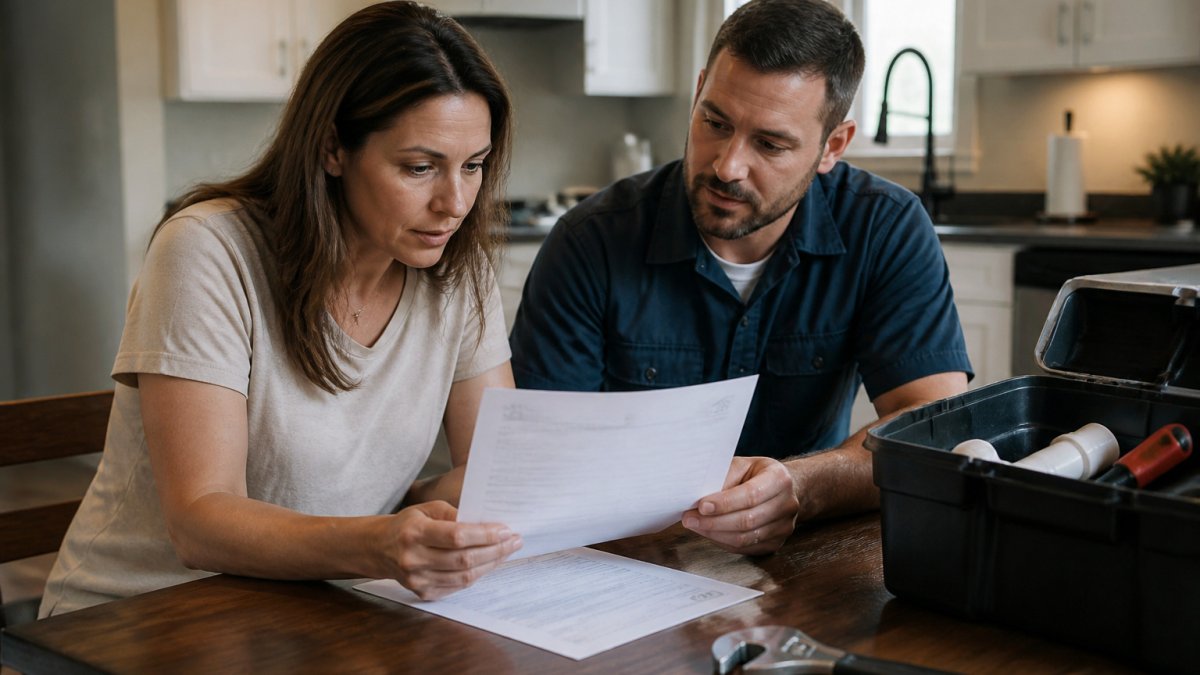
A COI is evidence that coverage existed on the date the certificate was issued. It is not the policy itself, and it is not a guarantee that coverage will remain in force.
What to look for on the certificate
- Insured name: The business name must match the name on your contract, the name on the license, and the name on the estimate. A certificate issued to "J. Smith" when your contract is with "Smith Plumbing LLC" is a red flag, the policy may not cover the entity you are hiring.
- Certificate holder: This is the person or company the certificate was issued to. If the holder is a general contractor or property manager rather than you, ask for a certificate naming you as the holder.
- Insurer name and NAIC number: The NAIC number is a five-digit identifier for the insurance company. You can look it up in the NAIC's online consumer database to confirm the insurer is licensed in your state.
How to validate the certificate
A certificate is only as good as the information on it. Run these checks before you rely on it:
- Match the legal name. Pull the contractor's license record from your state licensing board and compare the legal business name to the insured name on the COI. If they differ, ask the plumber to explain the relationship (for example, a trade name versus a legal entity name) in writing.
- Confirm the insurer is legitimate. Use the NAIC number to verify the carrier is licensed in your state. A certificate from an unlicensed or unfamiliar carrier is worth a phone call before you accept it.
- Check the dates against your project timeline. A policy that expires before your project ends leaves a gap. Ask for a renewal certificate before work continues past the expiration date.
- Call the insurer using independently sourced contact details. Do not use the phone number printed on the certificate, look up the carrier's claims or agent line yourself. Confirm the policy number, the insured name, the effective dates, and the limits. This is the single most reliable way to confirm the certificate reflects an active policy.
- Ask about cancellation notice. Many policies include a cancellation clause requiring the insurer to notify the certificate holder if coverage is canceled. Ask the plumber's agent whether your certificate includes that notice, and confirm the contact information the insurer has for you is correct.
If the plumber cannot produce a COI, or the certificate does not match the license and contract, pause the project. Coverage you cannot validate is coverage you do not have.
Step 2: Confirm the Policy Is Active and Dates Are Current
An expired policy offers no protection, even if the certificate looks official. Compare the effective and expiration dates on the COI against today's date.
Watch out: Some plumbers send an old certificate that was valid last year. Always check that the dates cover the entire length of your project.
If the policy expires mid-project, ask for a renewal certificate before work resumes.
Step 3: Review Plumber Insurance Coverage Limits for Your Job
Coverage limits set the maximum the insurer will pay for a claim. A limit that suits a small repair may fall far short for a major job. Reviewing limits is not about finding the biggest number, it is about matching the policy to the actual risk of your project.
The two limits that matter most
- Per occurrence: The most the insurer will pay for a single incident. If a supply line fails and floods three rooms, this is the cap on that one claim.
- Aggregate: The most the insurer will pay across all claims during the policy period. A plumber who has already had claims this year may have less aggregate room left than the certificate suggests.
Size the limits to the job
A common pattern is for homeowners to accept any general liability limit without asking whether it covers the worst realistic outcome. Use these questions to test adequacy:
- What is the value of the property that could be damaged? A bathroom remodel in a finished basement puts flooring, drywall, cabinetry, and electronics at risk. Add up a realistic worst-case repair bill and compare it to the per-occurrence limit.
- Does the job involve excavation or underground work? Sewer line replacement, slab work, and repiping can damage landscaping, driveways, utilities, or neighboring property. Ask whether the policy covers excavation and underground damage, many standard general liability policies exclude or sublimit it.
- Will the plumber use subcontractors? If the plumber brings in a separate crew for excavation or drywall repair, confirm the policy covers subcontracted work. Some policies exclude injuries or damage caused by subcontractors unless they are separately insured.
What to do if the limits look thin
If the per-occurrence limit is low relative to your project, you have options:
- Ask the plumber to confirm whether an umbrella or excess liability policy sits above the general liability policy.
- Ask whether you can be added as an additional insured, which can give you direct access to the policy in a claim.
- Request a certificate from a plumber whose limits match the job. A contractor who cannot show adequate limits for the work is a contractor who is passing the risk to you.
If the plumber cannot explain the limits or confirm that plumbing-specific risks are covered, treat that as a gap in verification, not a detail to sort out later.
The table below sums up the coverage limits and what to check for each, so you can compare a plumber's policy against your job.
| Item | What it means | What to check |
|---|---|---|
| Per occurrence | Most paid for one incident | Compare to a realistic worst-case repair bill |
| Aggregate | Most paid across all claims in the policy period | Less room left if claims were already filed this year |
| Excavation and underground work | Sewer or slab damage | Often excluded or sublimited in standard policies |
| Subcontractors | Damage caused by a plumber's subcontractor | Confirm subcontracted work is covered |
| Completed operations | Leaks that appear after the plumber leaves | Confirm products-completed operations coverage |
| Water damage | Core plumbing risk | Some policies exclude or sublimit it |
Step 4: Check Additional Insured Certificate of Insurance Status
An additional insured endorsement can add your name to the plumber's policy. This means you may be covered for claims tied to the plumber's work.
Ask whether you can be listed as an additional insured on the certificate. If the plumber says yes, confirm it appears on the COI itself.
Some general contractors also require this endorsement. Check your contract before you sign.
Step 5: Verify Directly With the Insurer and Your State Licensing Board
Do not rely on the certificate alone. Contact the insurance carrier directly, using contact details you find yourself, not those on the certificate. Confirm the policy number, dates, and coverage.
You can also check the plumber's license through your state's licensing board. Most state boards offer an online license lookup. Confirm the license is active and matches the business name on the insurance paperwork.
What to Do If a Plumber's Coverage Cannot Be Verified
If a plumber refuses to share a COI, or the insurer cannot confirm the policy, do not start work. Coverage you cannot verify is coverage you do not have.
Consider these next steps:
- Ask the plumber to resolve the gap in writing before work begins, and review how to verify a plumber's workmanship warranty to see what guarantees they should be able to show beyond insurance.
- Get a second quote from a plumber who can show current coverage
- Check your homeowners insurance policy to see what it covers, and read whether homeowners insurance covers plumbing repairs to understand how it interacts with a contractor's liability coverage.
For guidance on finding a dependable local plumber, see our guide on how to choose a reliable local plumber. Our list of 10 questions to ask before hiring a plumber also covers coverage and other key points.
Booking a Plumber With Verified Coverage at Colby Plumbing Company LLC
Colby Plumbing Company LLC is a family-owned and operated business serving the Denver metro area since 1996. Our licensed, seasoned professionals handle new construction, remodels, and emergency repairs for residential and commercial clients. Contact us to request a current certificate of insurance, or for a quote. Pricing depends on the scope of the job, so contact us for current pricing.
CONTACT US TODAY
Frequently Asked Questions
How do I verify a plumbing contractor's liability insurance?
Start by requesting a current certificate of insurance that lists the business name exactly as it appears on the contract. Check that the general liability policy is active, that the effective and expiration dates cover your project, and that the coverage limits meet your needs. Then confirm the policy directly with the insurance agent or carrier listed on the certificate. Calling the agent is the step most homeowners skip, and it is the one that catches fake or expired certificates.
Can I verify a contractor's insurance directly with the insurance company?
Yes. The certificate lists the insurance agent or carrier and a policy number. Contact the agent or carrier using a phone number you find independently, not one printed only on the certificate, and ask them to confirm the policy is active, the named insured, the coverage dates, and the limits. Many insurers will confirm this information with the policyholder's permission. Keep a note of the date, the name of the person you spoke with, and what they confirmed.
Should a homeowner be listed as an additional insured?
For many plumbing jobs, yes. Being named as an additional insured can extend the plumber's general liability coverage to you for claims arising from their work on your property. Ask for an additional insured certificate of insurance that names your property address or your name, and confirm the endorsement with the insurer. A standard certificate of insurance does not always show this endorsement, so check it specifically.
What should I look for on a plumber's certificate of insurance?
Look for the business name, the policy number, the insurance carrier, the policy effective and expiration dates, and the general liability limits for each occurrence and in aggregate. Confirm that workers' compensation coverage is listed if the plumber has employees. Be cautious of certificates with handwritten changes, missing dates, or limits that look inconsistent with the size of your project. Verify the document with the carrier before you sign a contract.