 how-to
How to Choose a Reliable Local Plumber
Table of Contents
- Step 1: Verify the Plumber's License and Insurance
- Step 2: Check Experience, Qualifications, and Trade Credentials
- Step 3: Review Online Reputation and Customer Feedback
- Step 4: Ask the Right Questions Before Hiring
- Step 5: Compare Plumber Estimates and Pricing
- Step 6: Confirm Workmanship Warranty and Guarantees
- What to Do in an Emergency Plumbing Situation
- Conclusion
- Frequently Asked Questions
Last Updated: October 6, 2026
Step 1: Verify the Plumber's License and Insurance
Every state licenses plumbers differently, and some require only registration. Confirm which credential your area requires, then verify it yourself in the official database, not on the plumber's website or a directory.
Where to verify
Start with your state's contractor licensing authority. Most maintain a free, searchable online database. Common examples:
- State licensing boards, search by license number, business name, or individual name for status, dates, classifications, and disciplinary actions.
- State consumer protection or attorney general offices, many publish complaint histories and enforcement actions not on the licensing board site.
- Your city or county building department, some issue their own permits and keep a separate registration list.
- The Better Business Bureau, useful for complaint patterns, but not a licensing authority and never your only check.
Find your state's plumbing licensing board
What to check once you're in the database
- Match the name exactly. The license should be tied to the legal business name or the individual doing the work, not a franchise, alias, or relative.
- Confirm the classification. A journeyman license may not authorize pulling permits or running a business; a residential classification may not cover commercial work.
- Check status and expiration. An expired license is not a license. Confirm it is active as of the day you hire.
- Read the disciplinary history. One old citation is not automatically disqualifying; a pattern is.
- Verify the license number on the written estimate and contract. It should match the database.
Insurance: what to ask for and how to read it
A license does not prove insurance. Ask for two documents:
- General liability certificate, confirms the policy is active and shows coverage limits. Call the agent listed to confirm it is current; certificates can be forged or expired.
- Workers' compensation certificate, required in most states once a business has employees. If the plumber claims an exemption, ask for the state-issued certificate.
If a plumber cannot produce both, you may be personally liable for injuries on your property and damage to your home. That risk is not worth the savings.
At Colby Plumbing Company LLC, we provide proof of our licensing and insurance documentation upfront so you know you're working with a legitimate, protected contractor.
Step 2: Check Experience, Qualifications, and Trade Credentials
Years in business matter. A plumber with 10+ years of experience has seen problems you haven't and solves them efficiently; newer plumbers may be competent but lack that pattern recognition.
Look for these qualifications:
- Years in operation: Established plumbers have proven staying power.
- Trade certifications: Certifications beyond a license show deeper expertise in areas like water heaters or backflow prevention.
- Trade association membership: Groups like the Plumbing-Heating-Cooling Contractors Association (PHCC) set standards and a code of ethics.
- Specialized training: For boilers, gas lines, or new construction rough-ins, ask about specific experience.
The right plumber matches the job. You wouldn't hire someone with only drain-cleaning experience for a complete kitchen remodel. Ask directly: "Have you done this exact type of work before?
A reliable local plumber knows your area's building codes and permit requirements. They've worked with local inspectors and understand what passes inspection the first time.
Step 3: Review Online Reputation and Customer Feedback
Online reviews tell you how a plumber treats customers. Read Google, Better Business Bureau, and industry platform reviews, looking for patterns rather than single complaints.
What to look for in reviews:
- Timeliness: Did they show up when promised?
- Communication: Did they explain the problem and solution clearly?
- Pricing accuracy: Did the final bill match the estimate?
- Quality of work: Does the work last, or do problems recur?
One negative review doesn't disqualify a plumber, people sometimes complain unfairly.
Check how the plumber responds to negative reviews: a professional acknowledges the issue and explains their side, while ignoring complaints suggests they don't care.
Step 4: Ask the Right Questions Before Hiring
Before you hire, have a conversation. The questions you ask reveal whether the plumber understands your job and respects your concerns.
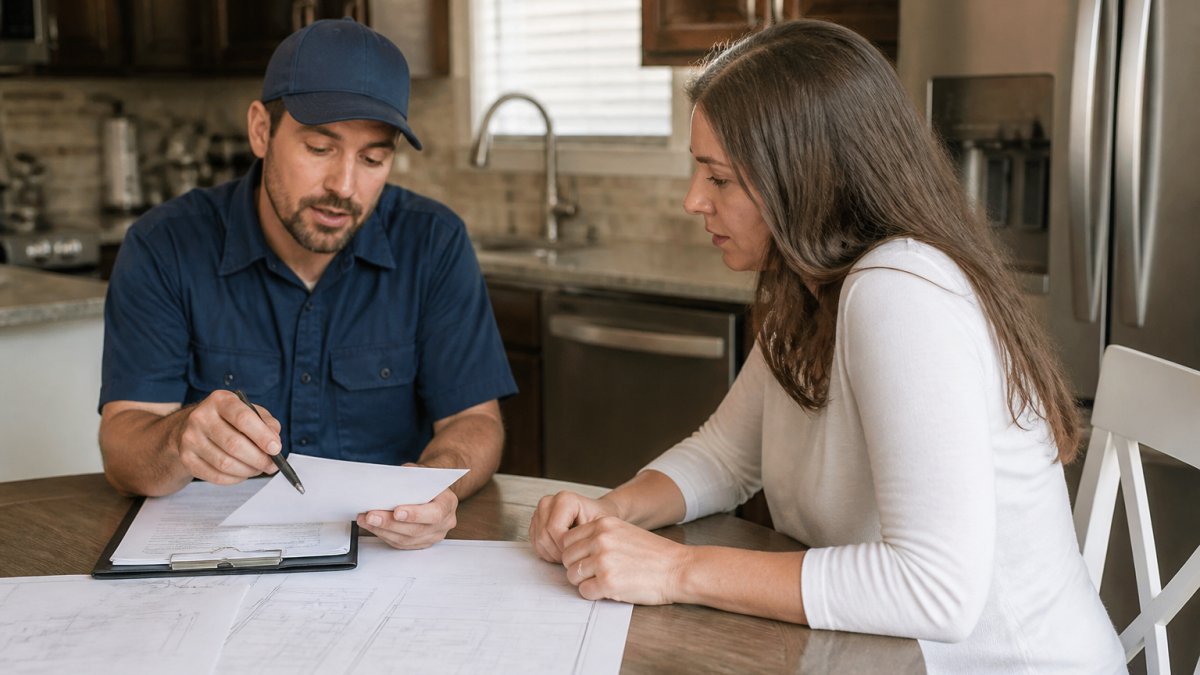
Essential questions to ask:
- "What is your experience with this specific type of work?" (boiler replacement, remodel rough-in, emergency repair)
- "Will you pull permits for this job?" (Permits protect you legally and ensure code compliance.)
- "What is your timeline, start and finish?"
- "What happens if the work takes longer than expected? How do you charge for extra time?"
Listen to how they answer. A professional explains their process clearly, doesn't rush you, asks about your situation to understand scope, and is transparent about costs and timelines.
Red flags in conversation:
- Vague answers about pricing or timeline
- Pressure to decide immediately
- Unwillingness to provide references or insurance proof
- Dismissing your concerns as unnecessary
A reliable local plumber welcomes questions, knowing transparency builds trust and repeat business.
Step 5: Compare Plumber Estimates and Pricing
Getting three estimates is easy; comparing them apples to apples is not. Two estimates can look identical on headline price and differ by hundreds once you read the fine print. Use this checklist to line up every estimate against the same categories.
The quote-comparison checklist
For each estimate, confirm whether it includes or excludes the following. Write the answer in a column next to the price.
- Diagnostic or service call fee, Is there a flat fee just to come out? Is it credited toward the repair if you hire them? A low repair price with a high, non-credited diagnostic fee is not cheaper.
- Labor, Hourly, by the job, or flat rate? If hourly, what is the rate, the minimum (many bill one hour), and the overtime rate?
- Materials and parts, Itemized with brand and model, or lumped into one line? Ask for the specific make and model.
- Warranty terms, How long is the workmanship warranty, what does it cover, and is the parts warranty from the manufacturer, the plumber, or both?
Reading the numbers
Once the checklist is filled in, compare totals, not headline prices. A bid that looks $200 cheaper often loses that advantage once you add a non-credited diagnostic fee, a permit the other plumber included, and a buried haul-away charge.
If one estimate is dramatically lower, ask the plumber to walk you through it line by line. Legitimate reasons exist, a smaller crew, a closer supplier, simpler access, but so do illegitimate ones: unpermitted work, uninsured labor, or a low bid designed to be raised later through change orders.
Payment, deposits, and scam prevention
- Deposits, A deposit covering special-order materials is reasonable; a demand for the full job cost upfront in cash is not. Ask what it covers and get it in writing.
- Payment methods, Credit cards and checks leave a paper trail and recourse; cash offers none. Be wary of cash-only plumbers.
- Pressure tactics, 'We have a crew in the neighborhood today only,' 'the price goes up tomorrow,' or 'sign now and we'll waive the fee' are classic scripts. A reputable plumber lets you take the estimate home.
- Suspiciously low bids, If a bid is far below the others and the plumber can't explain why concretely, assume the difference will be recovered through change orders, substandard materials, or unpermitted work.
At Colby Plumbing Company LLC, every estimate is written and yours to keep, and we'll walk you through each line so you can compare us fairly against anyone else.
Step 6: Confirm Workmanship Warranty and Guarantees
A workmanship warranty means the plumber guarantees their labor for a set period: if the work fails due to poor installation, they fix it at no cost.
Questions about warranty:
- "How long is your workmanship warranty?" (One year is common; some offer longer.)
- "What does it cover, parts I supply or only materials you provide?"
- "If something fails during the warranty period, will you fix it for free?"
- "What conditions void the warranty?" (For example, customer damage.)
A reliable local plumber stands behind their work and is willing to warranty it because they're confident it's done right; refusing to warranty labor is a red flag.
At Colby Plumbing Company LLC, we back our work with a 100% satisfaction guarantee. If you're not satisfied with the quality or the service, we make it right.
What to Do in an Emergency Plumbing Situation
When a pipe bursts or water backs up at midnight, you need a plumber fast. Before an emergency:
- Identify your main water shutoff valve and know how to turn it off.
- Keep a reliable plumber's number programmed in your phone.
- Research emergency plumbers during business hours, not at 2 a.m. while panicking.
During an emergency:
- Turn off the water at the main valve immediately to stop damage spreading.
- Call your plumber, many reliable local plumbers offer 24/7 emergency service. Explain the situation clearly.
- If water is pooling, remove it with towels or a wet vacuum to prevent mold.
- Take photos of the damage for insurance.
Emergency rates are higher than standard service, expect a premium for after-hours response, which is industry standard. A plumber charging the same at 3 a.m. as at 3 p.m. is either not actually available or undervaluing their service.
Colby Plumbing Company LLC responds to emergency calls quickly. When a customer calls with a burst pipe or backup, we prioritize the response.
Conclusion
The cheapest option often costs more in the long run. A reliable plumber charges fairly, communicates clearly, stands behind their work, shows up when they say they will, explains the problem and solution, and doesn't surprise you with hidden charges.
When you're ready to hire a plumber for your next project, whether it's a routine repair, a remodel, or an emergency, contact Colby Plumbing Company LLC.
Frequently Asked Questions
How can I verify that a plumber is actually licensed and insured?
Contact your state's plumbing board or licensing authority to confirm active licensure, most states provide online verification databases. Ask the plumber directly for proof of liability insurance and workers' compensation coverage. A reliable licensed plumber will provide this documentation without hesitation. Never hire someone who cannot produce these credentials.
What questions should I ask a plumber before hiring them?
Ask about their years in business, specific experience with your type of project, warranty coverage, service area, emergency availability, and whether they provide written estimates. Request references from recent jobs and clarify their pricing structure upfront. Ask if they pull required permits and what happens if unexpected issues arise during the work. These questions to ask a plumber before hiring help you assess reliability and avoid surprises.
What should I look for in plumber estimates and pricing?
A detailed written estimate should include labor, materials, service fees, and timeline. Compare estimates from multiple plumbers, but don't choose solely on price, the cheapest option often indicates rushed work or hidden costs. Watch for vague estimates with no breakdown. Plumber estimates and pricing should be transparent, with clarity on what's included and what triggers additional charges. Ask when payment is due and what deposit is required.
Should a plumber guarantee their work?
Yes. A reputable plumber should offer a workmanship warranty covering defects in their labor for a specified period, typically 1-3 years. This plumbing workmanship warranty protects you if the repair fails due to poor installation. Some also warranty materials. Confirm the warranty terms in writing before work begins, including what's covered, the duration, and how to request service if issues arise. A 100% satisfaction guarantee demonstrates confidence in quality.
Hiring the right plumber protects your home and your budget. A reliable local plumber is an investment in peace of mind. Take the time to verify credentials, check reputation, and ask the right questions. The effort upfront saves you from costly mistakes and poor workmanship later. When you find a plumber who meets these standards, keep their number handy. A trustworthy professional relationship is worth its weight in gold.