 how-to
Sump Pump Installation Cost Guide: 2026
Table of Contents
- What Professional Sump Pump Installation Costs
- Cost Breakdown: Labor, Equipment, and Materials
- Installation Quote: What to Expect and What to Ask
- Cost to Install a Sump Pump in an Existing Basement
- Battery Backup Sump Pump Cost and Considerations
- Sump Pump Installation Time: What Affects Your Timeline
- Factors That Affect Your Final Installation Price
- New Installation Versus Pump Replacement: Cost Differences
- Frequently Asked Questions
Last Updated: October 13, 2026
What Professional Sump Pump Installation Costs
A professional sump pump installation cost typically ranges based on the complexity of your basement setup, the pump type you choose, and whether you're working with an existing pit or need one excavated. At Colby Plumbing Company LLC, we've helped homeowners across the Denver metro area understand this critical protection against water intrusion and flooding.
The total investment for a professional sump pump installation includes several components: the pump itself, labor to install it, materials like discharge piping and check valves, electrical work, and any permits required by your local building code. Understanding these pieces helps you evaluate contractor quotes and avoid surprise charges.
Most homeowners find that getting multiple quotes from licensed professionals gives them confidence in their final decision. The range of costs varies significantly based on site conditions, pump selection, and installation complexity.
Cost Breakdown: Labor, Equipment, and Materials
Most quotes you'll see bundle everything into one number, which makes it hard to tell whether you're paying for a quality install or a rushed one. Breaking the job into its component tasks and parts is the single best way to compare bids. The table below shows the typical line items a professional installation quote should include.
| Line item | What it covers | Typical range |
|---|---|---|
| Sump pump unit | Submersible or pedestal pump, sized to your inflow | $150-$500 |
| Sump basin / pit liner | Pre-formed basin or poured liner, lid, and seal | $50-$250 |
| Pit excavation (new pit only) | Concrete cutting, digging, gravel bedding, backfill | $400-$1,200 |
| Discharge piping and fittings | PVC or ABS pipe, elbows, adapters, freeze protection | $50-$200 |
| Check valve | Prevents backflow into the pit | $20-$60 |
| Electrical work | Dedicated circuit, GFCI outlet, wiring, junction box | $150-$500 |
| Labor | Assessment, install, testing, cleanup | $300-$800 |
| Permits and inspection | Municipal filing and inspector visit | $50-$300 |
| Battery backup (optional) | Secondary pump, battery, charger, integration | $250-$700 |
Your actual numbers depend on your basement, your local labor market, and how much of the work is already done.
Labor costs cover the time your contractor spends on the job. This includes:
- Assessing your basement and existing conditions
- Excavating or preparing the sump pit
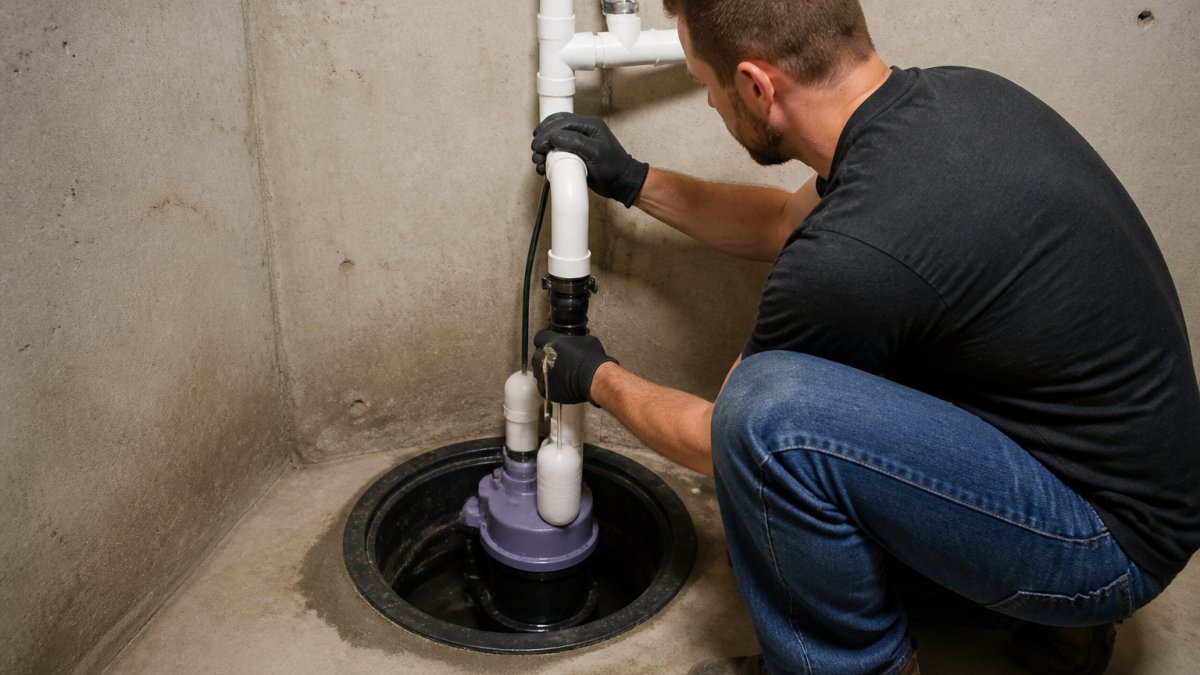
- Installing the pump and basin
- Running discharge lines to the exterior
- Making electrical connections
- Testing the system before completion
Equipment and materials include:
- The sump pump unit (pedestal or submersible)
- Sump basin or pit liner
- Discharge piping and fittings
- Check valve to prevent backflow
- Electrical components and wiring
- Gravel, sealant, and finishing materials
Permit costs vary by location. Many municipalities require permits for sump pump installation to ensure the system meets drainage codes and electrical standards. Your contractor should handle permit applications and inspections as part of the service.
A licensed professional like those at Colby Plumbing Company LLC provides comprehensive quotes, so you understand exactly what you're paying for.
Installation Quote: What to Expect and What to Ask
A sump pump quote is only useful if you can compare it against another one.
Step 1: Get an on-site assessment. A quote given over the phone without seeing your basement is a guess.
Step 2: Require an itemized scope. Ask each contractor to break the bid into the same categories so you can compare apples to apples:
| Bid item | What to look for |
|---|---|
| Pump make and model | Specific model number and rated capacity (GPH at your discharge head) |
| Pit work | New excavation vs. reuse of existing pit, basin type, lid |
| Discharge line | Pipe material, diameter, routing, freeze protection, termination point |
| Check valve | Included or excluded |
| Electrical | Dedicated circuit, GFCI, who pulls the electrical permit |
| Permits | Who files, who pays, who meets the inspector |
| Testing and cleanup | System test, water test, debris removal |
| Warranty | Pump warranty vs. workmanship warranty, and how long each lasts |
| Exclusions | Anything the contractor is explicitly not covering |
Step 3: Compare the exclusions, not just the totals. The lowest bid is often the one with the most exclusions. Common exclusions to watch for: permit fees, concrete patching, discharge line termination, and hauling away old equipment.
Step 4: Verify credentials and coverage. Confirm the contractor is licensed and insured, and ask for the license number so you can verify it with your state or local licensing board.
Step 5: Ask the right questions.
- How long have you been installing sump pumps?
- Are you licensed and insured, and can I verify the license number?
- What happens if the system fails after installation, is the workmanship covered?
- Will you handle all required permits and inspections?
- What's your payment schedule, and is any portion held until inspection passes?
- Can you provide references from recent installations in my area?
Step 6: Check the discharge plan. Ask where the discharge line will terminate and confirm it complies with local rules. Discharging onto a neighbor's property, into a sanitary sewer where it's prohibited, or into a spot that recirculates water back to your foundation are all common problems that a good contractor will flag before the work starts.
Contractors who give honest, detailed answers and explain their pricing build trust. A vague quote or pressure to decide quickly is a red flag. The best contractors, like our team at Colby Plumbing Company LLC, stand behind their work with transparent communication.
Cost to Install a Sump Pump in an Existing Basement
Installing a sump pump in an existing basement is often less expensive than new construction because the basic structure is already in place. However, your actual sump pump installation cost depends on whether you can use an existing sump pit.
If you have an existing pit: The contractor cleans it, inspects it for cracks or damage, and installs the new pump. This is the fastest and most affordable scenario. The work focuses on the pump placement, discharge line routing, and electrical connections.
If you need a new pit: Excavation becomes a significant part of the cost. The contractor must break through the basement floor, dig the pit to proper depth and dimensions, install a basin, and seal everything properly. This adds labor time and equipment use to your total sump pump installation cost.
Factors affecting existing basement installations:
- Floor composition (concrete thickness affects excavation difficulty)
- Existing drainage systems in place
- Electrical outlet proximity for pump power
- Discharge line routing to exterior or sump pump discharge area
- Basement ceiling height and access Integrating these components often requires evaluating whether a French drain installation is necessary to manage hydrostatic pressure before finalizing the sump pit location.
Battery Backup Sump Pump Cost and Considerations
A battery backup sump pump system adds extra protection during power outages, which is critical since heavy rain often brings electrical failures. The battery backup sump pump system is an additional investment beyond your primary pump.
Battery backup systems include:
- A secondary pump (usually smaller capacity)
- A battery unit (typically 12-volt)
- Charging and monitoring electronics
- Installation labor to integrate with your main system
Adding a battery backup increases your total sump pump installation investment, but many homeowners consider it essential insurance. During the outage, your basement remains protected even if the main pump can't run.
Battery systems require periodic maintenance:
- Testing to ensure the battery holds a charge
- Replacing the battery every 3-5 years
- Checking connections and pump operation
The battery backup investment pays dividends during storms. A battery backup system can help prevent water damage during power outages.
Sump Pump Installation Time: What Affects Your Timeline
The time required for a professional sump pump installation varies based on project scope. A straightforward installation in an existing pit might take 4-6 hours. A new pit excavation can take a full day or more.
Factors affecting sump pump installation time:
- Excavation requirements (new pit vs. existing)
- Electrical work complexity
- Discharge line routing distance
- Concrete cutting or floor prep needed
- Permit inspection scheduling
- Material delivery and availability
Your contractor should give you a realistic timeline during the quote. Complex installations may require multiple visits: one for excavation, another for pump installation, and a final inspection.
Weather can affect scheduling. Heavy rain makes excavation difficult, and contractors may delay work to avoid complications. Electrical inspections also add time if your municipality requires them before the system operates.
Factors That Affect Your Final Installation Price
Several variables influence what you'll pay for a professional sump pump installation cost. Understanding these helps you compare quotes accurately.
Pump type makes a significant difference. Submersible pumps offer advantages in noise reduction and space efficiency.
Basement size and layout affects discharge line routing and labor time.
Soil and water conditions impact excavation difficulty. Clay soil is harder to dig than sandy soil. High water tables mean more challenging pit placement.
Local building codes vary by municipality. Some areas require specific pump capacities, discharge methods, or additional safeguards.
Contractor experience matters. Established professionals like our team at Colby Plumbing Company LLC provide transparent pricing based on actual work required.
Season and timing can affect availability.
Existing system condition plays a role if you're replacing an old pump. Removing old equipment and dealing with outdated discharge lines adds labor.
New Installation Versus Pump Replacement: Cost Differences
Replacing an existing sump pump typically requires less extensive work than installing a new system from scratch. The difference lies in what work is already done.
Pump replacement involves:
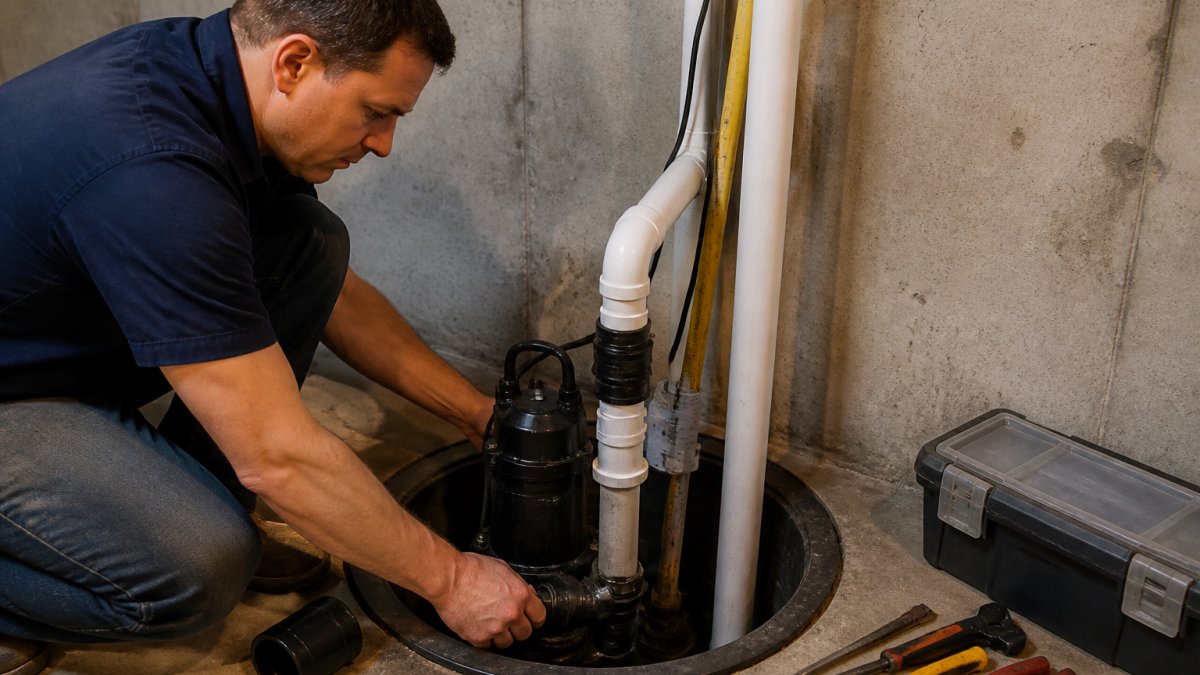
- Removing the old pump
- Installing the new pump in the existing basin
- Reconnecting discharge lines
- Testing the system
This focused work takes 2-4 hours.
New installation requires:
- Site assessment and planning
- Pit excavation or basin installation
- Discharge line installation
- Electrical work and connections
- Permits and inspections
- Full system testing
New installations take considerably longer and involve more materials and labor.
When to replace versus upgrade: If your existing pit is sound and properly sized, replacement is the economical choice. If the pit is damaged, too small, or in a poor location, a new installation gives you better long-term performance even though it costs more initially.
However, if you're building new protection into a previously unprotected basement, the full installation is a one-time investment that protects your property for years.
Understanding your sump pump installation helps you make an informed decision about protecting your basement from water damage. The investment in professional installation ensures your system works reliably when you need it most.
Frequently Asked Questions
How much does it cost to install a new sump pump?
The total sump pump installation depends on whether you're adding a pump to an existing basement or replacing one, the pump type (pedestal or submersible), pit conditions, electrical work required, and local labor rates. Professional installation includes the pump, basin or pit, discharge line, check valve, and electrical connection. Contact Colby Plumbing Company LLC for a detailed quote tailored to your specific situation and basement layout.
What should a sump pump installation quote include?
A complete sump pump installation quote should itemize the pump itself, basin or pit excavation, discharge line materials and installation, check valve, electrical work and permits, testing, and labor hours. The quote should specify whether it covers an existing pit or requires new pit excavation, the pump capacity and horsepower, and any site-specific factors like crawl-space access or complex drainage routing. A transparent quote helps you understand exactly what you're paying for and avoid surprise charges.
Are battery backup sump pumps worth the extra cost?
Battery backup sump pump systems add significant protection during power outages and pump failures, which is valuable if you live in an area with frequent storms or power interruptions. The backup battery system requires an upfront investment but can help prevent costly water damage when your primary pump can't operate. Evaluate whether your basement flooding risk justifies the additional investment based on your local weather patterns, existing sump pump reliability, and the cost of potential water damage to finished spaces or stored items.
How long does professional sump pump installation take?
Professional sump pump installation typically takes 4 to 8 hours for a new installation in an existing basement, depending on pit conditions, discharge line routing, electrical work complexity, and whether permits are required. Replacing an existing pump usually takes 2 to 4 hours. Installation time increases if the contractor must excavate a new pit, route discharge lines through crawl spaces or exterior walls, or handle complex site conditions. Your installer can provide a more precise timeline after assessing your basement layout and existing infrastructure.