 how-to
Common Plumbing Issues in Historic Denver Houses
Table of Contents
- Why Older Homes Have Different Plumbing Challenges
- Galvanized Pipes in Old Houses: Corrosion and Deterioration
- Cast-Iron and Drain Pipe Problems
- Low Water Pressure and Mineral Buildup
- Old House Sewer Line Problems and Backups
- Plumbing Inspection for Older Homes: What to Check
- Cost to Replumb an Old House: Repair vs. Replacement
- Frequently Asked Questions
Last Updated: October 17, 2026
Why Older Homes Have Different Plumbing Challenges
Historic homes charm with character and craftsmanship, but their plumbing tells a different story: pipes installed decades ago face challenges modern plumbing rarely encounters.
At Colby Plumbing Company LLC, we work on historic Denver houses regularly and have identified patterns in what fails and why.
Common plumbing issues in historic Denver houses stem from three sources: materials, system age, and regional environmental factors.
Many problems are preventable with proper inspection and maintenance. Knowing what to look for saves time, money, and emergency-repair stress.
Galvanized Pipes in Old Houses: Corrosion and Deterioration
Galvanized steel pipes are steel pipes coated with zinc to resist rust.
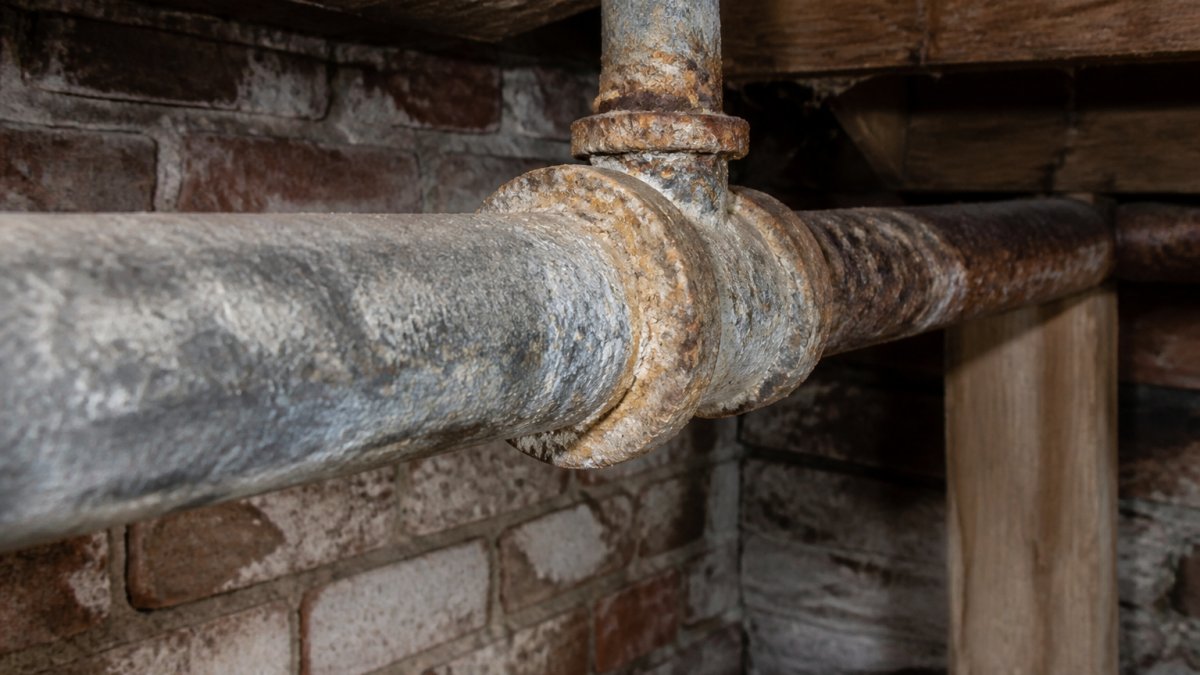
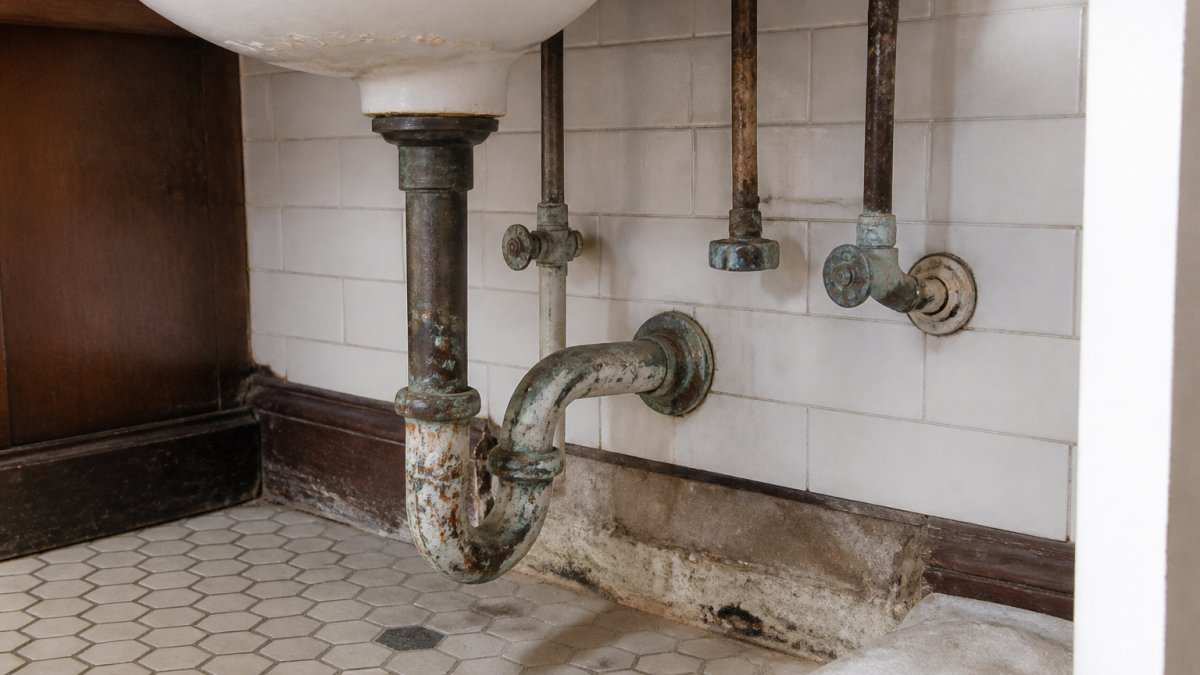
Once the zinc wears away, the exposed steel corrodes, a process Denver's water chemistry can speed up significantly.
Corroded galvanized pipes narrow from the inside as mineral buildup compounds the problem, causing low water pressure throughout the house, starting with fixtures farthest from the main line.
Signs your galvanized pipes are failing:
- Water comes out brown or discolored, especially when you first turn on a faucet
- Water pressure drops noticeably over time
- Visible rust stains on the exterior of pipes
- Leaks appearing where pipes connect to fixtures
- Pinhole leaks developing in the pipe itself
The corrosion process is slow but relentless.
Replacing galvanized pipes is often the only permanent solution. Patching leaks buys time, but the underlying corrosion continues, each repair delays the inevitable rather than preventing it.
Cast-Iron and Drain Pipe Problems
As corrosion progresses, the interior surface roughens and catches debris, so clogs become more frequent and harder to clear.
Common drain and sewer problems in older homes:
- Frequent backups in lower-level fixtures
- Slow drains that don't respond to plunging
- Gurgling sounds from drains and toilets
- Cracks in the foundation near sewer lines
- Wet spots in the basement or yard
Cast-iron pipes can last 75-100 years, but performance degrades significantly after year 50. Homes built in the 1960s or earlier may already face drain issues.
Replacing cast-iron drain lines is disruptive but necessary when problems escalate; the alternative is recurring backups and worsening moisture damage.
Low Water Pressure and Mineral Buildup
Low water pressure, weak showers, slow tub fills, frustrates homeowners. In historic houses, the cause is rarely a single failure but a combination of pipe condition, mineral scale, and fixture wear accumulated over decades.
Why pressure drops in older systems
Pressure loss in an old house generally comes from four overlapping mechanisms:
- Internal scale and corrosion: Mineral deposits and corrosion products narrow the effective diameter of supply pipes. A half-inch galvanized line that has scaled for 60 years may flow like a quarter-inch line.
- Galvanized steel deterioration: As the zinc coating wears away, the steel underneath corrodes and pits, creating rough interior surfaces that catch debris and further restrict flow.
- Fixture and aerator clogging: Sediment and scale collect in faucet aerators, showerheads, and cartridge valves, dropping pressure at individual fixtures even when the supply line is fine.
- Pressure-regulator and valve issues: A failing pressure-reducing valve or a partially closed gate valve can throttle the whole house.
A practical diagnostic sequence
Before assuming the worst, isolate where the pressure loss occurs. Test pressure at an outdoor hose bib or laundry sink (closest to the main) and compare it with a fixture at the far end. Low everywhere points upstream, main line, regulator, or meter. Low only at distant fixtures points to the supply lines serving those areas. A single weak fixture points to the aerator and cartridge.
Hard water and mineral buildup
Hard water contains dissolved minerals, primarily calcium and magnesium, which deposit on interior pipe surfaces, narrowing the opening and reducing flow (Hardness of Water). The problem worsens gradually, you may not notice for months, then realize you've adjusted to lower pressure as normal.
Mineral buildup affects fixtures at different rates, a kitchen faucet may have adequate pressure while an upstairs shower dribbles, pointing to buildup in the supply lines serving specific areas rather than a whole-house problem.
Mitigation options and trade-offs
- Clean aerators and showerheads first. This is the cheapest fix and resolves single-fixture complaints more often than homeowners expect.
- Flush the water heater. Sediment accumulates in tank-style heaters and can affect hot-water pressure and recovery. Annual flushing is standard maintenance.
- Install a whole-house water softener or conditioner. This addresses the root cause of scale buildup and protects water heaters and appliances. It is an investment, and it requires space, a drain, and periodic salt or media service.
- Replace corroded sections of pipe. Spot replacement of galvanized runs with copper or PEX restores flow in the affected zones without a full repipe.
- Check the pressure-reducing valve. If the house has one, have it tested; a failed regulator can cause both low and excessively high pressure.
A water softener is not a cure-all for already-corroded galvanized pipe, it slows new scale but does not reopen a narrowed line. Pairing treatment with targeted pipe replacement is the realistic path.
Old House Sewer Line Problems and Backups
Sewer backups are among the worst plumbing emergencies: raw sewage backs up into the home, the smell is overwhelming, and cleanup is expensive and hazardous. In a historic house, the sewer line is often the original one, asked to handle a century of use it was never designed for.
What the line is made of matters
Older sewer laterals are typically one of three materials, and each fails differently:
- Cast iron: Durable for decades but corrodes from the inside out. The interior surface roughens, debris catches, and blockages become more frequent. Exterior rust eventually eats through the pipe wall.
- Clay tile (vitrified clay): Common in early-to-mid-century construction. Joints between tiles are the weak point; roots exploit them and soil movement opens gaps.
- Orangeburg (bituminized fiber): Used in some mid-century installations. It deforms and collapses over time and is generally considered a replace-on-sight material when found.
Knowing which material you have changes both the diagnosis and the repair strategy. A cast-iron line with localized corrosion may be spot-repaired; a collapsed Orangeburg line generally needs replacement.
How roots and soil cause failures
Tree roots penetrate cracks and joint gaps seeking water and nutrients, then grow into a mat that catches waste and causes repeat backups. Soil movement is the other major factor: expansive clay shifts with wet-dry cycles, pulling joints apart, while freeze-thaw cycles add stress near the surface. These are structural problems, not simple clogs, snaking clears the symptom but does not fix the opening the roots enter through.
Warning signs worth acting on
- Multiple drains backing up simultaneously, especially lower-level fixtures
- Sewage smell in the yard, basement, or crawl space
- Wet or unusually green patches in the lawn above the line
- Gurgling sounds from drains and toilets
- Cracks in the foundation or settled areas near the sewer route
Camera scope inspection: the diagnostic step that matters
A sewer scope is the single most useful tool for an old house. A small camera travels the lateral and records the interior in real time, showing cracks, root intrusion, joint offsets, bellies (sags where water pools), and material transitions. The inspector marks the distance to each defect, which tells you whether a spot repair is feasible or the line needs replacement.
Repair versus replacement
- Spot repair works when damage is localized and the surrounding pipe is sound, for example, one cracked section under a walkway.
- Trenchless methods (pipe lining or bursting) can rehabilitate a line with less yard disruption, but suitability depends on the line's condition and material.
- Full replacement is the realistic answer for collapsed Orangeburg, widespread root intrusion, or a line with multiple offsets and bellies.
Early detection prevents backups: a cracked sewer line can be repaired or replaced before sewage backs into your home. Waiting is far more expensive and disruptive, in a historic house, it often means emergency excavation rather than a planned project.
Plumbing Inspection for Older Homes: What to Check
A thorough plumbing inspection reveals your system's condition and identifies problems before they become emergencies, for older homes, it's preventive medicine.
Professional inspectors check multiple components:
Water supply lines: Look for corrosion, leaks, and pressure issues. They test water pressure and quality.
Drain and sewer lines: Use camera inspection to spot cracks, roots, and blockages.
Water heater: Check age, condition, and sediment buildup.
Fixtures: Test for leaks and proper operation.
Shut-off valves: Verify they work correctly for emergency situations.
Visible pipes: Inspect for rust, corrosion, and damage.
During inspection, ask the inspector to identify the materials used in your plumbing.
Many older homes have mixed materials, original galvanized steel alongside copper or PEX from later renovations.
Document findings with photos and records of what was found and when, so you can track deterioration and make future decisions easier.
Cost to Replumb an Old House: Repair vs. Replacement
Deciding whether to repair or replace is one of the toughest questions homeowners face.
The downside is that underlying problems continue. A patched galvanized pipe will leak again.
Replacement approach: Replace the entire plumbing system or major sections, a larger upfront investment that solves problems permanently.
Factors affecting the decision:
- Age of the system: If pipes are 60+ years old, replacement becomes more attractive
- Frequency of problems: Recurring issues suggest systemic failure
- Extent of corrosion: Widespread corrosion favors replacement
- Budget constraints: Repair is cheaper initially; replacement is cheaper long-term
- Planned renovations: Replacing plumbing during kitchen or bathroom remodels is more economical
A professional plumber can weigh these factors, assess your specific situation, and recommend the most cost-effective path forward.
| Approach | Upfront Cost | Long-Term Outlook | Best For |
|---|---|---|---|
| Targeted Repair | Lower | More problems likely | Minor issues, newer systems |
| Partial Replacement | Moderate | Improved, partial solution | Specific problem areas |
| Full Replacement | Higher | Permanent solution | Widespread corrosion, older systems |
Historic homes deserve care that respects their age while addressing modern plumbing needs.
Contact Colby Plumbing Company LLC today for a thorough plumbing evaluation of your historic home.
Frequently Asked Questions
What are the most common plumbing issues in historic homes?
Historic homes frequently experience pipe corrosion, low water pressure from mineral buildup, leaks from aging materials, sewer line damage, and clogged drains. Galvanized steel and cast-iron pipes, common in older construction, deteriorate over decades. Hard water in many areas accelerates mineral accumulation inside pipes, narrowing them and reducing water flow. Sewer backups occur when aging sewer lines crack or collapse. A professional plumbing inspection identifies which issues affect your specific home.
How can I tell if an older house has galvanized or lead pipes?
Galvanized pipes appear silver-gray and show orange or brown rust stains where they connect. Lead pipes are soft, dull gray, and leave marks when scratched with a coin (use a safe area). Most homes built before 1950 used galvanized supply lines; those from the 1800s may have lead. Never attempt to remove or test pipes yourself. A licensed plumber can safely identify your pipe materials during a plumbing inspection for older homes and recommend next steps.
How much does it cost to replumb an old house?
The cost to replumb an old house depends on the home's size, pipe materials, accessibility, and extent of replacement needed. Partial repairs cost less than full replumbing. Factors include labor complexity, material choices, and whether walls must be opened. Since pricing varies significantly based on your specific situation, contact Colby Plumbing Company LLC for a detailed estimate. We can discuss repair-versus-replacement options to fit your budget.
What should I do if an old pipe starts leaking?
Turn off the water main immediately to prevent further damage. Place a bucket under the leak to catch water and minimize moisture damage to your home. Document the leak location and severity with photos. Call a licensed plumber promptly, delays allow leaks to worsen and cause structural damage. Early action often prevents the need for extensive replumbing. Colby Plumbing Company LLC offers reliable emergency service to address leaks before they become costly problems.