 Ultimate guide
Plumbing Installation Permit Requirements: What to Know Before You Build
Last Updated: November 9, 2026
Quick Summary
Plumbing installation permit requirements apply to any work that alters, extends, or replaces part of the plumbing system, and a permit must be issued before work begins. Minor repairs like swapping a faucet or clearing a stoppage are exempt in many jurisdictions, but the line varies by locality, so confirm with your permit authority.
- A plumbing permit is official authorization confirming planned work will be inspected for code compliance.
- The most common cause of permit delays is an incomplete application packet at intake.
- Unpermitted work can trigger a stop-work order that halts the entire project, not just the plumbing.
- Only a licensed plumbing contractor or an owner-builder of an occupied single-family home may pull a permit.
- Ask who pulls the permit, whose name is on it, and who pays the fee before work starts.
Table of Contents
- When a Plumbing Permit Is Required (and When It Isn't)
- How to Apply for a Plumbing Permit
- Consequences of Unpermitted Plumbing Work
- Residential Plumbing Inspection Checklist
- Who Is Allowed to Pull a Plumbing Permit
- Permit Responsibility When You Hire a Contractor
- Get Your Plumbing Permit Questions Answered by a Licensed Pro
- Frequently Asked Questions
When a Plumbing Permit Is Required (and When It Isn't)
Plumbing installation permit requirements exist to protect the water supply and drainage system in every building, and the general rule is straightforward: any work that alters, extends, or replaces part of the plumbing system needs a permit before a wrench turns. Permit requirements for new construction and remodels are consistent across most jurisdictions. If the job touches the pipes behind a wall or under a slab, a permit is almost always part of the deal.
A plumbing permit is an official authorization from your local building department confirming that planned plumbing work will be inspected for plumbing code compliance.
Work that typically requires one:
- New installation of fixtures, water heaters, or gas lines
- Relocating or extending water supply or drainage piping
- Replacing a water heater or repiping a section of the system
- Adding a bathroom, kitchen, or laundry rough-in
- Any modification to the building sewer or waste and vent system
Exemptions exist in many jurisdictions for minor repairs, like swapping a faucet or clearing a stoppage, but the line varies by locality. Because plumbing code requirements vary, it helps to review residential plumbing code requirements before assuming a small job is exempt. When in doubt, call the permit authority and ask. That call costs nothing; skipping a required permit can cost plenty.
How to Apply for a Plumbing Permit
Applying for a permit follows a predictable path in most jurisdictions, though forms, fees, and review times differ. Here is a typical sequence, with the practical detail that keeps a packet from bouncing back to the start of the queue.
- Confirm the jurisdiction and permit type. The property address determines the authority having jurisdiction (AHJ), a city building department, a county permitting office, or a state-level office in some areas. Ask whether the job needs a standard plumbing permit, a separate gas piping permit, a rough-in permit, or a phased approval that lets framing and rough-in proceed before final fixtures.
- Complete the application form. Expect fields for the property address and legal description, the scope of work, the fixture count, the contractor license number and expiration date, and the valuation of the work. Some portals require the licensed contractor to register an account before the homeowner can be listed as the property owner.
- Submit supporting documentation. Most residential permits require a plumbing plan or isometric drawing showing supply and drain-waste-vent routing, fixture locations, pipe sizes, and the point of connection to the building sewer and water main. Water heater replacements often need the model, capacity, fuel type, and location. Gas line work typically needs a piping diagram with load calculations.
- Pay the permit fee. Fees are usually calculated from a fee schedule tied to fixture count or job valuation, plus a separate plan-review fee when drawings are required. Many departments charge a technology or automation surcharge on top of the base fee. Get a receipt and the permit number in writing.
- Wait for plan review and permit issuance. Over-the-counter review can issue a permit the same day for simple fixture swaps; larger remodels and new construction may take several business days to a few weeks depending on the local building department's backlog. The permit card and approved plans are what the inspector expects to see on site.
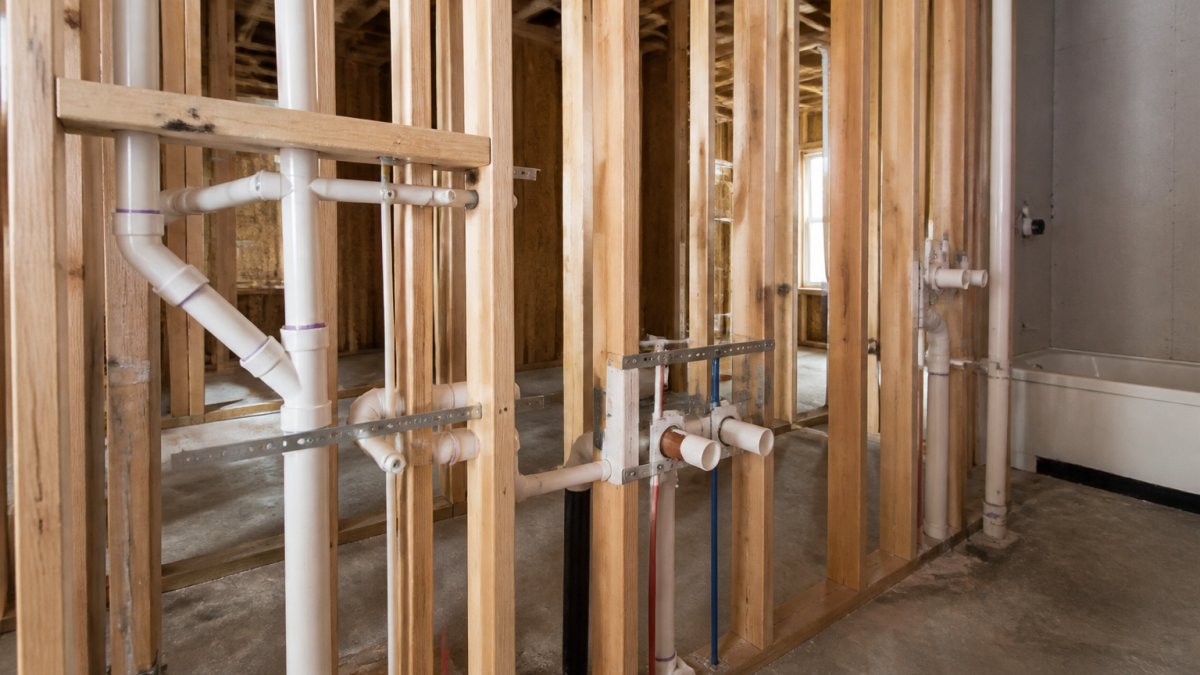
- Schedule the rough-in inspection. Call or book online once piping is installed and before walls close. The rough-in inspection covers supply pressure testing, drain slope, venting, and strap spacing.
- Schedule the final inspection. Book it after fixtures are set, traps are installed, and the system is tested. Some AHJs require a separate gas pressure test or a building-sewer inspection before the final sign-off.

Delays cluster at two points, an incomplete packet at intake and an inspector's schedule that is booked out during peak season.
Watch out: the most common delay is an incomplete application. Missing drawings, an unsigned form, a license number that does not match the contractor of record, or a valuation that does not match the fee schedule sends the packet back to the start of the queue. Submit everything at once, keep a copy of the approved set on site, and the permit processing tends to move faster.
If the AHJ uses an online portal, save the confirmation number and the reviewer's comments in the project file. Those records matter if a later inspection disputes what was approved.
Here is the typical permit application sequence and what each step involves.
| Step | What to do | Key detail |
|---|---|---|
| 1 | Confirm jurisdiction and permit type | Address determines the AHJ |
| 2 | Complete the application form | Scope, fixture count, license number, valuation |
| 3 | Submit supporting documentation | Plumbing plan or isometric drawing |
| 4 | Pay the permit fee | Based on fixture count or job valuation |
| 5 | Wait for plan review and issuance | Same day to a few weeks |
| 6 | Schedule the rough-in inspection | After piping installed, before walls close |
| 7 | Schedule the final inspection | After fixtures set and system tested |
Consequences of Unpermitted Plumbing Work
The first consequence is administrative. When an inspector or code officer discovers work without a permit, the AHJ can issue a stop-work order that halts the entire project, not just the plumbing, until the work is permitted and inspected.
Exposing the work is where the cost compounds. Piping installed behind finished drywall, under a slab, or inside a closed ceiling has to be opened up so the inspector can see the rough-in.
Watch out: unpermitted gas line work is the riskiest version of this.
The insurance problem is quieter but often larger. Many homeowner policies may exclude damage caused by work that was not permitted or inspected, and adjusters often request permit records after a water-damage claim.
There is also the resale problem. Many buyers and lenders request proof of permits for additions, water heater replacements, and repiping, and an unpermitted item can stall a closing or force a price reduction.
Remediation usually follows a retroactive permitting path. The owner may apply for a permit after the fact, may pay the standard fee plus any penalty the local authority imposes, exposes the work for inspection, and corrects any code violations the inspector identifies.
If you suspect a previous owner skipped the process, signs of poor quality plumbing work can help you spot the trouble before an inspector does. Document what you find, request the permit history from the AHJ before closing, and budget for retroactive permitting if the records are missing.
Residential Plumbing Inspection Checklist
A residential plumbing inspection checklist keeps a project on schedule because failed inspections mean reinspection fees and lost days. Use this list before you call for the rough-in inspection:
- Piping supported and strapped at required intervals
- Water supply lines pressure-tested and holding
- Drainage system sloped correctly toward the building sewer
- Waste and vent system connected and vented to code
- Gas line piping tested and capped
- Permit card posted and visible on site
- Work area clear for the inspector's access
For the final inspection, confirm fixtures are set, traps are installed, and every drain runs clear. Preparing the site matters as much as the plumbing itself, and knowing how to prepare for a professional plumbing installation visit helps the day go smoothly.
Who Is Allowed to Pull a Plumbing Permit
Only a licensed plumbing contractor or, in many jurisdictions, the homeowner of a single-family residence they occupy may pull a permit. That homeowner path is the owner-builder exemption, and it comes with real limits. Owner-builders usually cannot permit work on a rental property, a multi-family building, or commercial plumbing, and some jurisdictions restrict the exemption to the homeowner's primary residence.
Licensed plumbing contractors typically hold the license, insurance, and code knowledge that permit authorities expect. A handyman cannot pull a plumbing permit in most places, and hiring one who offers to "skip the paperwork" is a red flag. Before you hand over a deposit, the questions to ask before hiring a plumber will separate a properly licensed contractor from a risky one.
Permit Responsibility When You Hire a Contractor
The permit responsibility sits with whoever holds the contract, and in nearly every jurisdiction the licensed contractor pulls the permit under their own license. That matters because the permit ties the inspection record to a specific license holder. If the work fails inspection, the record follows that contractor, not you.
Ask three things before work starts: who pulls the permit, whose name appears on it, and who pays the fee. Get the answers in writing. A contractor who asks you to pull an owner-builder permit while they do the work is shifting legal risk onto you, and some jurisdictions treat that as a violation.
Verify the contractor's insurance as part of the same conversation. How to check plumbing contractor liability insurance walks through the certificate and the coverage limits to confirm before the first day on site.
Get Your Plumbing Permit Questions Answered by a Licensed Pro
Permit rules shift by jurisdiction, and a project that sailed through last year can need a different form this year. The safest path is to have a licensed professional handle the permit application, the inspections, and the paperwork from start to final approval.
Colby Plumbing Company LLC is a family-owned and operated business serving the Denver metro area since 1996, with licensed, seasoned professionals and a 100% satisfaction guarantee. Contact us today for help with your plumbing project.
Get started with Colby Plumbing Company LLC and put your plumbing installation on a permitted, inspected path from day one.
Frequently Asked Questions
What happens if you install plumbing fixtures without a permit?
Installing fixtures without a permit can lead to fines, mandatory removal of the work, and problems when you sell your home. Your local building department may require you to tear out and redo the installation under a new permit, which doubles your cost. Unpermitted work also may not be covered by homeowner's insurance if a leak or flood occurs. Many jurisdictions treat unpermitted plumbing as a code violation and can issue stop-work orders until the work is brought into compliance.
Can a homeowner pull a plumbing permit?
In many states, homeowners can pull a permit for plumbing work on their primary residence, but rules vary. Some jurisdictions require a licensed plumber for any work beyond minor repairs, while others allow owner-builder permits with an inspection requirement. You'll typically need to sign an affidavit stating you live in the home and will do the work yourself. Check with your local building department before starting, because pulling a permit as a homeowner often means you cannot hire a contractor to do the work under that same permit.
How do I determine if my plumbing project requires a permit?
A good rule: if the work involves new piping, moving a fixture, replacing a water heater, or changing the drainage system, a permit is almost always required. Simple repairs like fixing a leaky faucet, clearing a clog, or replacing a toilet flapper usually do not need one. For anything beyond a minor repair, call your local building department or ask a licensed plumber. They can tell you whether your specific project needs a permit and what inspections will be required.
What is the typical cost of a residential plumbing permit?
Permit fees vary widely by jurisdiction and are usually based on the project value or the number of fixtures. Fees depend on the jurisdiction, project scope, and fixture count, so ask your local building department or contractor for the current fee schedule. Some cities charge a flat fee plus an inspection fee. Your contractor should include the permit cost in their estimate, and you can always call your local building department to ask for the exact fee schedule before you apply.